Major auto CEOs launch hydrogen mobility alliance, demand EU to act now
A group of nearly 40 CEOs from the automotive, energy and hydrogen sectors has called on the European Commission to accelerate support for hydrogen mobility, warning that delays are putting Europe’s industrial base and climate goals at risk.
The Global Hydrogen Mobility Alliance (GHMA) made its formal debut this week with a joint letter to Commission President Ursula von der Leyen, urging the EU to adopt a coordinated hydrogen mobility strategy, backed by public funding, infrastructure planning and regulatory consistency.
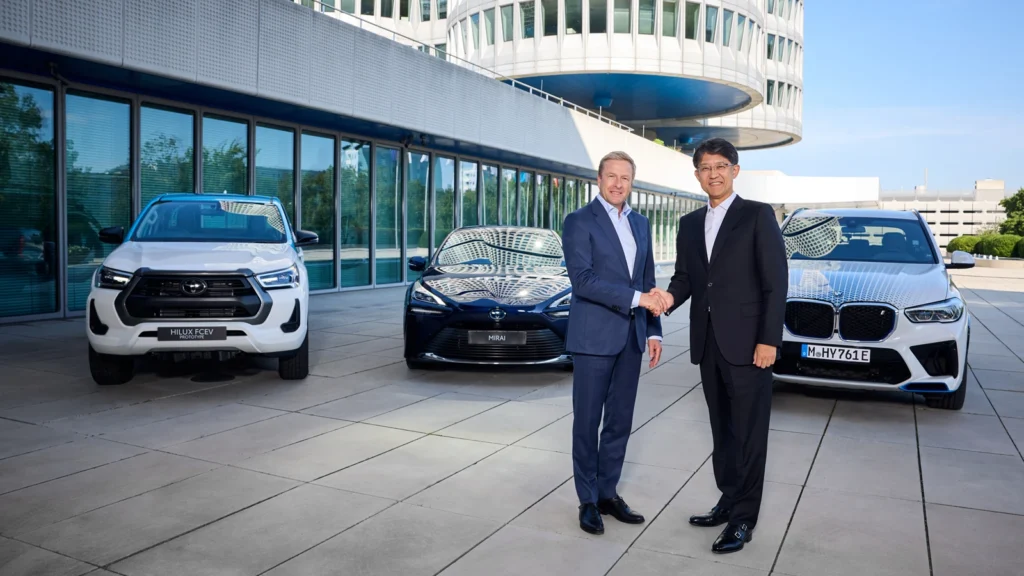
Among the signatories are top executives from BMW, Toyota, Hyundai, Bosch, Daimler Truck, Air Liquide, Johnson Matthey, Ballard, Symbio, and more than two dozen other organisations spanning fuel cell technology, hydrogen supply, vehicle manufacturing and critical components.
The letter describes hydrogen vehicles – both fuel cell and combustion – as “a strategic imperative” and calls on policymakers to prioritise deployment across trucks, buses, taxis and high-utilisation fleet segments.

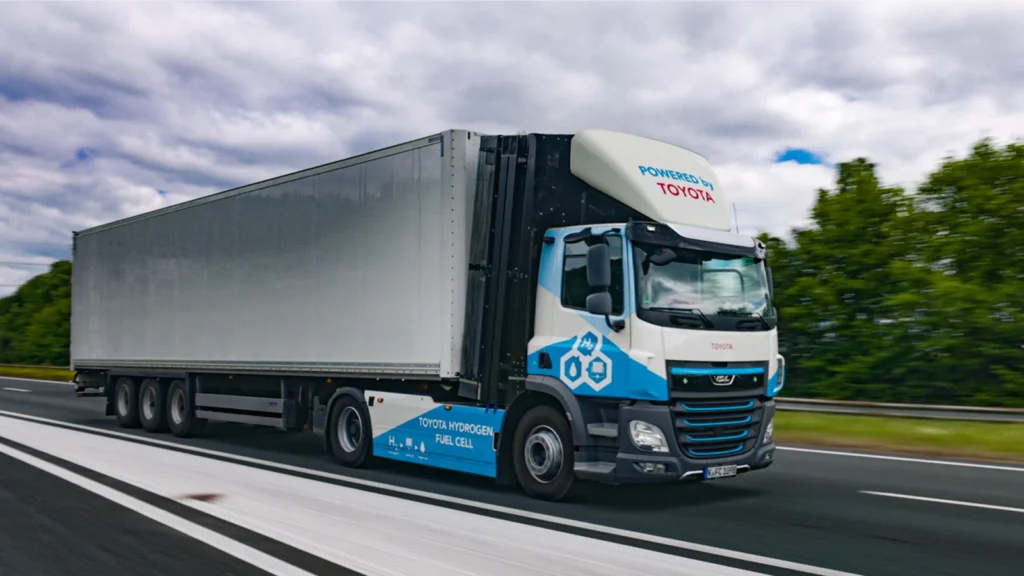
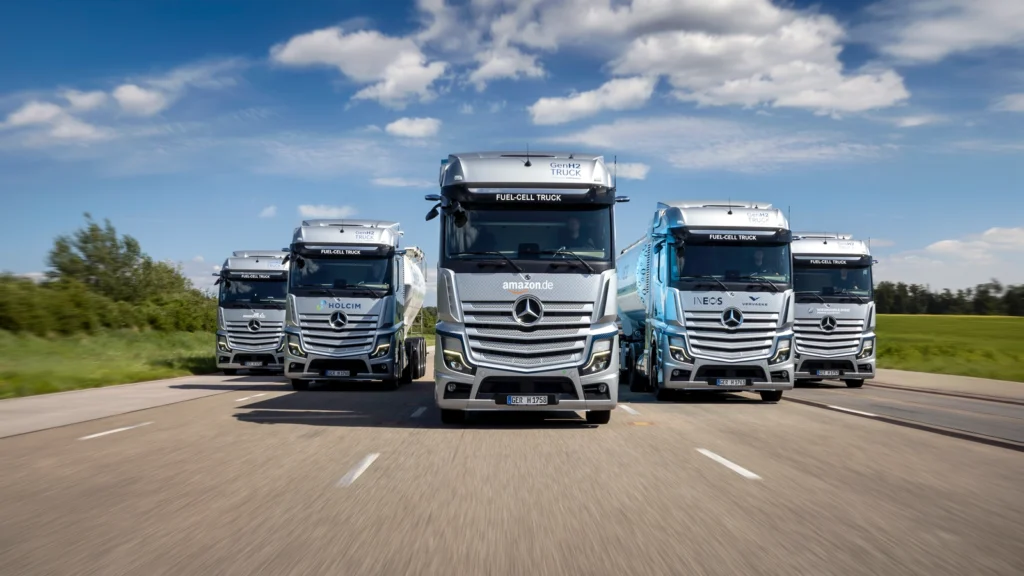
“Hydrogen trucks are the perfect complement to battery-electric ones – offering long ranges, fast refuelling, and a big opportunity for Europe,” said Karin Rådström, CEO of Daimler Truck. “We lead in hydrogen tech, and we’ll stay ahead if we act now – across the full value chain.”
Industry seeks joined-up strategy
The Alliance is calling for three specific actions:
- Include hydrogen mobility in the EU’s Sustainable Transport Investment Plan and Clean Industrial Deal, to ensure integration across transport, energy and manufacturing policies,
- Support early-stage deployment with targeted funding for vehicles, fuel and infrastructure, aimed at closing the cost gap with battery-electric options,
- Fully implement existing regulation, including the Alternative Fuels Infrastructure Regulation (AFIR) and Renewable Energy Directive III (RED III), to give investors and operators the certainty they need.
So far AFIR implementation varies widely across the EU, with several member states behind on heavy duty hydrogen corridor planning. As of mid-2024, Europe hosts around 187 publicly accessible hydrogen refuelling stations.
But according to the latest data, only around 24% (45 stations) are equipped with heavy duty dispensers suitable for trucks.
Moreover, fewer than half of member states have published national deployment plans specifying heavy duty station timelines.
The CEOs argue that coordinated action would speed up adoption, reduce total infrastructure costs, and anchor high-value industrial activity in Europe.
They point to estimates suggesting that a dual-track approach – combining fuel cell and battery-electric vehicles – could save the EU between €300–500 billion in grid and charging infrastructure by 2050.
The figure reflects growing concern that high-power charging alone will put pressure on electricity distribution networks – particularly at logistics depots and freight corridors – where hydrogen could ease the load.
The letter also notes that hydrogen mobility plays a wider strategic role by enabling shared infrastructure and unlocking demand aggregation.
According to the Alliance, mobility is a critical driver for building the scale and investment case needed to support hydrogen use in other hard-to-abate sectors, including steel, chemicals and aviation.
Europe has the know-how, but needs the momentum
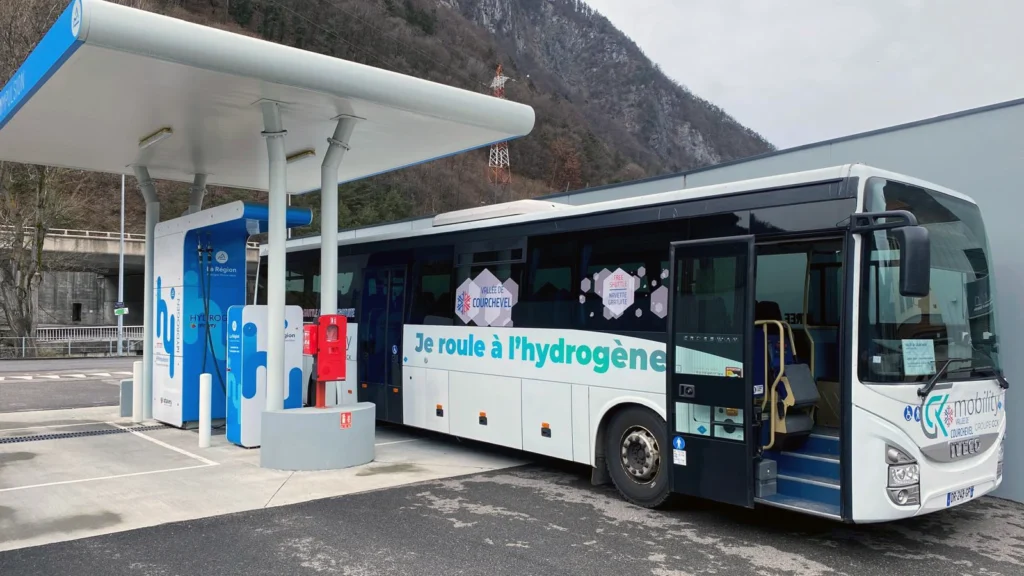
Fuel cell mobility is already on the road – more than 15 million kilometres have been logged by hydrogen-powered trucks and buses in Europe. In Paris, a fleet of 800 hydrogen taxis is covering around 3 million kilometres per month.
In trucking, Hyundai’s XCIENT fuel cell lorries have now driven over 15 million kilometres across Germany and Switzerland.

What’s missing, say the CEOs, is scale – and the policy framework to support it.
“Hydrogen mobility is ready for deployment, but it requires decisive policy support to bridge the initial cost gap,” said Dr Gernot Stellberger, CEO of EKPO Fuel Cell Technologies. “At EKPO, we make the fuel cell competitive – in terms of performance, cost and reliability.”
“There is no full decarbonisation or competitive European mobility sector without hydrogen,” added Oliver Zipse, CEO of BMW.
Many of the signatories warn that Europe’s dependence on imported battery materials – particularly lithium, cobalt and nickel – risks weakening its industrial position.
In contrast, fuel cell systems rely on platinum group metals, for which Europe already has local refining and recycling capacity.
Those supply chains – centred in countries like Germany, Finland and the UK – give Europe a foothold, but without volume, the industrial advantage won’t last.
“Hydrogen is not just an alternative fuel – it’s an essential pillar of tomorrow’s mobility and energy ecosystem,” said Arnd Franz, CEO of MAHLE. “Whether powering hydrogen engines or fuel cells, this technology will be indispensable for achieving truly sustainable transportation.”
The letter also highlights the opportunity to integrate hydrogen into the wider energy system – particularly in absorbing surplus renewable electricity that would otherwise be wasted.
In Germany alone, around 9 TWh of clean electricity went unused in 2024 due to grid congestion or lack of demand.
According to the Alliance, that’s €2.8 billion worth of energy that could have been stored as hydrogen and used where it’s needed.
The China problem
The letter draws a direct comparison with China’s rapid scale-up. As of 2024, China had already deployed 28,000 hydrogen vehicles and built more than 400 refuelling stations.
By 2030, it aims to reach 1 million vehicles and 1,000 stations.
Europe, by contrast, has no equivalent deployment target or roadmap – despite being home to many of the companies building the underlying technology.
China’s rollout is also feeding a growing export push, with several Chinese manufacturers now targeting overseas markets, including Southeast Asia and Latin America, putting additional pressure on European firms to maintain their edge in engineering and systems integration.
“Europe can establish a competitive sustainable hydrogen industry,” said Nicholas Loughlan, CTO of fuel cell joint venture cellcentric. “It can secure and create about 500,000 jobs in Europe by 2030. The only prerequisite: it must happen now.”
Action and collaboration
The GHMA plans to publish a detailed roadmap later this month, and will host a public webinar on 15 July to outline its vision for a coordinated rollout of hydrogen mobility across the EU.
The Alliance says the goal isn’t more strategy documents, but action. Infrastructure. Policy certainty. Commercial support.
It needs a joined-up approach that gives manufacturers and suppliers the confidence to invest – and gives fleets a reason to switch.
It also calls for stronger public-private collaboration across the value chain, bringing together OEMs, fuel suppliers, infrastructure developers and hydrogen producers with governments to co-develop the conditions for long-term market growth.
That includes clear rules, consistent funding, and the removal of tax distortions. Specifically, the Alliance wants hydrogen exempted from energy taxes – whether used in fuel cells or combustion engines.
“The technology is proven. The time to scale is now,” said Jaehoon Chang, Vice Chair of Hyundai Motor Group. “Together with our alliance members, we are turning hydrogen vision into reality.”