DRIVE35: £40m funding on the table for UK hydrogen and zero emissions tech
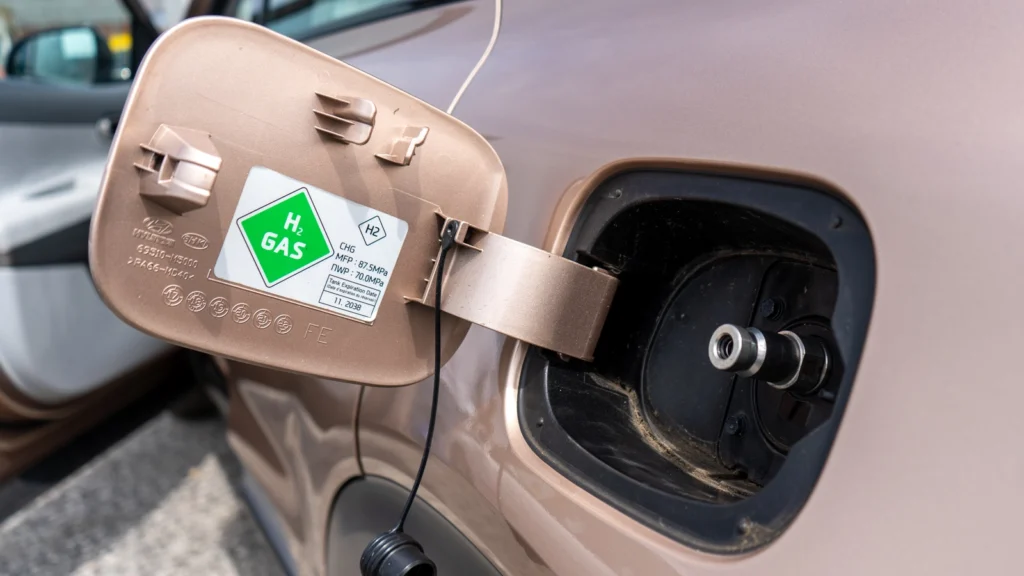
Whitehall has launched a £40 million competition to help move the UK’s zero-emission vehicle technology from late-stage development into commercial production.
The DRIVE35 Innovation Fund, delivered by the Department for Business and Trade with Innovate UK and the Advanced Propulsion Centre, is aimed at what the official brief describes as “collaborative R&D projects… which target post-project commercialisation.”
In practice, that means taking technologies that have already been proven in working prototypes and preparing them for manufacturing at scale.
Hydrogen technologies in scope
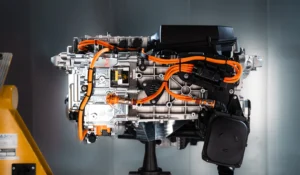
Hydrogen features clearly in the list of eligible technologies, with fuel cell systems included, along with the associated balance of plant – the pumps, valves, sensors and electronics that keep them operating safely and efficiently.
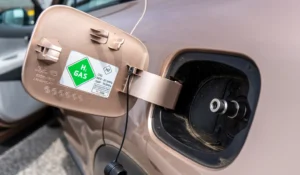
Hydrogen storage and management systems, including high-pressure tanks, regulators and the control systems that manage them, are also in scope.
Hydrogen internal combustion engines are listed too, with the requirement for road-going projects to deliver “zero harmful tailpipe emissions utilising non-fossil fuels” and for off-road projects to demonstrate a pathway to zero emissions.
Supply chain, circularity and digital validation
The competition goes beyond vehicle-ready hardware, with projects in the upstream supply chain – such as those making components, materials or specialist tooling for hydrogen powertrains – eligible, as are those working on circularity and design-for-disassembly, where products are developed to be dismantled and reused at the end of life.
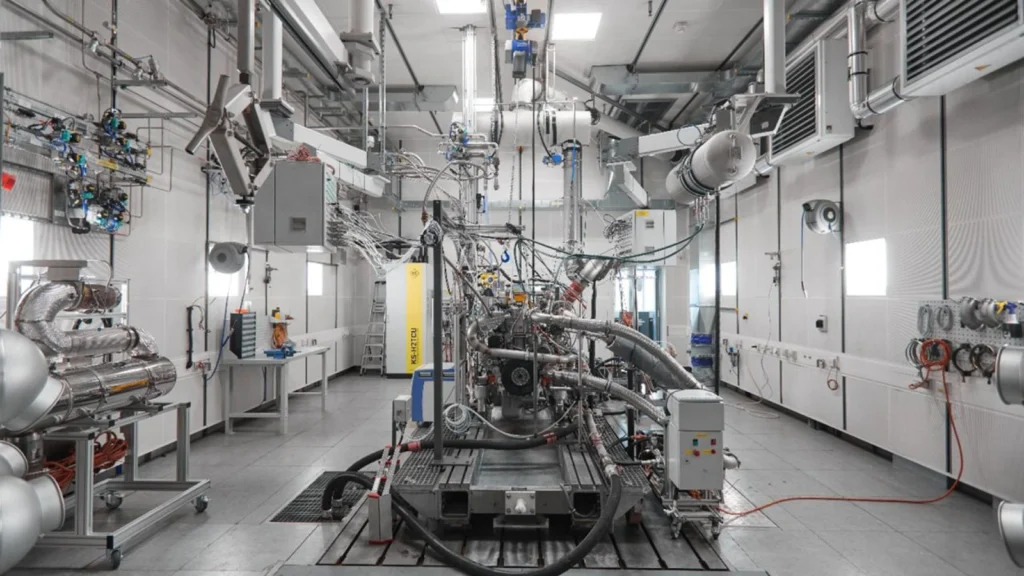
Digital validation and design are also part of the scope, covering the use of virtual modelling and simulation to prove a product before committing to physical production.
Three themes
All projects must align with at least one of three themes set out by the Department for Business and Trade:
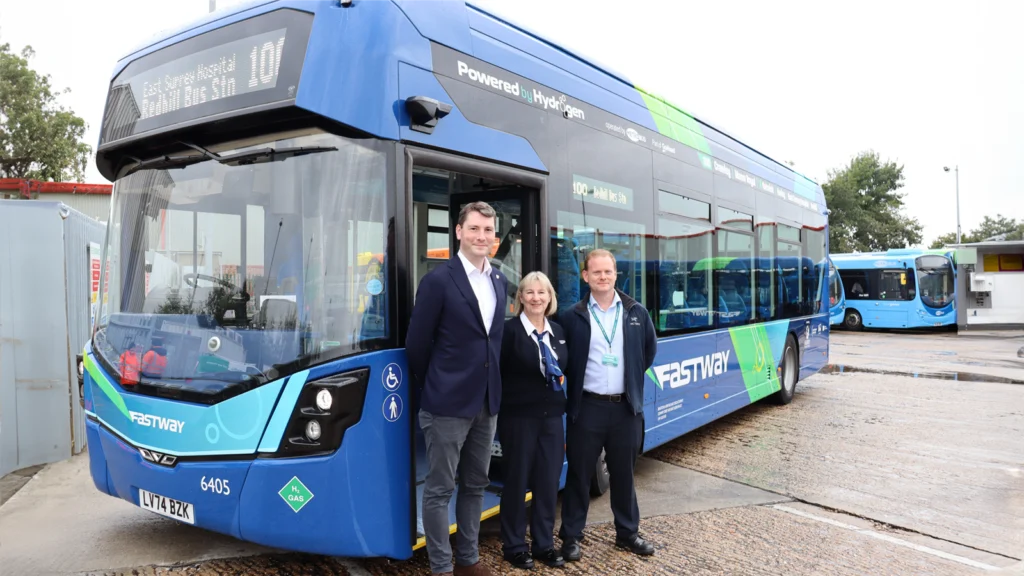
- Promote Zero Emission Vehicle Technologies – onboard systems for zero-emission drivetrains, including hydrogen fuel cells, storage and engines.
- Enhance Manufacturing Competitiveness – innovations that make manufacturing faster, more efficient, lower-carbon or more locally based in the UK.
- Future Vehicle Innovation – Software-Defined Vehicles and E/E Architectures – integrated electronics and software platforms, which for hydrogen could include intelligent control systems managing power delivery between a fuel cell and an onboard battery.
Project requirements and funding
By the end of the programme, projects should reach “TRL 7-8” / “MRL 6-7” – industry measures that indicate a technology is moving into, or already at, pilot production.
Project durations must be 18-36 months, starting no later than 1 March 2026, with total eligible costs split at least 50/50 between grant and match funding from the consortium.
The grant ask must be between £2.5 million and £25 million, and every consortium must include a UK-based vehicle manufacturer or Tier 1 supplier and at least one SME.
Funding rates follow Innovate UK rules – smaller firms can claim a higher percentage of eligible costs than larger ones, and experimental development projects, being closer to market, qualify for a lower funding percentage than industrial research.

Domestic supply chain benefits a key focus
The Advanced Propulsion Centre has highlighted the fund’s emphasis on supply-chain benefits.
This could favour hydrogen projects that can be manufactured in the UK, reducing reliance on imports and securing local jobs.
In the APC’s assessment process, bids must show how they will improve supply-chain resilience, increase UK content in bill of materials, and support clustering of capabilities around UK manufacturing sites.
Key dates and closing view
Applications close at 11:00am on 1 October 2025. Shortlisted projects will be interviewed in late November, with successful bids able to begin from March 2026.
For hydrogen developers with technology already proven in trials, the DRIVE35 Innovation Fund is one of the few current UK government opportunities to secure substantial support for scaling up.
While battery projects will undoubtedly compete strongly for the same funding, hydrogen’s explicit inclusion – from fuel cells and tanks to hydrogen engines – places it on equal footing, offering the potential to turn small-batch prototypes into fully industrialised British products.