Phase 2 begins: Daimler rolls out next wave of hydrogen truck trials
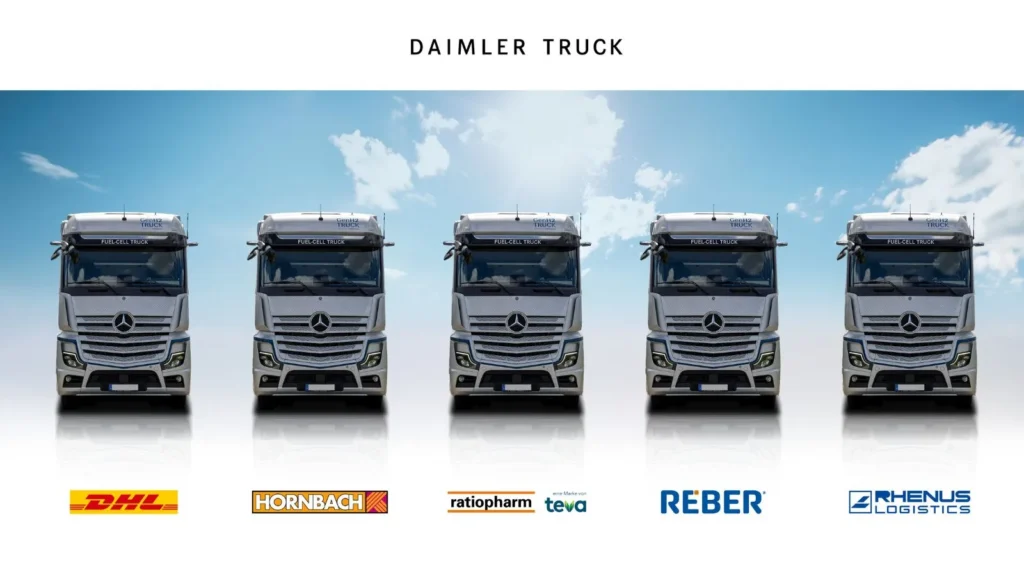
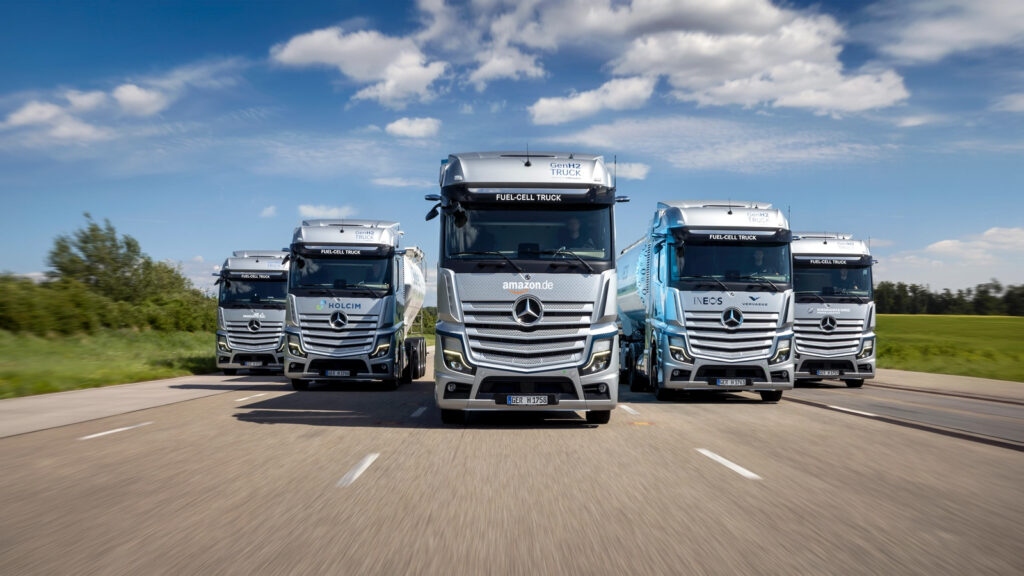
Daimler Truck has shifted gears: the company has launched the second trial phase of its hydrogen‑fuel‑cell long‑haul truck programme with five new logistics partners.
This move builds on its previous commitments and infrastructure efforts — and underscores hydrogen’s growing role in heavy‑duty transport.
Trial rollout expands
On 13 November 2025, Daimler Truck announced it will deploy its Mercedes‑Benz GenH2 Truck with five additional partner companies across Germany: Hornbach Baumarkt AG, Reber Logistik, Teva Germany (via its brand ratiopharm), Rhenus Duisburg and DHL Supply Chain Germany & Alps.
“We develop the best trucks for our customers by conducting trials with our partners early on,” said Michael Scheib, Head of Product Engineering, Mercedes‑Benz Trucks.
“That’s why the next five companies are now testing our hydrogen‑powered Mercedes‑Benz GenH2 Truck in daily operation.”
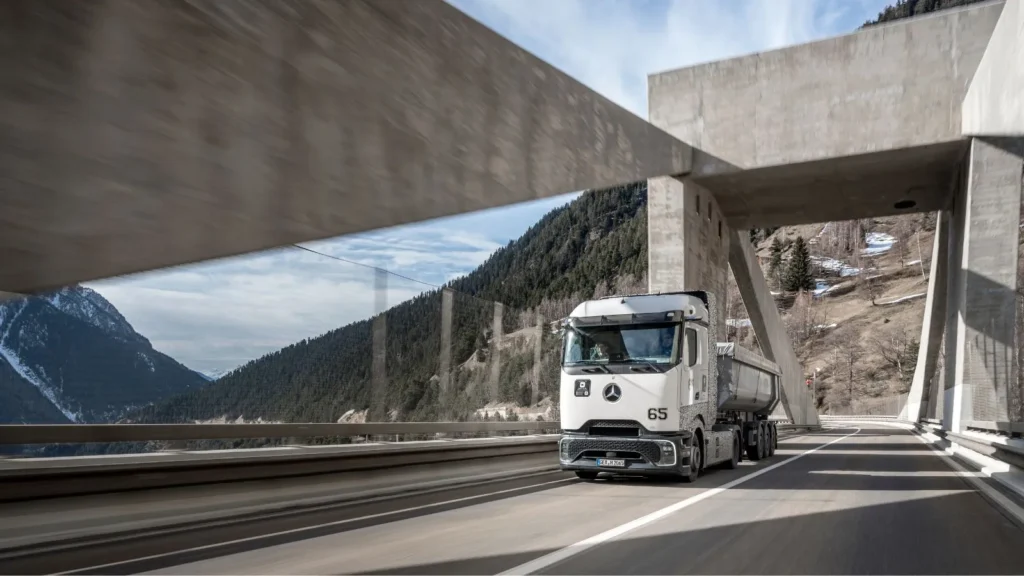
These trucks will be used in diverse logistics scenarios, from refrigerated pharmaceuticals to general cargo and long‑haul transport. The aim is to gather real‑world data on vehicle performance, serviceability and sales readiness.
Why this matters for hydrogen logistics
This update follows Daimler’s earlier statements about infrastructure urgency. In June 2025 they warned Europe must build 2,000 truck‑capable hydrogen refuelling stations by 2030.

They also co‑signed a memorandum with Kawasaki Heavy Industries and Hamburger Hafen und Logistik AG (HHLA) to develop liquid hydrogen supply chains.
These elements underscore a simple truth: trucks work, hydrogen works — but without infrastructure it cannot scale.
The vehicle itself
The GenH2 Truck uses liquid hydrogen storage to maximise driving range and minimise downtime.
- Gross vehicle weight: ~40 tonnes
- Payload: ~25 tonnes
- Continuous fuel‑cell output: up to 300 kW, supported by a buffer battery. These specs put the GenH2 closely in line with modern diesel trucks, underlining hydrogen’s potential in long‑haul transport.
A closer look at the GenH2 Truck and what comes next
The Mercedes-Benz GenH2 Truck, developed by Daimler Truck, is purpose-built for long-haul hydrogen transport. Weighing in at around 40 tonnes with a payload capacity of 25 tonnes, it’s designed to match the performance of modern diesel trucks while operating on liquid hydrogen.
Its fuel-cell system delivers up to 300 kW of continuous power, supported by a buffer battery that handles peak loads and recovers energy during braking. Liquid hydrogen offers a much higher energy density than gaseous hydrogen, giving the GenH2 an edge in range and refueling efficiency.
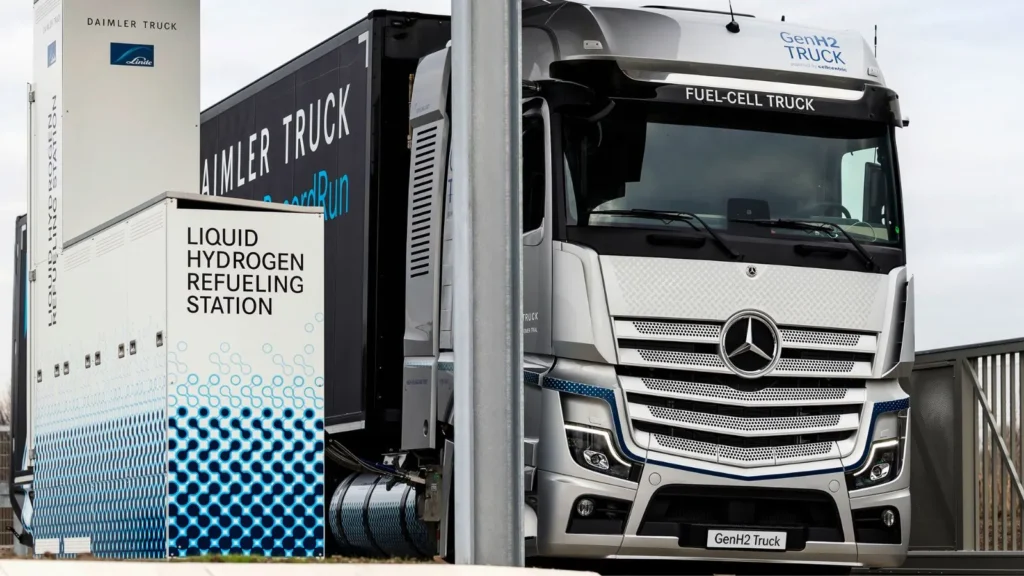
With trials already clocking over 225,000 kilometres (5.5 times around the world!) and fuel consumption ranging from 5.6 to 8.0kg of hydrogen per 100km, the truck is proving its real-world potential. Refueling is handled at dedicated sLH₂ stations in Woerth am Rhein and Duisburg.
Looking ahead, Daimler Truck is preparing for small-series production of 100 GenH2 trucks by the end of 2026. These vehicles will go into customer operation across Europe.
Still, challenges remain: the rollout of hydrogen refueling infrastructure is lagging, pushing full industrialisation of hydrogen trucks into the early 2030s. Daimler continues to back a dual-track approach — combining battery-electric and hydrogen fuel-cell technologies — as the most robust route to zero-emission heavy transport.
Infrastructure remains the bottleneck
Despite the hardware advancing, Daimler acknowledges the infrastructure challenge. The company wrote:
“The expansion of hydrogen refuelling infrastructure is progressing significantly slower than expected.”
For fleets, the experience is already tangible. Mirko Kauffeldt, Managing Director of Reber Logistik, commented: “We’re eager to see how the vehicle performs in everyday use… Since we can currently refuel the truck only in Duisburg and Woerth, we are deploying it specifically in this region.”
What this means for the hydrogen ecosystem
The expanded trial has several implications:
- Vehicle readiness: Daimler is proving that heavy‑duty hydrogen trucks can operate alongside battery‑electric models.
- Customer learning: Logistics providers now gain hands‑on experience with hydrogen vehicles including maintenance, refuelling and operations.
- Infrastructure demand: The trial amplifies the need for fast‑filling, high‑capacity hydrogen stations — Europe still lacks sufficient network density.
- Supply‑chain alignment: With partners for liquid hydrogen supply and infrastructure, hydrogen trucking is moving from lab to road.
In short
Daimler Truck’s second phase of trials marks a meaningful step in scaling hydrogen‑powered freight. The vehicles are real, the need is real, and the infrastructure is still catching up.
For fleets looking to decarbonise heavy transport, hydrogen is rapidly becoming a serious option — not just for tomorrow, but for the freight routes of today.