Toyota’s all-new Hilux goes electric, hybrid – and hydrogen
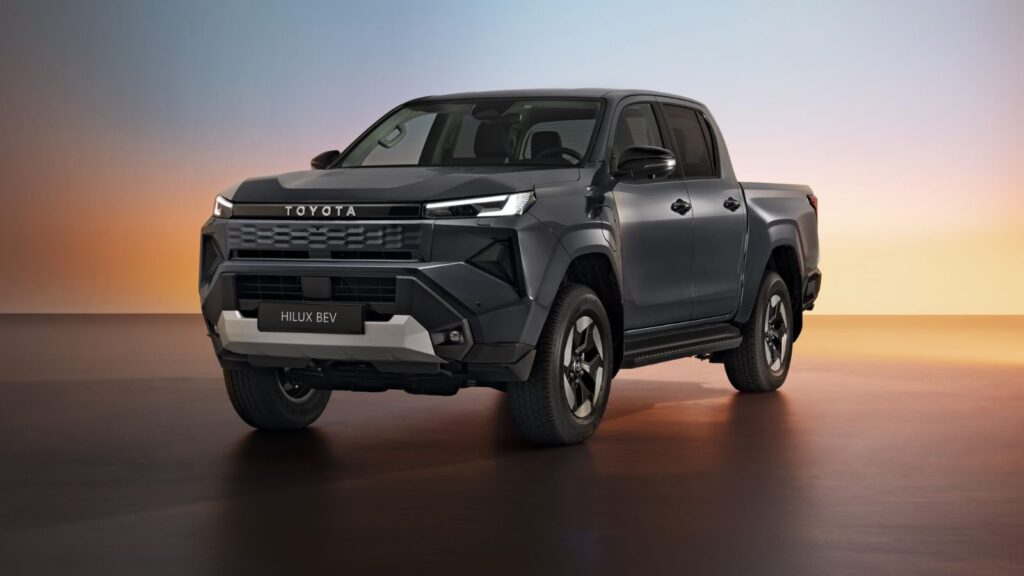
Toyota has revealed the ninth-generation Hilux, marking a major shift for its legendary pick-up. The new model introduces battery-electric and hydrogen fuel-cell powertrains, aligning with Toyota’s multipath approach to electrification and clean transport.
Announced in Bangkok, the next-generation Hilux builds on more than 50 years of global sales, taking the model into an era of zero-emission options without losing its reputation for reliability and toughness.
Three powertrains, one Hilux DNA
Toyota’s new Hilux range includes three key variants:
- A battery electric version (Hilux BEV) – the first fully electric Hilux.
- The 2.8D 48V mild-hybrid – set to be the volume seller for the UK and Western Europe.
- A hydrogen fuel-cell electric version, confirmed for launch in 2028.
This multipath strategy reflects Toyota’s global view that no single powertrain suits every market or use case. Therefore, by offering diesel-hybrid, battery, and fuel-cell models, Toyota hopes to match local energy infrastructure and customer needs while maintaining the Hilux’s long-standing Quality, Durability and Reliability (QDR).
New look, new technology
The ninth-generation Hilux adopts a “Tough and Agile” design theme, influenced by the new Land Cruiser. Slim LED headlights frame a strong horizontal front bar carrying the TOYOTA name. On the BEV version, the traditional grille is replaced with an aerodynamic front fascia.
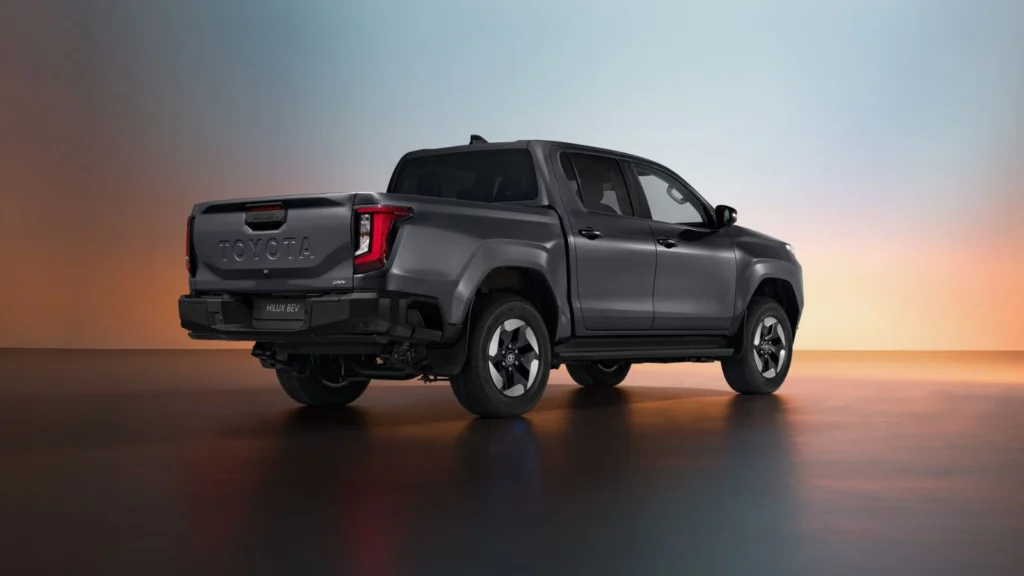
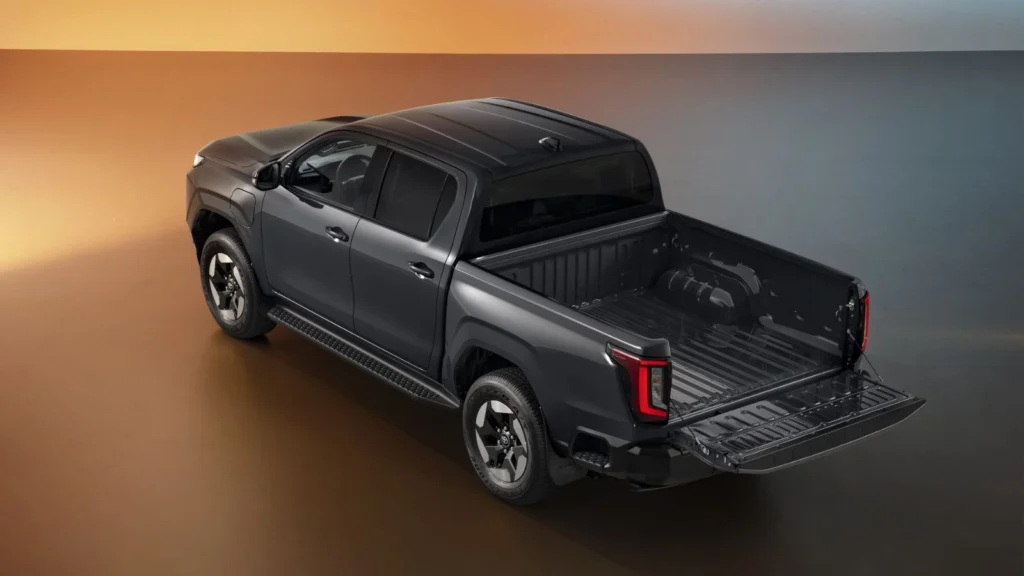
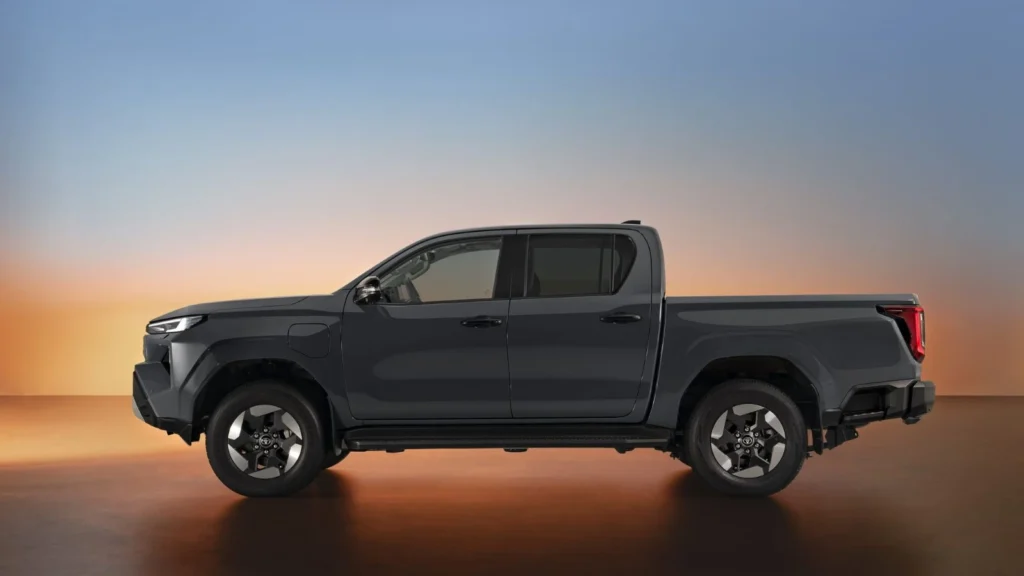
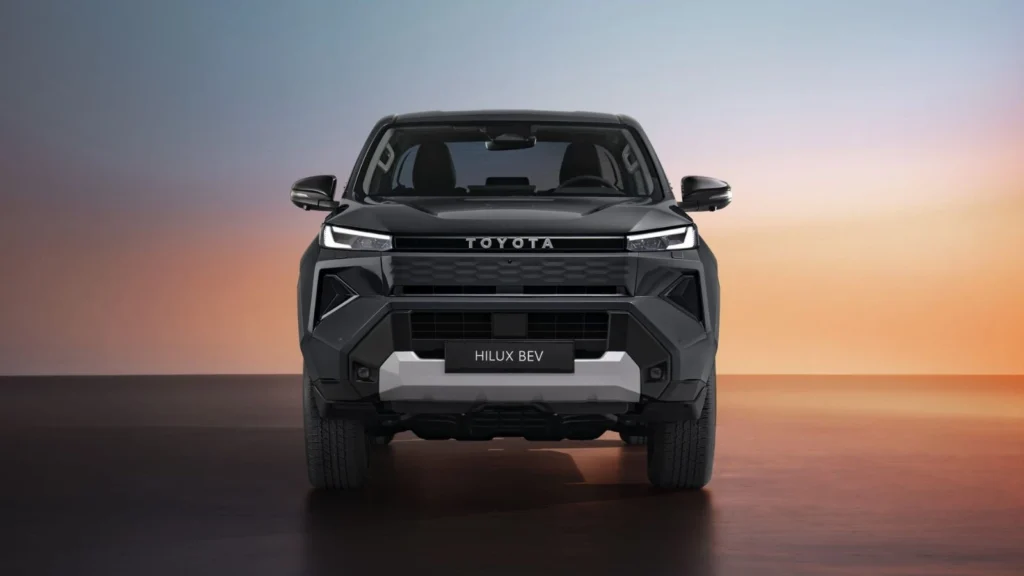
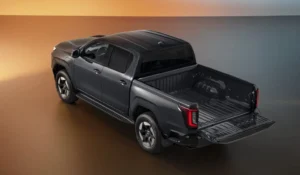
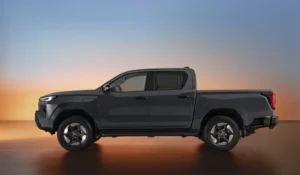
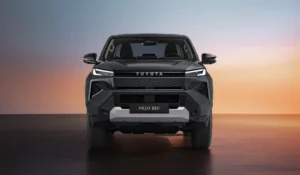
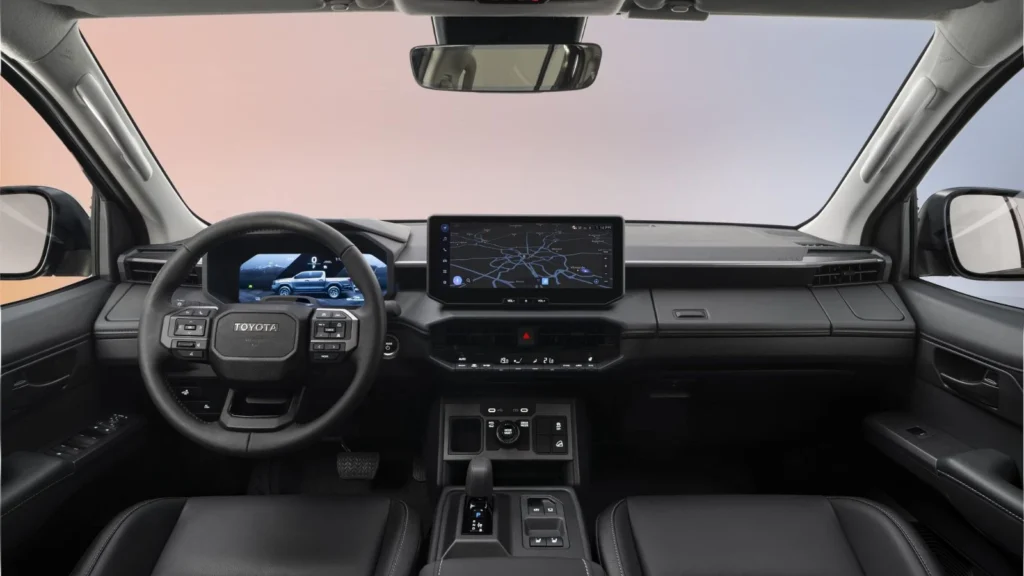
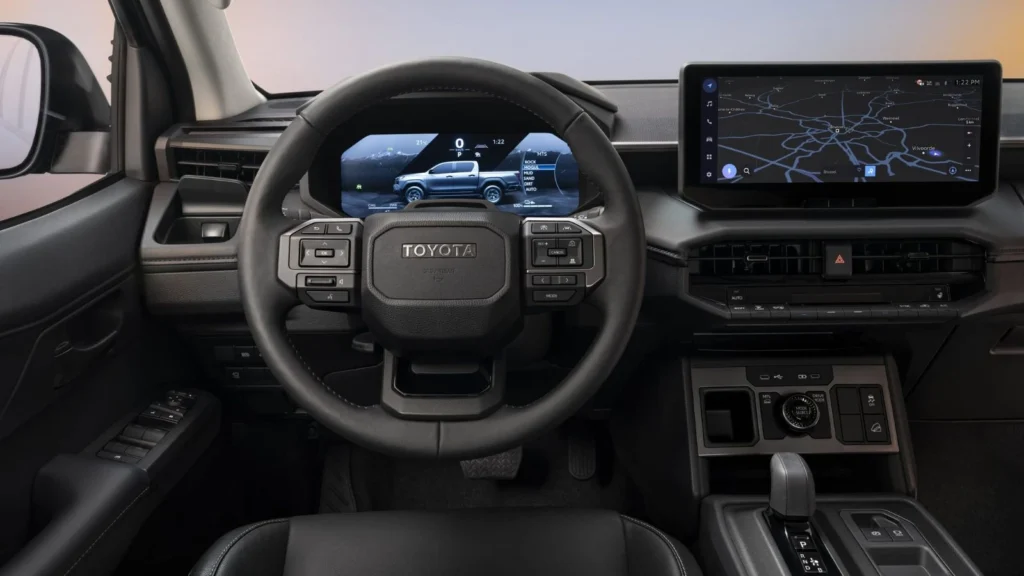
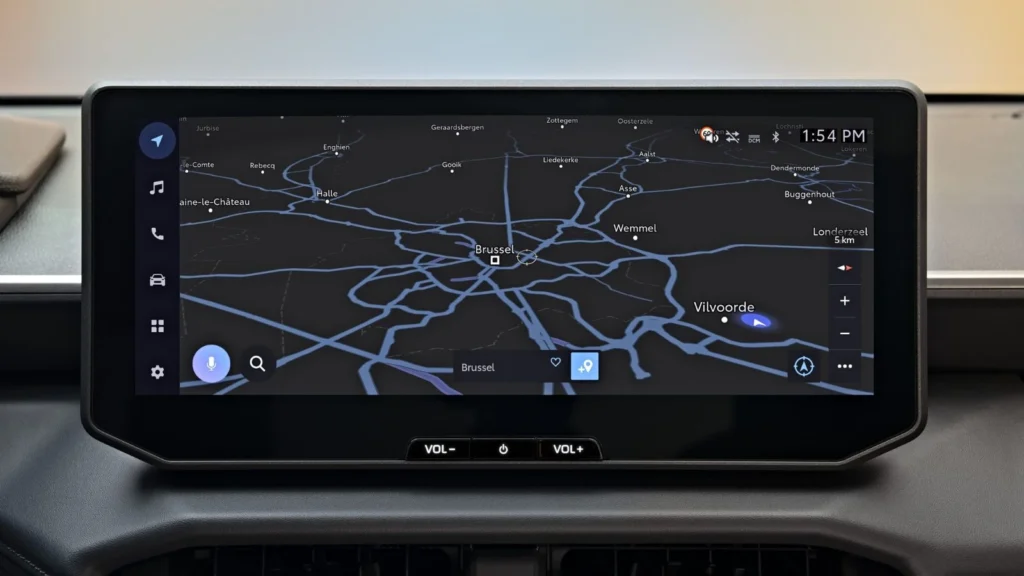
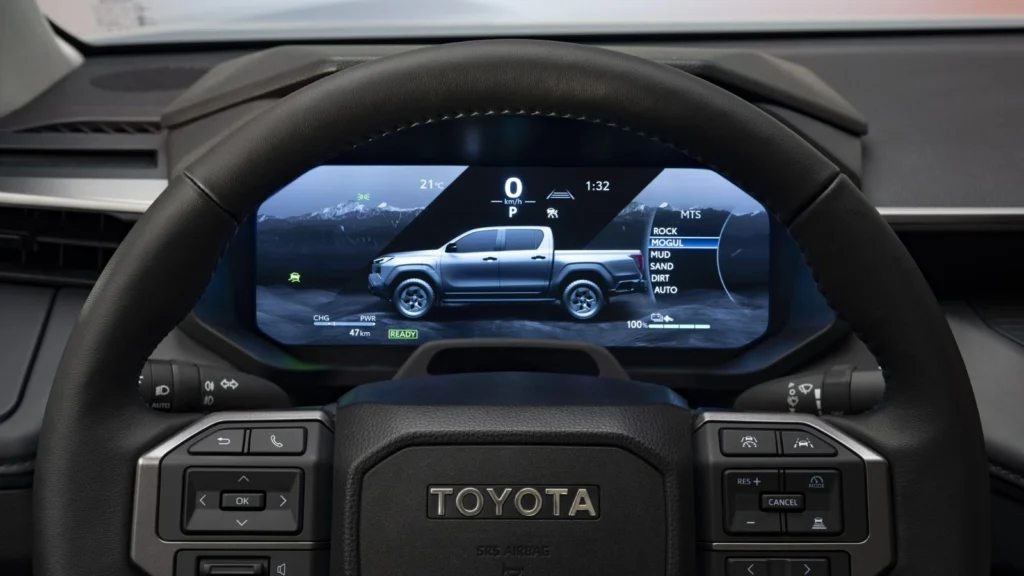
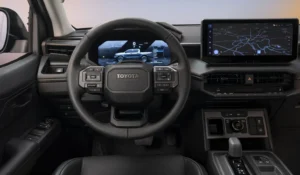
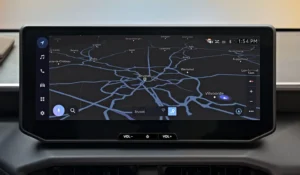
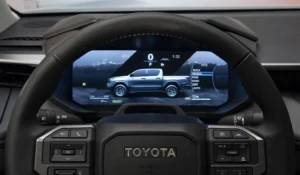
Inside, the cabin has been redesigned around a horizontal dashboard layout, featuring a 12.3-inch digital driver display and an optional 12.3-inch multimedia touchscreen. In addition, the pick-up is offered exclusively as a Double Cab. It has improved sensory quality and new comfort features such as electric power steering (for Western Europe) and grouped off-road controls for easier operation.
Connectivity takes a leap forward too. The new Hilux supports wireless phone charging, rear USB ports and over-the-air software updates. Fleet operators can access live vehicle data via the MyToyota app, tracking fuel levels, EV charging status and driver analytics for up to ten vehicles.
Hilux BEV: the electric workhorse
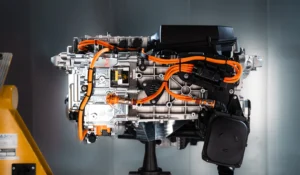
The new Hilux BEV prototype features a 59.2 kWh lithium-ion battery and front and rear eAxles providing permanent all-wheel drive. Combined torque figures are 205 Nm at the front and 268 Nm at the rear. Preliminary data suggests a payload of 715 kg, towing capacity of 1,600 kg, and a WLTP range of around 150 miles.
Despite the shift to zero-emission power, the electric Hilux retains its body-on-frame construction and off-road capability, including 700 mm wading depth and Toyota’s Multi-Terrain Select system.
Hilux 2.8D 48V: electrified for efficiency
Set to lead European sales, the 2.8-litre diesel 48V version combines a mild-hybrid system with Toyota’s proven powertrain. The 48V lithium-ion battery, placed beneath the rear seats, powers an electric motor-generator for smoother starts, improved refinement and energy recovery during deceleration.
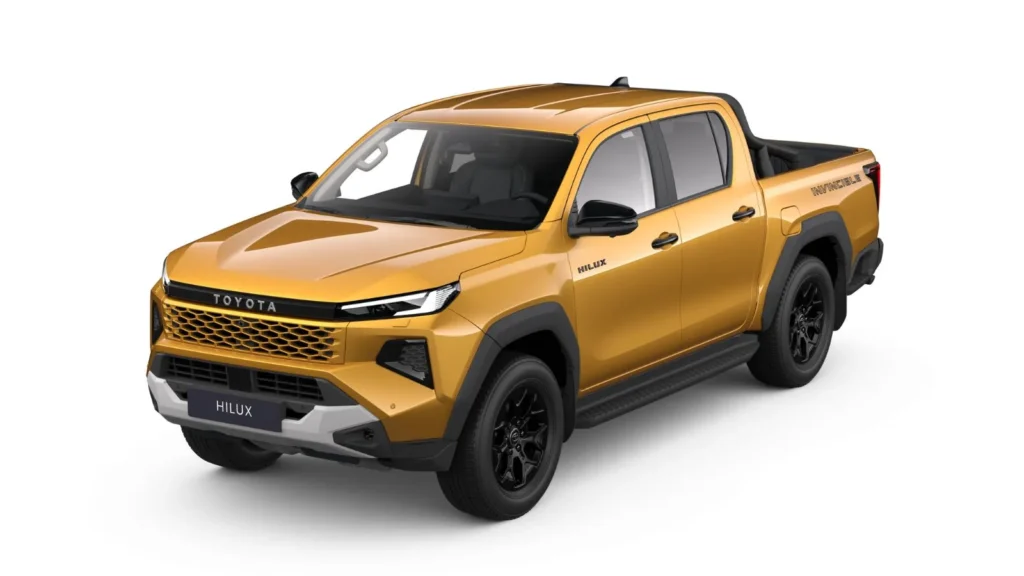
It maintains full workhorse ability, with a one-tonne payload, 3.5-tonne towing capacity, and enhanced off-road control through Multi-Terrain Select and the optional Multi-Terrain Monitor camera system.
Production starts in spring 2026, with UK sales following in June 2026.
Fuel-Cell Hilux: zero-emission future confirmed
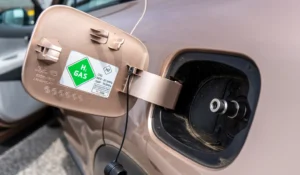
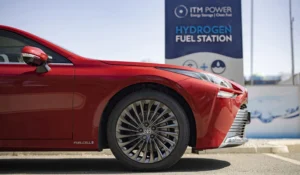
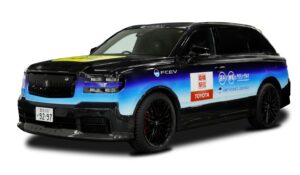
Toyota has confirmed a hydrogen fuel-cell Hilux for 2028, using technology derived from the Mirai saloon. The upcoming FCEV Hilux will demonstrate hydrogen’s suitability for utility and commercial applications. This supports Toyota’s wider efforts to expand hydrogen ecosystems and infrastructure across Europe.
The all-new Hilux moves Toyota’s most trusted pick-up into its cleanest and most connected era yet. Diesel, electric, or hydrogen, it remains unmistakably Hilux.