Hydrogen still on the table as Porsche explores future fuels
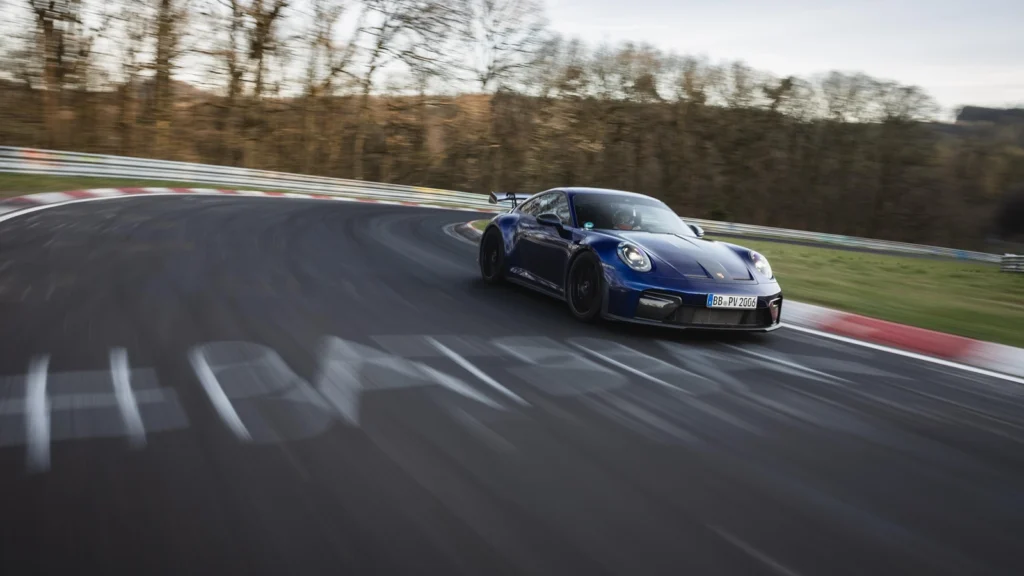
Porsche are self-proclaimed game changers of the automotive industry and have a tendency to be omnipresent at major technological shifts in vehicle engineering. It was Ferdinand Porsche himself who designed the first ever petrol-electric car way back in 1900.
Now, a new character has emerged onto the international scene, namely hydrogen, with a volatile personality and an exciting range of applications, of course the great minds at Porsche were intrigued.
Porsche has always contained out-of-the-box innovators, ignoring the pessimistic comment sections or the equivalent strongly worded letters of the 1900s, to advance future technologies.
Now they are exploring multiple avenues of alternative fuels. One of which is our good friend hydrogen, while the others are electric and synthetic fuelling systems.
Porsche’s ‘e-fuel’ is created through a process that simultaneously captures carbon dioxide directly from the air and combines it with the hydrogen produced to synthesise methanol.
This is then fed into ExxonMobil’s methanol-to-gasoline (MTG) process, resulting in an ecological fuel able to perform a petrol-like role in vehicles.
E-fuel, friend not foe
This exciting research exists alongside Porsche’s hydrogen studies, as the engineers explore a range of possibilities for the production of low-emission vehicles.
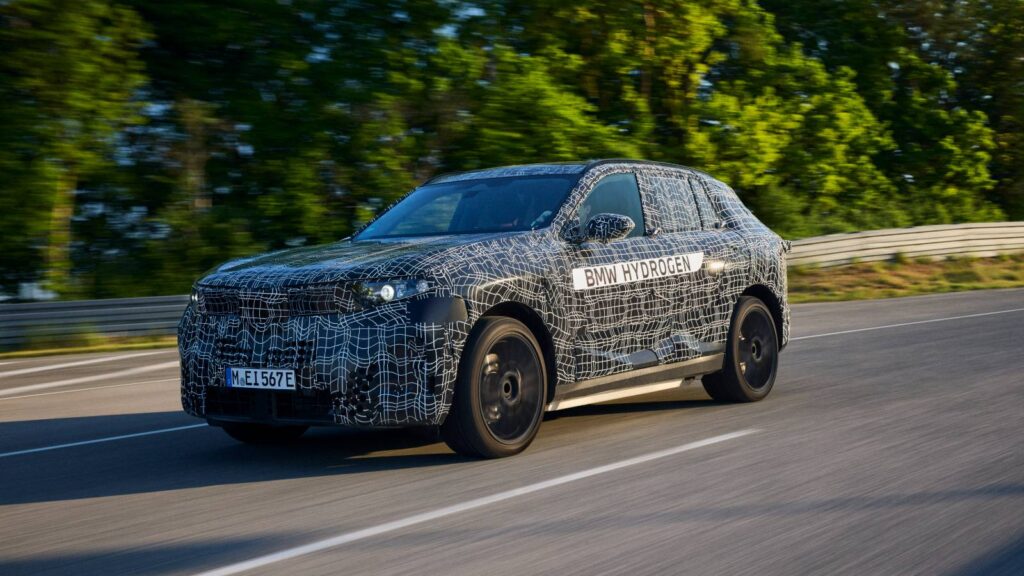
Porsche’s hydrogen research has been largely combustion-focused. In 2022, they undertook the major task of developing a hydrogen combustion engine concept that could match the power and torque of current high-performance gasoline engines.
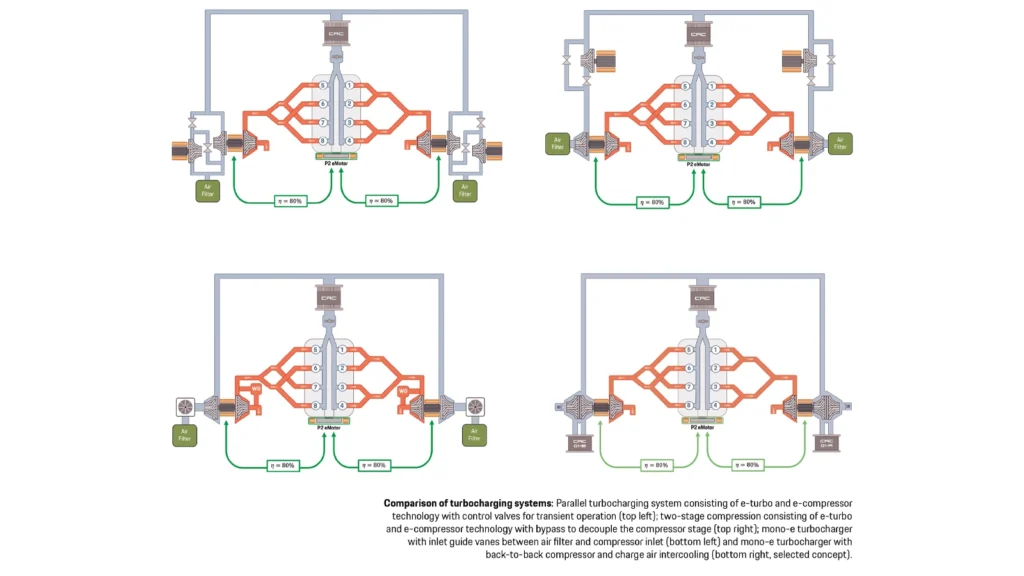
One of the key elements in the fine-tuning of their engine’s efficiency was the implementation of turbochargers.
Notably, within hydrogen combustion, turbochargers are designed to compress incoming air, forcing it into the engine to compensate for hydrogen’s lower energy density.
Porsche examined four different variations of turbocharger concepts along the evolution of their hydrogen engine, some of which were inspired by the world of motorsport.
A computerised Nürburgring
Porsche also ran a series of digital simulations to test their hydrogen combustion concept.
Their chosen site for this milestone? A computer-generated Nürburgring Nordschleife: “The drive was carried out using what is known as a digital twin,” said the manufacturer. “A virtual representation of the real vehicle, which demonstrated high potential with regard to driving dynamics”.
Porsche’s hydrogen vehicle emerged from these simulations with an impressive set of numbers:
- Maximum speed: 261 km/h
- Lap Time: 8:20:20 minutes
- Simulated engine power: 440 kW
As this was a sustainability-focused study, the hypothetical emissions were also calculated. Remarkably, they were roughly equivalent to ambient air, with the potentially harmful waste product nitrogen oxide being “well below the limits set by the Euro 7 standard”.
Hydrogen and Porsche: a match made in heaven?
Hydrogen combustion and Porsche make sense as a combination. It offers a CO2-free solution to power supply, which would allow Porsche to retain its classic flat six engine design.
More than that, it just sounds good. Nothing convinces a motorhead of a car’s excellence like the roar of an engine does.
As Porsche keeps one eye fixed on the demands of the mainstream car market, the other is free to wander to alternate propulsion solutions such as hydrogen.