Hydrogen cars now beat EVs with lowest life-cycle emissions of all, says ICCT
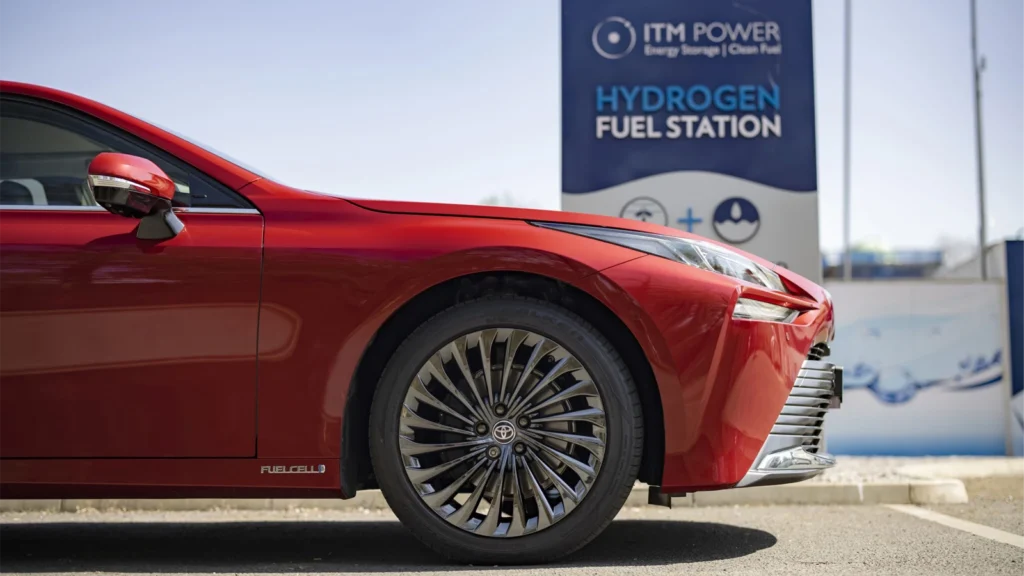
It’s official. Hydrogen cars are now the cleanest on the road. According to the latest EU-wide analysis, fuel cell electric vehicles (FCEVs) powered by renewable hydrogen produce lower life-cycle emissions than any other powertrain – even battery electric.
That’s assuming both are powered by renewable energy. But the difference is, hydrogen is getting there faster than you think.
The data comes from the latest July 2025 report by the International Council on Clean Transportation (ICCT) – the same independent group that exposed the Volkswagen diesel scandal back in 2014.
Its latest life-cycle assessment (LCA) compares every major type of car sold in the EU in 2025 – petrol, diesel, hybrid, plug-in hybrid, battery electric, and hydrogen fuel cell.
It adds up the total climate impact of each vehicle type across a full 20-year, 240,000 km life – including fuel production, vehicle manufacturing, battery or fuel cell production, tailpipe emissions, electricity or hydrogen supply, and recycling.
The result is striking. Hydrogen cars powered by green hydrogen now deliver the lowest emissions per kilometre of any car on the market.
The cleanest powertrain on the road
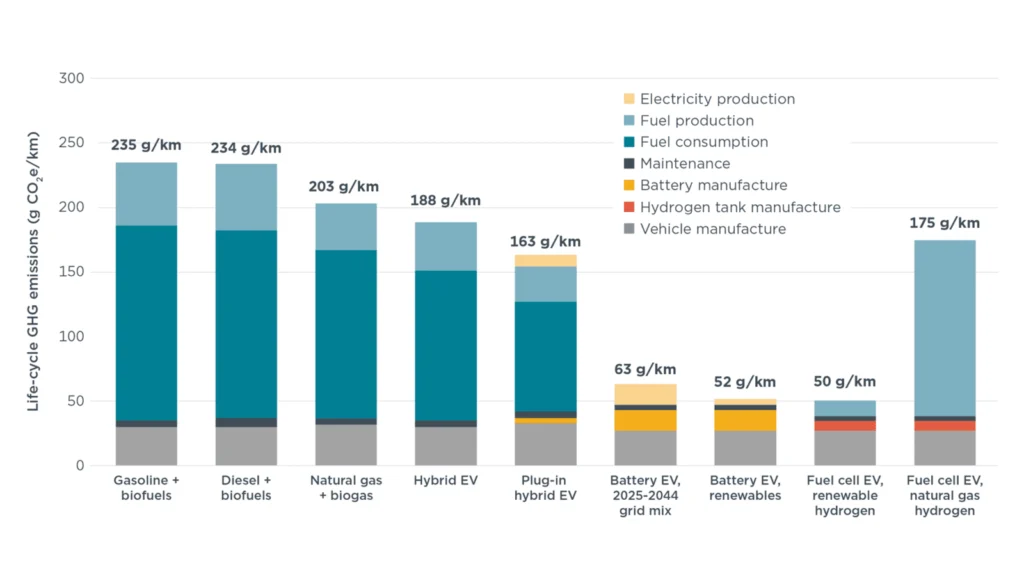
Here’s how the life-cycle carbon emissions stack up:
| Powertrain | Life-cycle emissions (g CO₂e/km) |
| Petrol ICEV (with biofuels) | 235 |
| Diesel ICEV | 234 |
| Natural gas ICEV | 203 |
| Hybrid (HEV) | 188 |
| Fuel cell EV (natural gas H₂) | 175 |
| Plug-in hybrid (PHEV) | 163 |
| Battery EV (EU grid mix) | 63 |
| Battery EV (100% renewables) | 52 |
| Fuel cell EV (renewable H₂) | 50 |
With clean hydrogen, FCEVs outperform BEVs, hybrids, and all combustion options – even when BEVs are charged from 100% renewable electricity.
That 50 g/km figure represents total life-cycle greenhouse gas emissions, including everything from materials extraction and manufacturing to energy supply and end-of-life treatment. It’s as close to zero as current technology allows.
If there was a nationwide refuelling network, would you buy a hydrogen car?
What matters is the supply chain
Fuel cell cars only deliver these ultra-low figures when powered by renewable hydrogen (often called green hydrogen) – typically made via electrolysis using wind, solar, or hydroelectric power.
Use fossil ‘grey’ hydrogen instead (the kind made from natural gas), and emissions jump to 175 g/km.
That’s more than triple. Same vehicle. Same powertrain. Just different fuel.
It’s a general point that’s often lost in broader zero emissions vehicles debates – especially when critics lump all the same powertrain vehicles together. What matters is the source of the energy, and how it is produced.
Is there enough green hydrogen on the road?
The ICCT is cautious: they note that renewable hydrogen “is still not widely available in the EU.” But the reality on the ground is changing fast, and nobody has the exact data on the green vs grey hydrogen mix across the hydrogen forecourts in Europe.
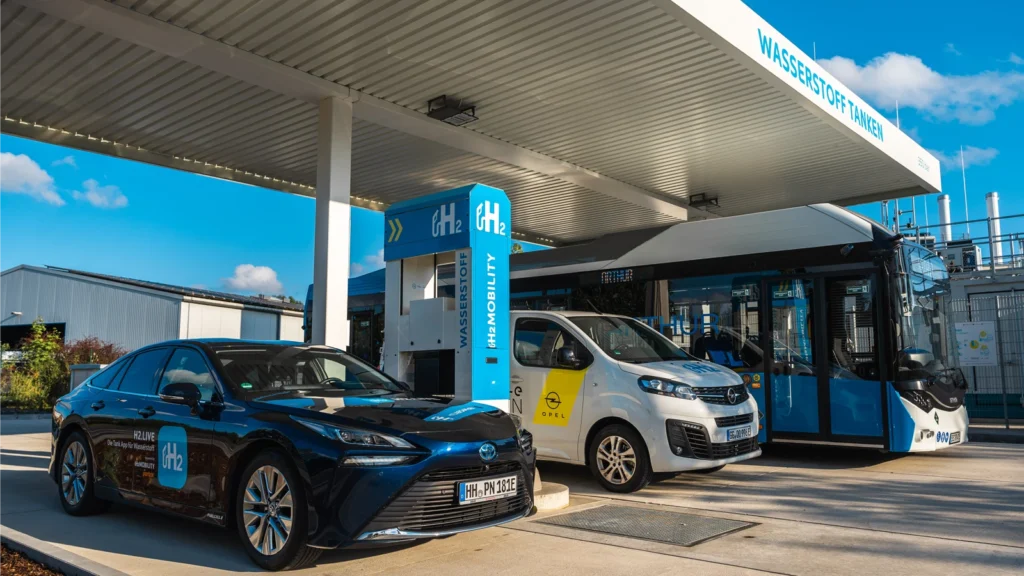
However, things are picking up. H2 MOBILITY, the largest hydrogen refuelling network in Europe, has signed a long-term supply agreement with Air Liquide for certified renewable hydrogen.
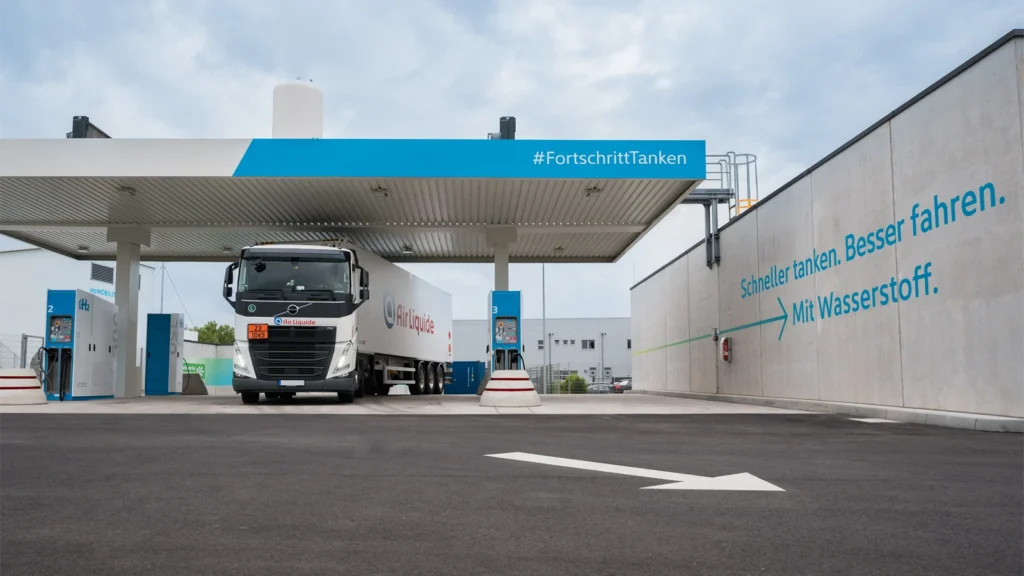
Across Germany, France, the Netherlands, and the Nordics, most new public road hydrogen projects are deploying electrolysers alongside refuelling stations – eliminating the need for grey hydrogen altogether.
At a political level, EU policy and funding now explicitly favour green hydrogen for transport.
In other words, the conditions for clean hydrogen vehicles to thrive are either already here – or being built. The vehicles are ready. It’s the infrastructure that’s still catching up.
Hydrogen for mobility can also be contracted and certified at point-of-sale – with purity and origin known up front.
And what about EVs?
Battery EVs still deliver very low emissions – 63 g/km on the EU grid average, and 52 g/km on 100% renewable electricity. But they carry a bigger carbon backpack at the start.
That’s because BEVs take more energy to build. Battery production and raw material processing result in around 40% higher manufacturing emissions than ICE vehicles.
As a result, the ICCT estimates it takes roughly 17,000 km of driving before a typical BEV breaks even on emissions with the combustion car it replaces.
From then on, it gets cleaner – assuming the grid continues to decarbonise – but that comes at a cost.
What this means for policy
The ICCT is blunt in its recommendations, saying only BEVs and FCEVs powered by renewable energy have the long-term decarbonisation potential needed to meet EU climate targets.
It says policy should:
- Continue the phase-out of combustion, hybrid and plug-in hybrid vehicle sales by 2035.
- Support only hydrogen and electricity pathways with credible, scalable routes to full decarbonisation.
- Account for full life-cycle emissions – not just what comes out of the tailpipe.
- It also means recognising the role of clean hydrogen in transport as one of the most effective long-term tools we have.
The bottom line
Fuel cell vehicles powered by renewable hydrogen now offer the lowest life-cycle carbon emissions of any powertrain.
Lower than BEVs, lower than hybrids, lower than petrol or diesel – even with biofuels mixed in.
This is with today’s data, backed by one of the most respected clean transport think tanks in the world.
Both FCEVs and BEVs will play a vital role in cleaning up road transport. But hydrogen now leads the top spot for minimal climate impact.
The only question is how quickly we can build the supply to match.