Home-made hydrogen: West Sussex farm fuels Riversimple Rasa
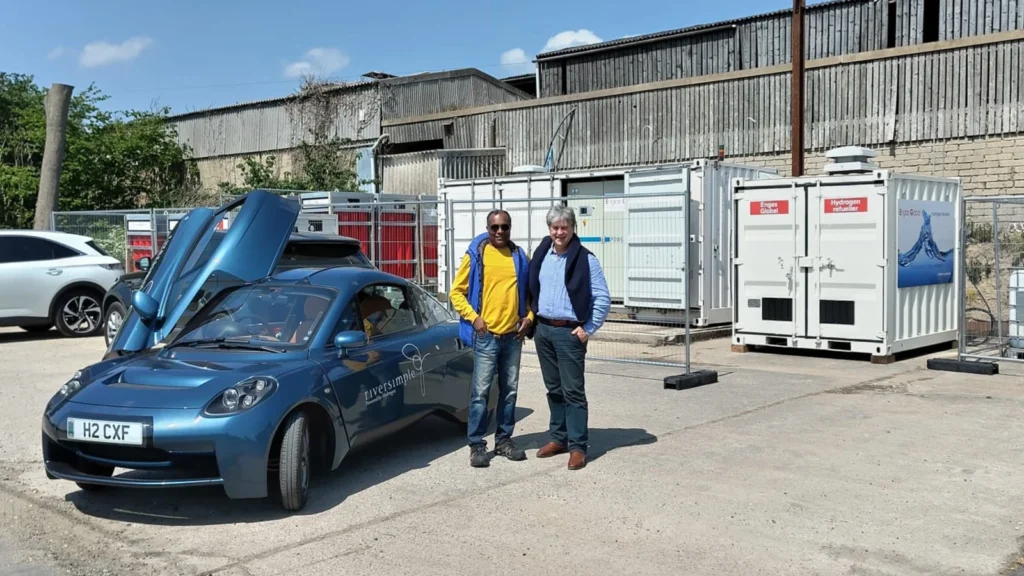
A small farm in Steyning might just hold a big clue to hydrogen’s future.
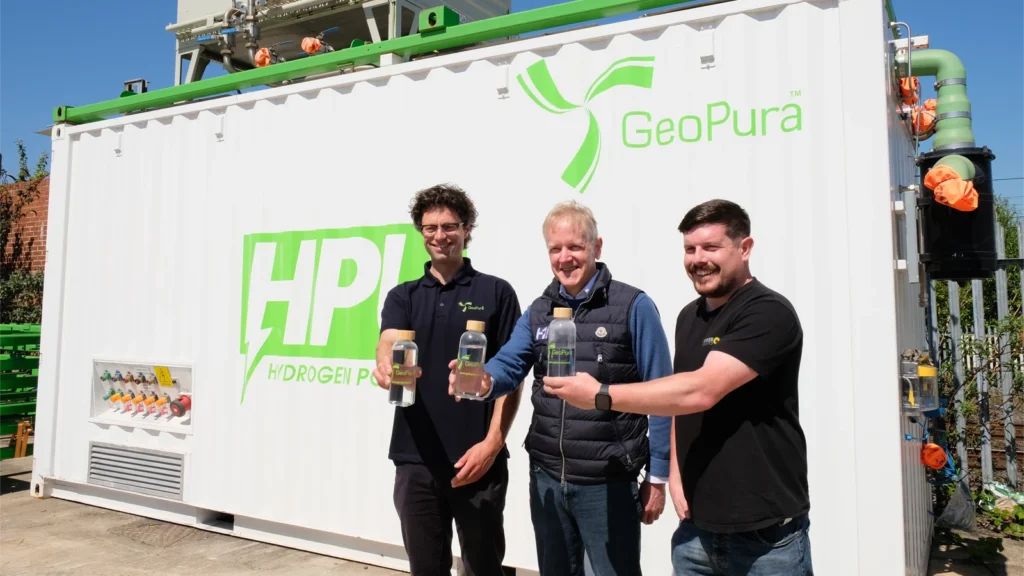
Horsham-based hydrogen systems firm Engas Global is trialling a compact ‘plug and play’ hydrogen refuelling unit on a working farm in West Sussex – and using it to keep a Riversimple Rasa topped up with clean, green fuel made on-site.
The system, deployed at Steyning Farm, uses surplus electricity from a biogas combined heat and power (CHP) plant to power a containerised electrolyser.
That in turn produces, compresses, stores and dispenses green hydrogen – with no need for external fuel deliveries or grid connection.
According to Engas Global CEO Amitava Roy, the goal is to prove how simple, decentralised hydrogen refuelling can work in practice.
“The Riversimple Rasa is helping to show just how simple and achievable hydrogen refuelling can be,” he said.
“Engas Global Steyning is demonstrating that with our complete system you can have a safe, green hydrogen refueller up and running quite quickly – with potential extra income and clean fuel on site for the farmer.”

The site currently produces 20kg of hydrogen per day – enough, the company says, to refuel up to 70 Riversimple Rasas.
Refuelling takes just a few minutes, and the cost of the hydrogen is roughly on par with petrol or diesel – though Roy expects this to fall with future rollouts.
He argues that hydrogen shouldn’t be treated only as a centralised infrastructure challenge.
“I think the idea that our hydrogen needs only to come from enormous refuelling stations in order to reach the necessary provision is wrong.
“Let’s approach hydrogen like solar PVs: small arrays are great… and this fits in very well with large solar generation sites too, as hydrogen can.”

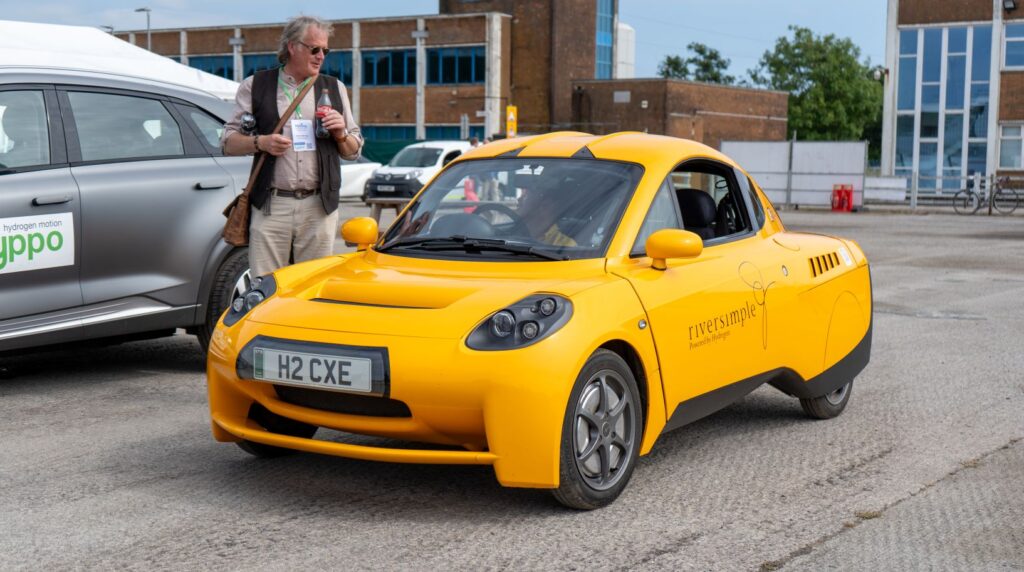


The Rasa in question – a lightweight, hydrogen-powered city car built by Welsh start-up Riversimple – is being driven regularly by Roy around Sussex until early July, as the firms gather real-world usage data.
A model for hydrogen-on-the-farm?
Both companies believe this model – small-scale, independent hydrogen production using on-site renewables – could be scaled across other rural and semi-rural settings.
According to Riversimple founder Hugo Spowers, who visited the site recently, it’s about turning vision into viability. “The Engas Global system and the farmer are proving that green hydrogen fuel and hydrogen electric mobility is not a distant goal, but a viable, practical solution today,” he said.
“Driving off in the Rasa, knowing that the hydrogen was created locally using 100% renewable energy, is immensely satisfying.
“These smaller, ‘plug and play’ hydrogen systems are helping build [the] network” our industry needs, he added.”
While the Steyning setup is one of Engas Global’s smaller projects – they’ve also worked on maritime hydrogen applications, including at the Port of Blyth – the firm sees strong potential in agricultural and institutional settings.
Council fleets, ports, private schools and even driver-owned hydrogen vehicles could all be served by similar setups, Roy said.
He’s also opening the Steyning site to universities for hands-on hydrogen training.
If hydrogen can succeed on a working farm with no grid link, it opens the gate to a far broader energy transition. One powered from the ground up.