Toyota’s Hydrogen Tacoma H2-Overlander concept can power an EV, purify water, and still go anywhere
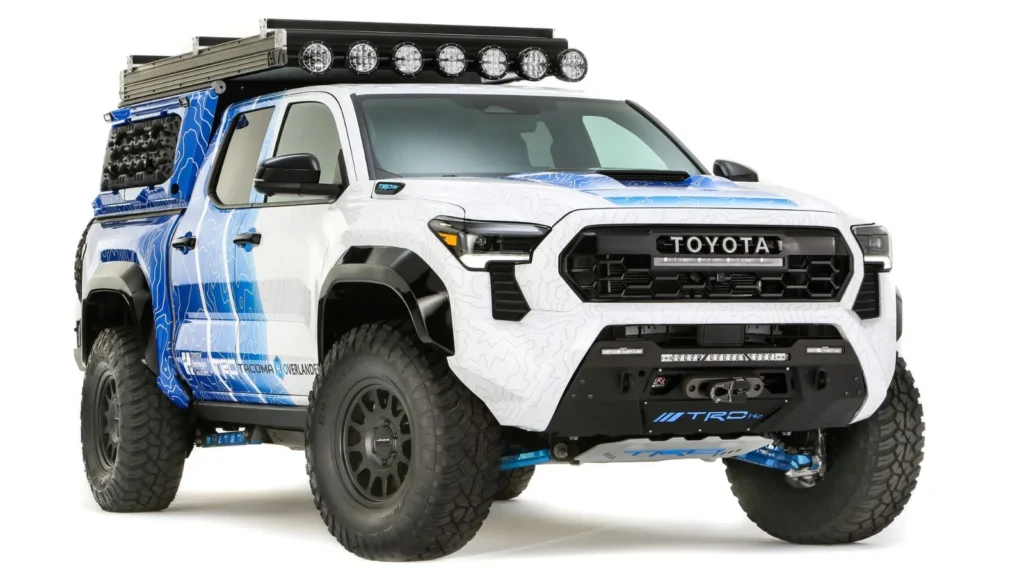
The hydrogen overlanding scene just got a serious shot in the arm. Toyota has unveiled the Tacoma H2-Overlander Concept. A wild, hydrogen-powered off-roader that can climb mountains, charge your mate’s EV, and even turn exhaust water into something useful for camping.
The concept, revealed at this year’s SEMA Show in Las Vegas, reimagines Toyota’s best-selling Tacoma pick-up as a fuel-cell-driven expedition rig. It’s rugged, it’s technical, and it’s an unapologetic showcase of what hydrogen can do beyond city fleets and test tracks.
Hydrogen heart, adventure soul
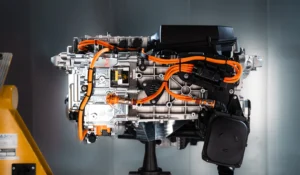
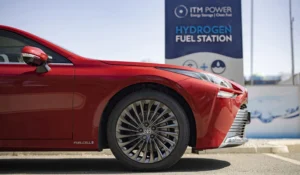
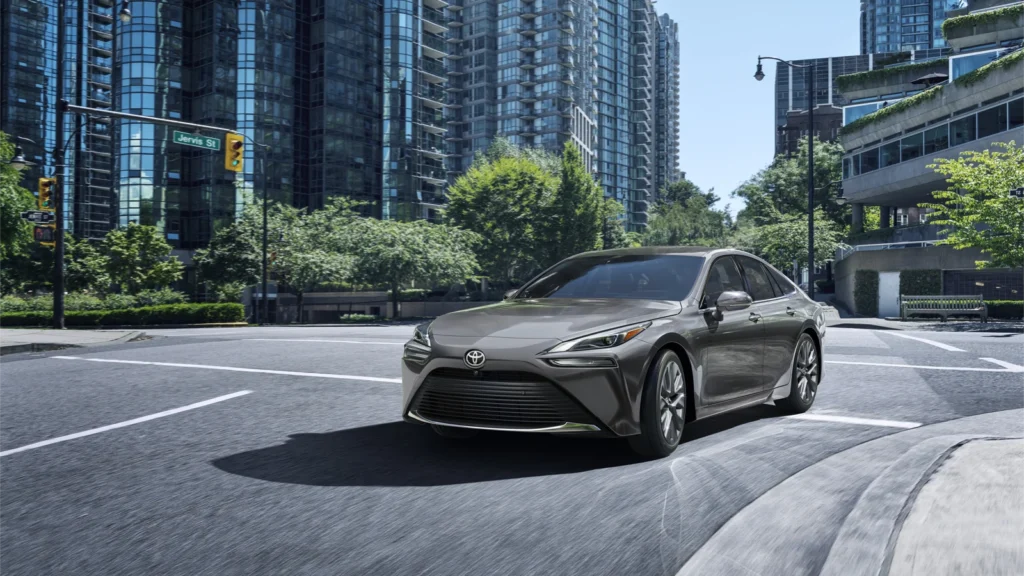
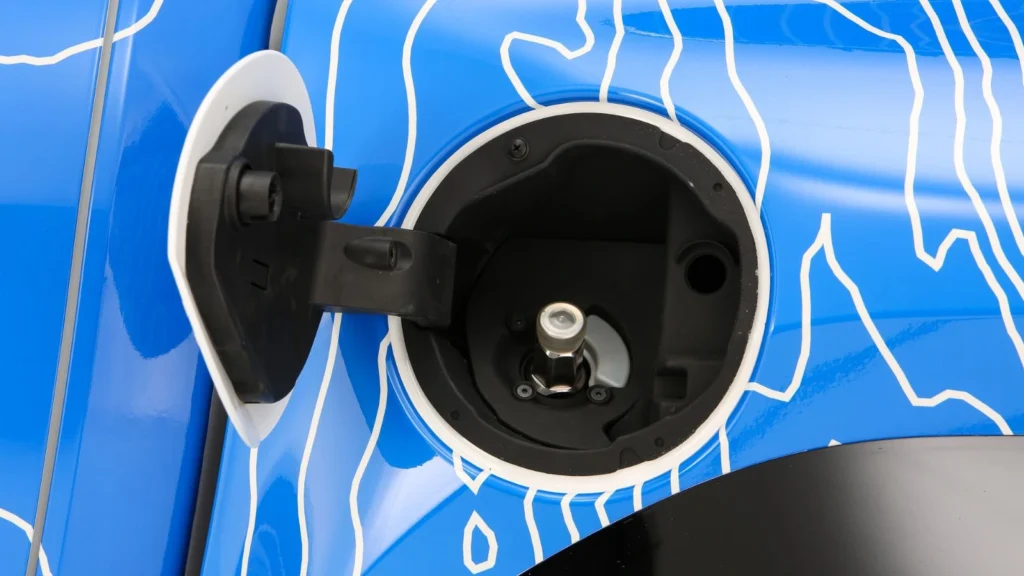
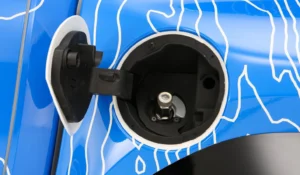
At its core, the Tacoma H2-Overlander packs Toyota’s second-generation Mirai fuel-cell stack — the same technology powering its hydrogen saloon, but here tuned for heavy-duty performance.
The system feeds a pair of electric motors (225 kW front, 188 kW rear) for a combined output of 547 hp. It draws power from three on-board hydrogen tanks totalling 6 kg and a 24.9 kWh lithium-ion battery.
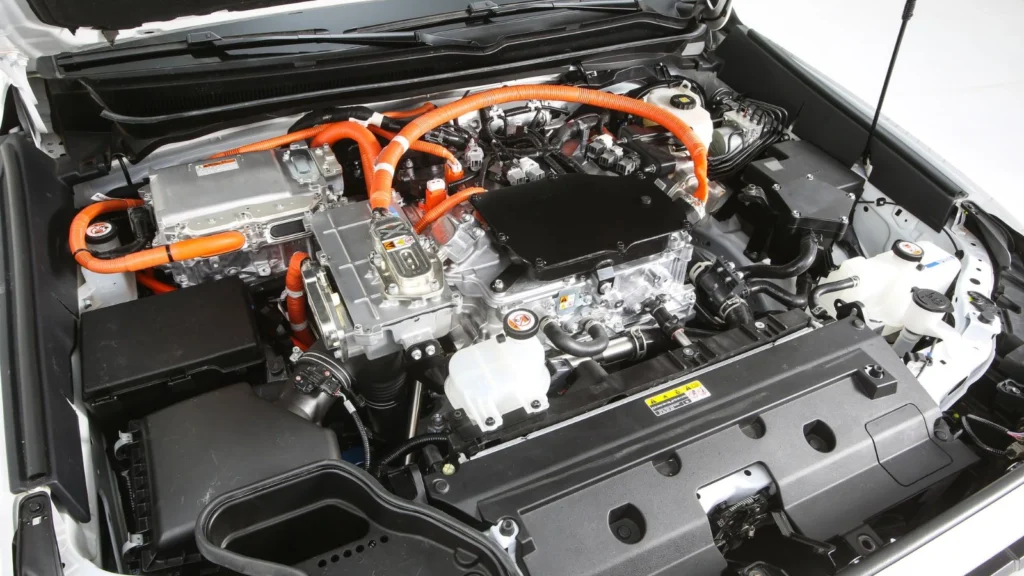
It’s a clever hybrid of hydrogen and electric tech. The fuel-cell generates electricity on the fly, while the battery stores extra charge for peak loads.
The result? Instant torque, silent running, and zero tailpipe emissions. Instead of smoke and fumes, the only thing this monster releases is water vapour, which Toyota has repurposed through a patent-pending filtration system for off-grid washing and cleaning.
Built to conquer the wild
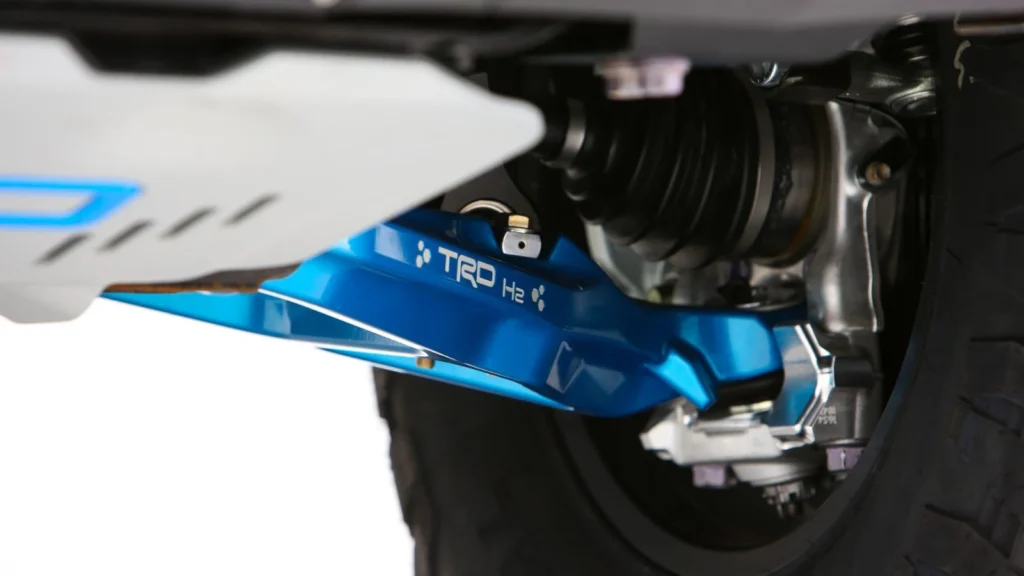
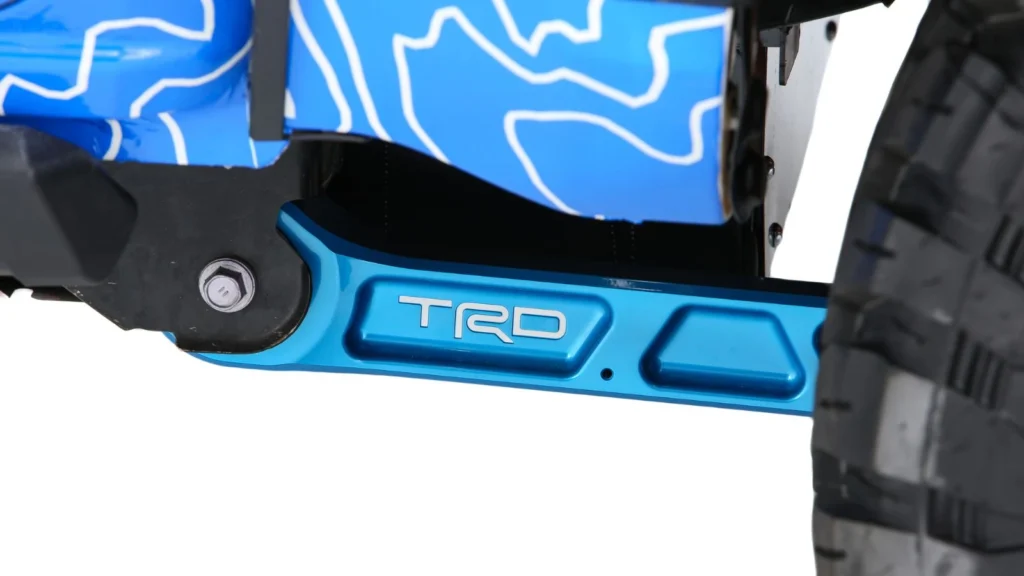
Toyota Racing Development (TRD) built the H2-Overlander in California and North Carolina, giving it serious off-road credentials. Long-travel suspension, Fox 2.5 Performance Elite shocks, 35-inch all-terrain tyres and heavy-duty Tundra brakes mean this isn’t a showpiece. It’s a machine that could take on Baja.
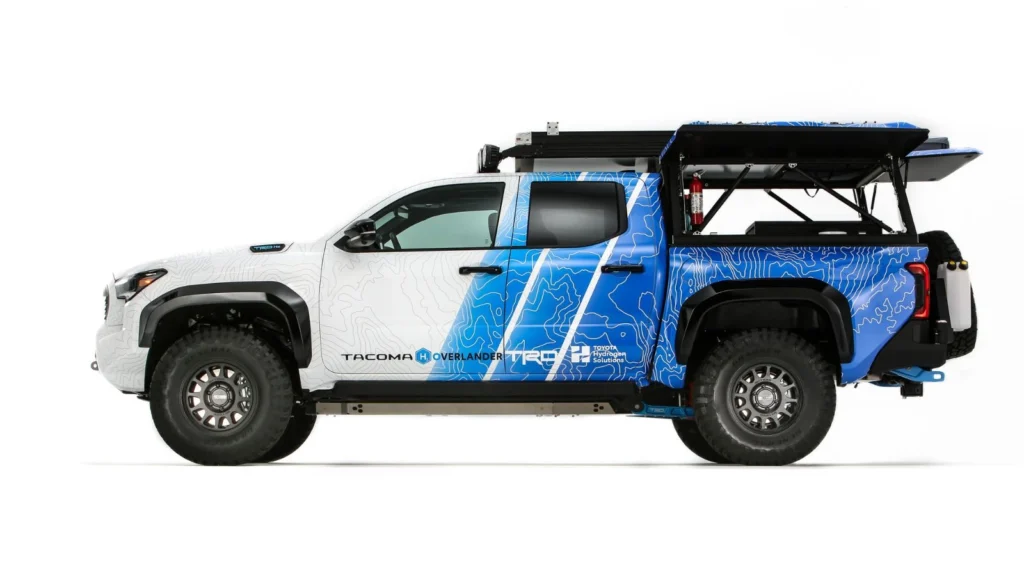
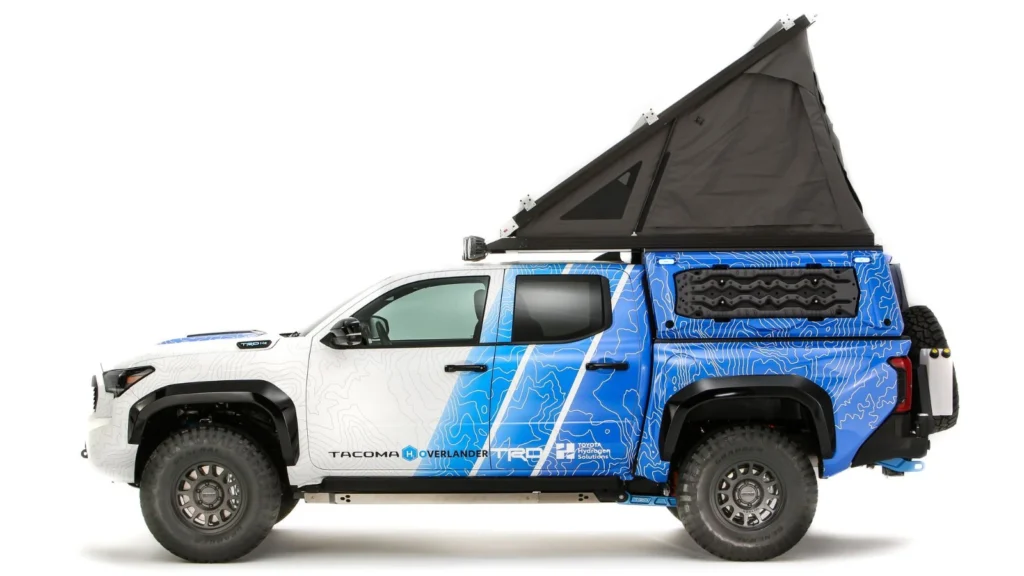
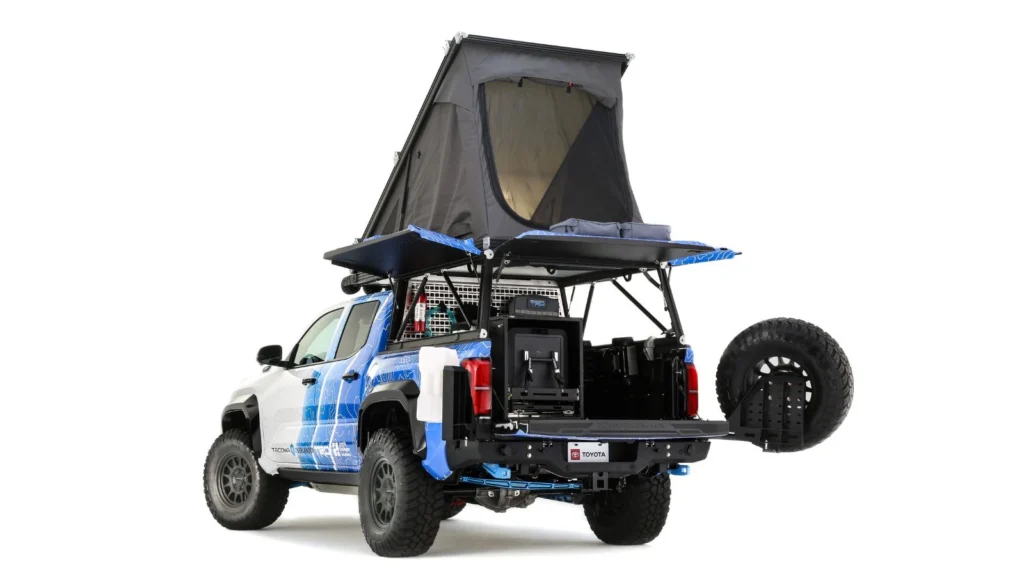
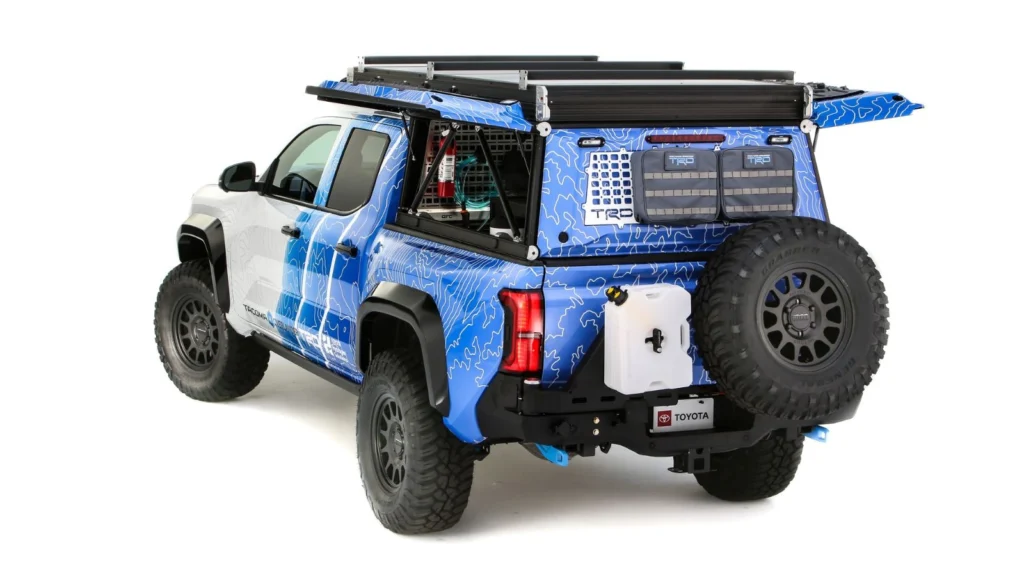
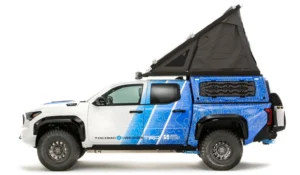
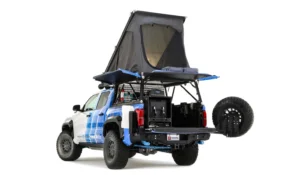
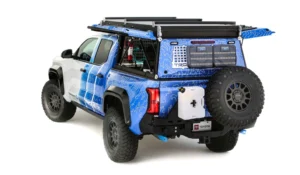
It’s all about capability. The high-mounted snorkel-style intake and reinforced underbody hint at extreme weather resilience, while the modular design keeps weight low and strength high. It’s Toyota showing that hydrogen vehicles can be tough, not just techy.
Your campsite’s new power station
The truck’s 15 kW power take-off (PTO) can juice up two EVs simultaneously via dual NEMA 14-50 outlets. Ideal for when your friend’s electric car has run flat halfway up a trail. It can also power camping kit, tools, or even a mobile basecamp.

In a nod to practicality, Toyota’s engineers fitted the concept with storage for adventure gear, recovery equipment and an integrated rooftop tent setup. Every watt generated by the fuel cell can be used for something — lighting, refrigeration, even a brew kettle if you’re far from civilisation.
A symbol of Toyota’s hydrogen ambitions
While still a concept, the H2-Overlander is part of Toyota’s multi-pathway strategy towards carbon neutrality. It’s proof that hydrogen can coexist with battery-electric tech — each playing to their strengths. For Toyota, hydrogen is ideal for long-range, heavy-duty or remote-area mobility where batteries alone might struggle.
Speaking at SEMA, Toyota engineers said the concept “embodies the spirit of adventure while advancing zero-emission technology.” It’s also a very public reminder that Toyota’s commitment to hydrogen goes well beyond passenger cars, and into commercial and off-road sectors.
Hydrogen, but make it hardcore
Hydrogen vehicles have often been criticised as city slickers — smooth, clean, but limited by refuelling networks. The Tacoma H2-Overlander throws sand in that idea’s face. It’s rugged, functional, and genuinely exciting.
If hydrogen infrastructure keeps expanding, the idea of filling up a zero-emission off-roader in five minutes and driving 300 miles into the wilderness doesn’t sound far-fetched at all. It sounds like the future of adventure.