Road Haulage and Construction Plant-hire Associations warn UK risks losing out on hydrogen heavy transport
The Hydrogen Energy Association (HEA), backed by the Road Haulage Association (RHA) and the Construction Plant-hire Association (CPA), has urged the government to move quickly to secure hydrogen’s role in decarbonising heavy-duty land transport.
In a joint letter to ministers ahead of the UK Hydrogen Strategy refresh this autumn, the three groups warned that without decisive action the country risks falling behind Europe and missing out on both emissions cuts and industrial growth.
More than batteries required
The letter follows a cross-sector workshop organised by the HEA, bringing together operators, technology firms, financiers and industry associations. Attendees concluded that battery-electric vehicles alone are not enough to meet the needs of high-utilisation fleets.
Sectors identified as especially difficult to electrify include HGVs, long-distance coaches, utility vans, construction plant, emergency service fleets, and parts of the rail sector.

These applications require rapid refuelling, high uptime, cold-weather reliability and the ability to operate off-grid – areas where hydrogen can be more practical than batteries.
The organisations stressed that hydrogen could even offer cost advantages in specific sectors, such as utilities and construction, by avoiding costly grid upgrades and reducing wasted temporary infrastructure.
Infrastructure gap
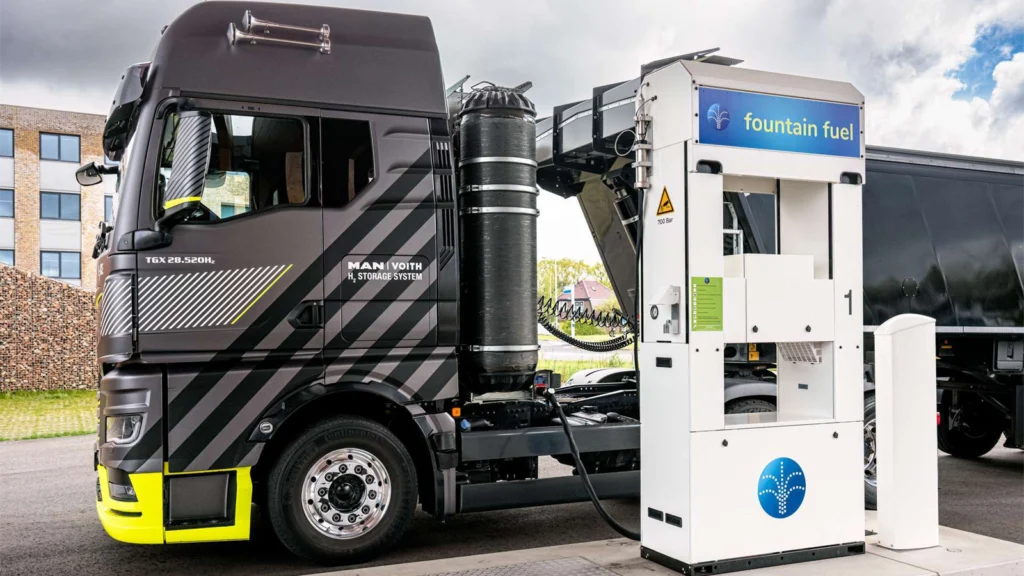
The UK currently has just 4-6 hydrogen refuelling stations in regular operation – far below the c.100 available across Europe. The letter calls for at least 12-13 strategically placed stations along freight corridors, as well as support for back-to-base hubs linked to hydrogen production projects.
Compared with battery-electric charging, hydrogen infrastructure could be deployed faster, the letter argues, given that grid connections for new charging sites can take up to a decade.
What the industry wants
The HEA, RHA and CPA set out five priority measures:
- Recognise hydrogen’s economic and strategic value across energy security, jobs and decarbonisation, with clear cross-departmental messaging.
- Publish a national roadmap for hydrogen fuel and refuelling infrastructure to give investors confidence.
- Establish demand targets to stimulate supply chains and secure supply.
- Bridge the early cost gap between hydrogen and diesel.
- Ensure all hydrogen solutions – including hydrogen combustion engines – are supported under the ZEV mandate and wider net zero policies.
The risk, they warn, is that a battery-only approach could overload the grid, increase reliance on imported rare earth materials, reduce fleet productivity and leave the UK trailing international markets that are already scaling hydrogen deployment.
Industry voices
Dr Emma Guthrie, CEO of the HEA, said: “Hydrogen is not just an energy solution – it is an economic opportunity.
“With the right policy support, the UK can decarbonise heavy transport without compromising productivity, while also creating jobs, strengthening energy security, and positioning itself as a global leader in hydrogen technology.”

Richard Smith, Managing Director of the RHA, added: “HGV and coach operators face a challenging pathway to decarbonise their fleets.
“It is essential that all technology options remain on the table, including hydrogen and the use of low carbon fuels. This is particularly critical for hard-to-decarbonise use cases, such as transporting very heavy goods.”
Luis Bassett, Decarbonisation and Sustainability Manager at the CPA, said hydrogen could prove especially valuable in construction: “There are significant challenges to all alternative fuels, but hydrogen shows significant potential, particularly in off-grid locations and residual value on the international market.”
Next steps
The HEA and its partners have offered to convene a cross-sector taskforce with the Department for Energy Security and Net Zero (DESNZ) and the Department for Transport (DfT) to present case studies, international examples and investment requirements.
A full report of findings will be published later this year.