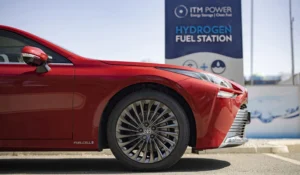
Europe needs 2,000 hydrogen fuel stations by 2030, says Daimler Truck CEO

Daimler Truck boss Karin Rådström says Europe must dramatically scale up hydrogen refuelling infrastructure if it wants a realistic shot at decarbonising heavy road transport.
In a LinkedIn post following a roundtable with the EU in Brussels, Rådström said it was the first time all major European truck makers, grid operators and EU policymakers had sat down together to focus solely on zero-emission freight.
The discussion was followed by a Strategic Automotive Dialogue with European Commission President Ursula von der Leyen.
2,000 hydrogen stations and 35,000 chargers needed
Rådström said the industry is “all-in on zero-emission transport” but warned that infrastructure and cost parity remain the biggest obstacles.
She called for at least 2,000 hydrogen refuelling stations for trucks to be built by 2030, alongside 35,000 public truck charging points – around 500 new charging locations per month.
FIND YOUR NEAREST HYDROGEN REFUELLING STATION:
EUROPE
US & CANADA
Simpler rules, faster targets
The Daimler Truck CEO also urged Brussels to simplify regulations: “let’s skip all ‘stupid’ rules that do not improve road safety or help the transition to zero emission,” she said.
The European Commission has already committed to a follow-up roundtable in six weeks, with Rådström pushing for an early revision of CO₂ fleet targets to accelerate the transition.
Daimler Truck is developing both battery-electric and fuel-cell electric trucks, with its Mercedes-Benz GenH2 long-haul FCEV due to enter series production sometime later this decade.

AFIR makes it law
The 2,000-station figure is roughly in line with the EU’s Alternative Fuels Infrastructure Regulation (AFIR), which makes hydrogen station coverage a legal requirement on the European road network by 2030.
AFIR mandates hydrogen stations with a capacity of at least one tonne per day every 200 km along major transport corridors, plus refuelling in every ‘urban node’ – essentially every large town or city on the network.
One tonne is enough capacity to serve somewhere around 20-25 heavy trucks per station, per day.
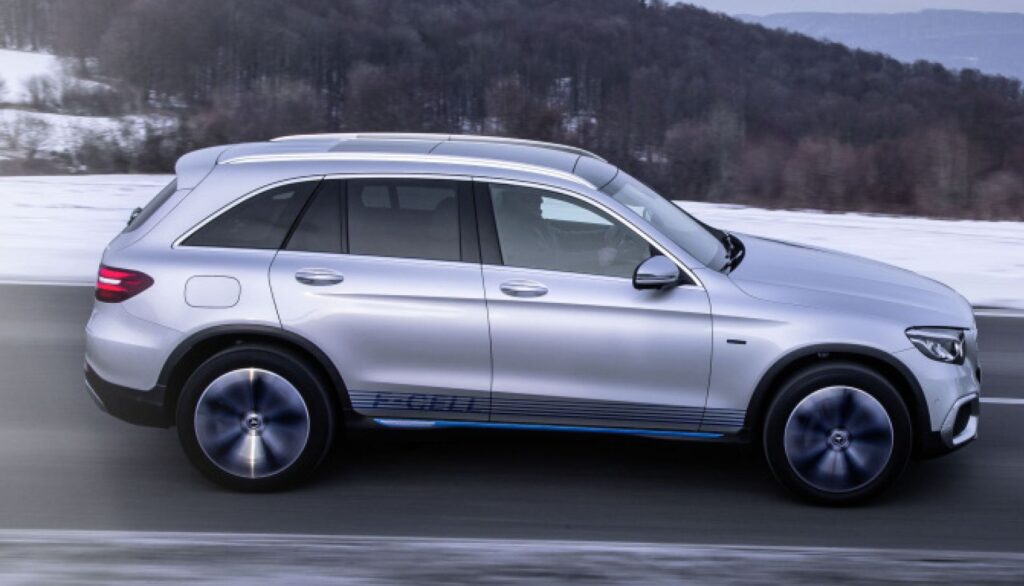
A handful of countries – notably Germany, France and the Netherlands – have begun rolling out heavy-duty capable hydrogen stations, with some reports saying there are nearly 300 in total across the bloc, but even still, coverage remains patchy.
Scaling from today’s relatively sparse network to a continent-wide backbone able to serve both trucks and passenger FCEVs will be a formidable challenge.
For hauliers, though, the talks in Brussels offer some light assurance that fuelling will be available on Europe’s main routes by the end of the decade.
The open question is whether infrastructure deployment and the actual supply of hydrogen can match the ramp-up in demand from manufacturing trucks like Daimler’s GenH2, Volvo’s FH Fuel Cell, the Hyundai Xcient FCEV and more.