Exclusive: Toyota Crown hydrogen car brings power take-off generator for UK test
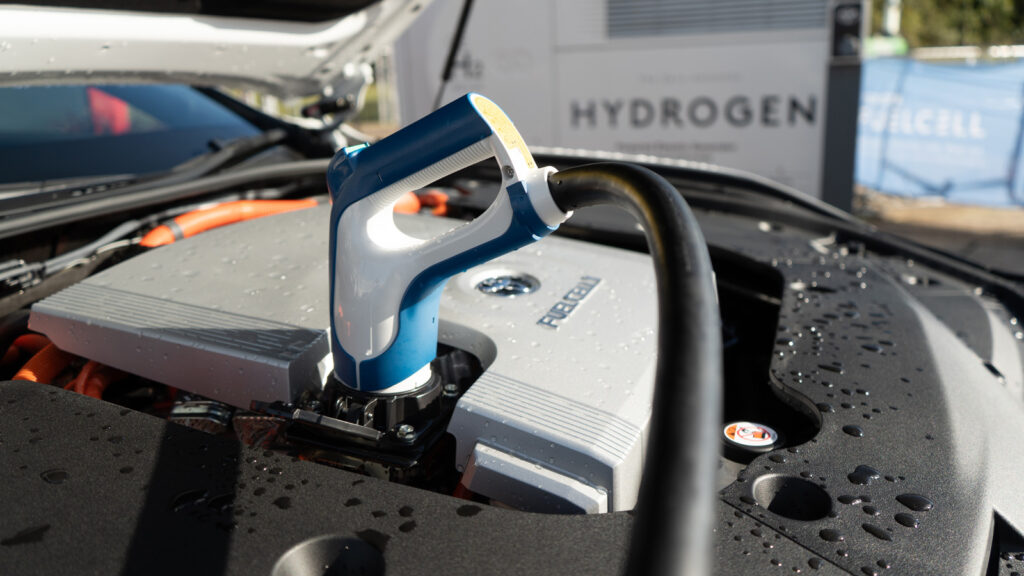
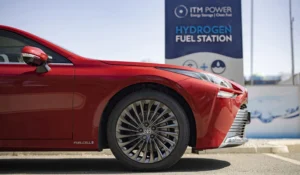
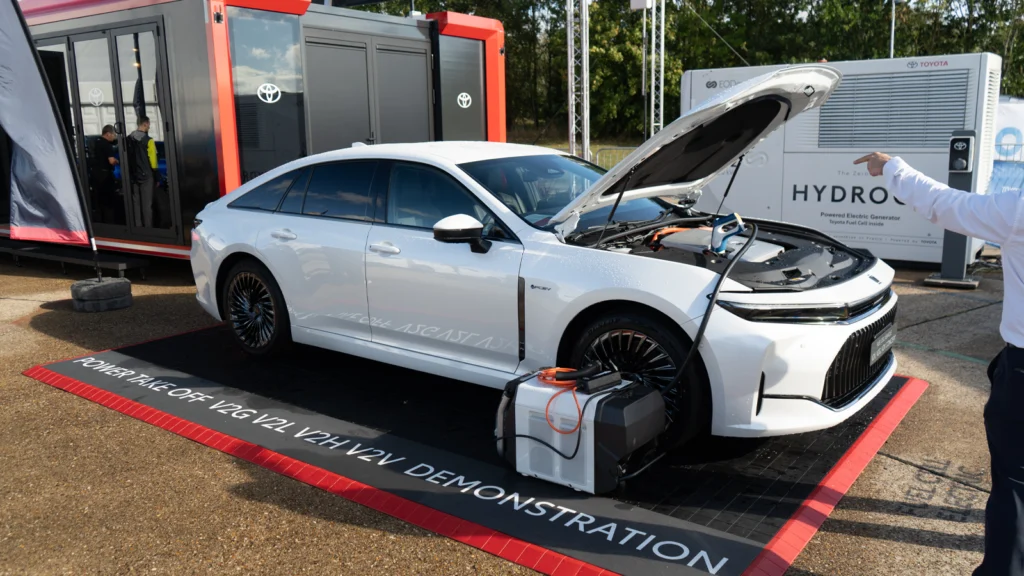
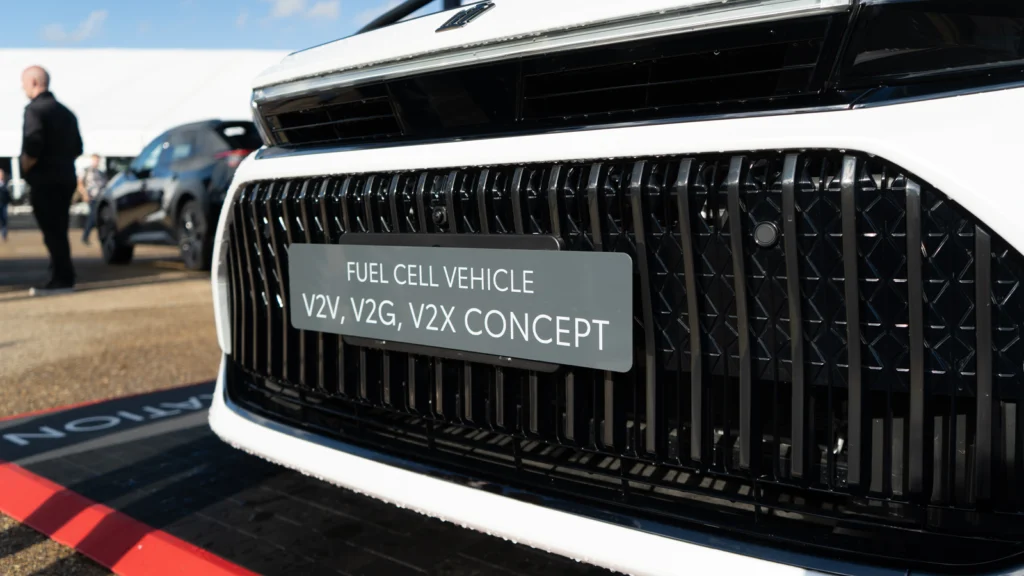
Toyota’s stand at Cenex Expo this year included a car you can’t buy in Britain. A Toyota Crown. Toyota’s premium saloon has occupied the marque’s top rung since the 1950s, sitting roughly where Lexus does elsewhere in the world, shown here at Millbrook Proving Ground in fuel-cell guise with its Mirai-derived drivetrain hidden beneath the metal.
And at first glance, it looked like little more than a slightly left-field display piece, a nod to Toyota’s broad hydrogen portfolio and Japanese heritage perhaps, but a closer look under the bonnet revealed something altogether more interesting.
This particular Crown came fitted with a factory power take-off (PTO) system, giving it the ability to export electricity directly out of its fuel cell stack – to power… anything you want.
Jon Hunt, Toyota GB’s top hydrogen man, was there to show Driving Hydrogen around the car. “This is the fuel cell version of the Crown sold in Japan,” he explained. “It uses a very similar powertrain set up to the Mirai and is commonly available in the Far East. But what we have had in Japan for some time now is a power take-off, emergency power take-off.”
Power take-off
The background is straightforward enough. For years Toyota has offered PTO capability on hybrids in Japan, allowing owners to idle the car and use its onboard generator to provide electricity in the event of an outage. It’s slightly crude but effective in a country plagued by weather related grid outages.
As Hunt put it: “With a hybrid vehicle you’ve got a generator and if you run the engine and the vehicle is stationary, you can use that generator to give you electric power, so power take-off. And for a typical 50 litre tank… you can run the vehicle for a couple of days, with the power for a typical home use.”
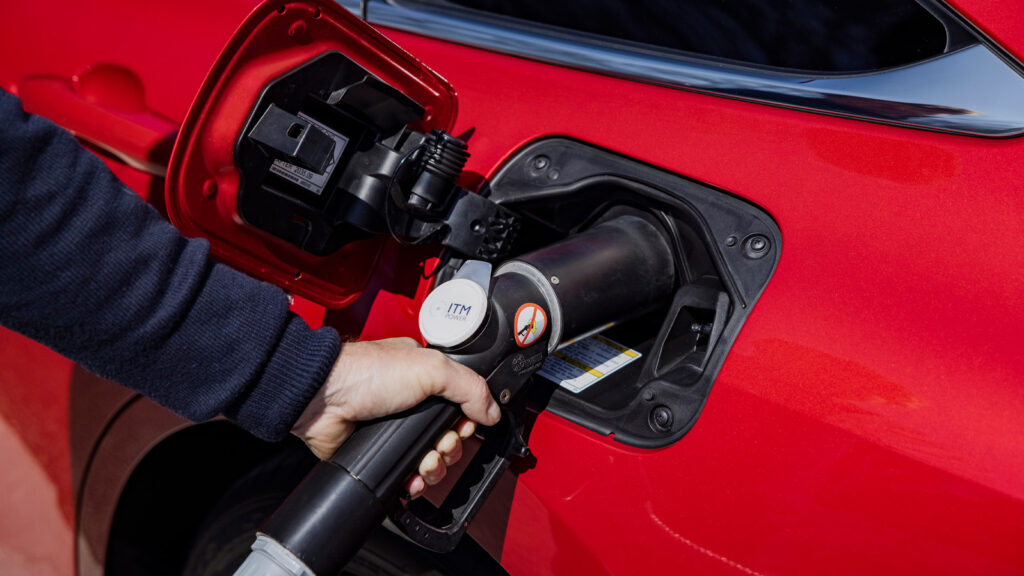
The obvious drawbacks with a hybrid car are noise, fumes and the need to operate the system outdoors, but it has served as a useful emergency measure in a country where power supply is not always reliable.
Indeed Japan is often hit by inclement weather and natural disasters, and more than that, the grid in Japan often-enough runs ‘load-shedding’ type exercises, where everyone gets a text message instructing them to turn the electric off. BEV uptake in Japan has been particularly poor, perhaps this is a contributing factor.
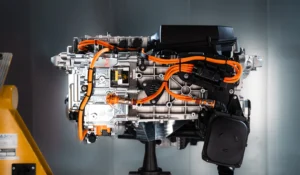
But, with a fuel cell, the same principle works, but far more cleanly. The Crown FCEV takes in hydrogen, like any hydrogen car, produces electricity in the stack, but can then export it out of the car without any of the compromises that come with a combustion engine.
“With the fuel cell vehicle, you’ve got a lot more advantages and that allows you to run these systems silently with water as the only emission from the system. But you can do it indoors and you have a lot more power. So rather than a couple of days, you can run a typical home for more than a week with a tank full of fuel”, says Jon.
The Crown’s hydrogen system
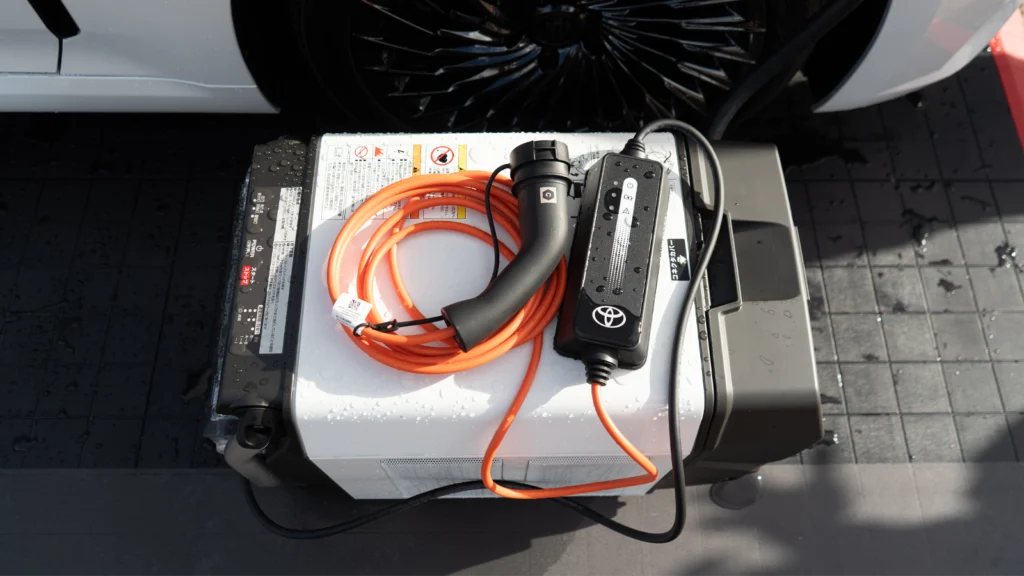
The system on this car uses a CHAdeMO connector (a DC fast-charging standard for electric vehicles primarily used in Japan) and a small, lightweight inverter box, no bigger than cabin luggage, which plugs directly into the fuel cell stack.
“This is a Japanese domestic system which will provide you with 9 kilowatts of power at any time… you can connect it directly to a vehicle charging so you can have vehicle to vehicle charging. Actually as good, in fact better, than home charging. But also you can put it into the grid, you can put it into any other appliance, and you can run it silently as well,” Hunt said.
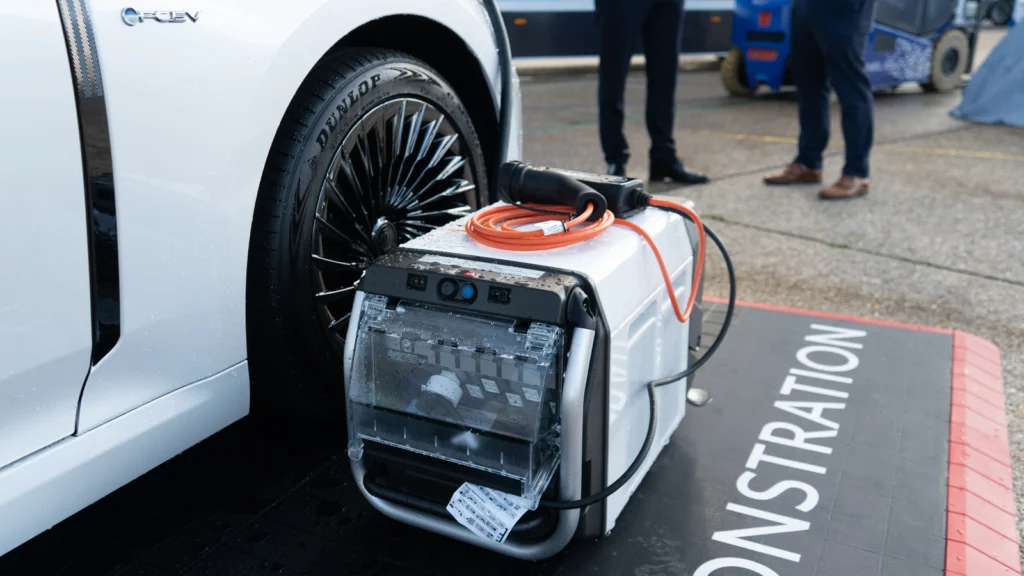
In total, Toyota reckons the Crown’s tanks hold around 150kWh of usable energy, which in practice means roughly ten hours of flat-out 15kW output, or close to a whole week of household use at average consumption levels.
This is a car that looks very nice, a premium saloon, but is capable of acting as a generator, a home backup supply or even a mobile charging point for an electric car in times of emergency, or on the job site… if your builder’s van of choice is an executive saloon.
More than just backup power
Toyota has sold this capability in Japan for some time, but what makes its appearance at Cenex rather interesting is the audience. Cenex is not a consumer motor show, it’s a trade event attended by fleet operators, councils, infrastructure firms and contractors.
These are people who need things as tools to work. Toyota brought the Crown FCEV here as a trial balloon – to test the waters to see how British users might react to a hydrogen vehicle that doubles as a power supply.
“Where we see a really strong potential with this is in construction sites and the emergency sector where you’ve got to dispatch to areas where there may be no power,” Hunt told us.
“That might be in a natural disaster situation but is also very practical in construction where actually you’re digging the power cables in before the power is actually available. So this allows a lot of flexibility.”
The inverter unit itself is deliberately compact. “It’s a portable one as well. So we’re trialling it now to see whether there’s a market and then we’ll see how we might be able to address it for future product,” Hunt added.
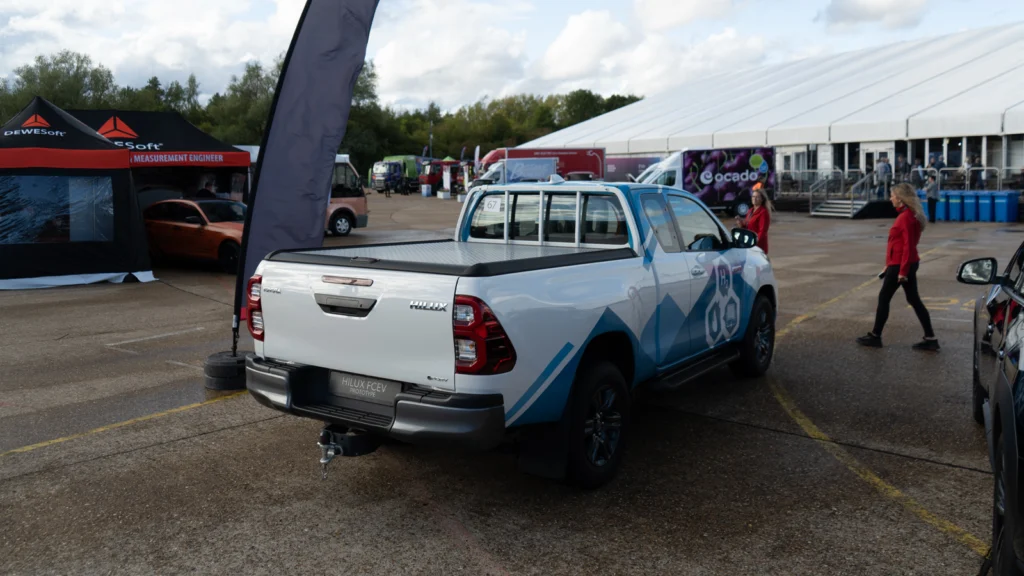
The commercial applications are easy to imagine. A hydrogen Hilux – like the one also shown at Cenex – could be dispatched to a construction site to run lighting, tools and welfare cabins before the mains is connected, or to an emergency response zone to power equipment without the noise and fumes of a diesel generator.
And because the system provides a steady 9kW through a simple plug-and-play inverter, it doesn’t require any elaborate infrastructure beyond the hydrogen already onboard.
There are caveats, of course. The CHAdeMO interface makes sense in Japan, where it is widely adopted, but is less relevant to the UK and Europe, and Toyota has yet to confirm how it might adapt the system for other markets. But the Crown at Cenex was a purely display model, so we’ll cut them some slack for that.
For now, the company is gauging feedback and exploring how it might fit into future product planning.
A generator on four wheels
Still, it’s the first time we’ve seen a hydrogen car with this functionality available straight from the factory. And it highlights something important about fuel cell vehicles that battery EVs can’t quite match – they are power plants as well as modes of transport.
Before you start shouting, an EV with bidirectional charging can feed power back to a home or the grid, but once its battery is flat it’s finished. A fuel cell car can keep generating electricity for as long as the hydrogen tank lasts. That is the wonderful thing about molecules – they can be transported around by independent means to where you need them. It’s a wonder hydrocarbons have been so popular.
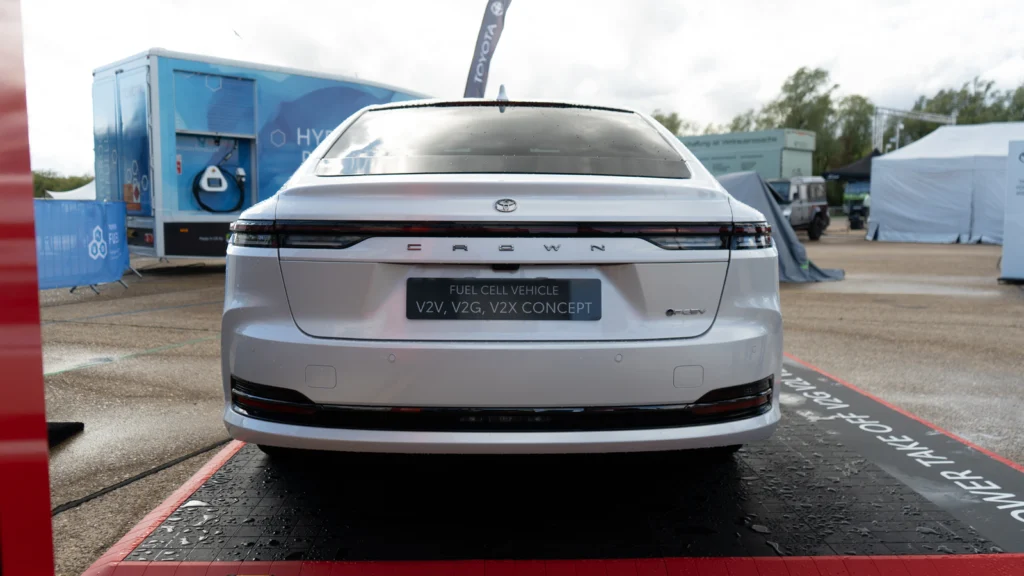
That’s why Toyota chose to put a Crown FCEV with PTO on the stand at Cenex to test the appetite among the people who might actually use a tool like this.
“We’re trialling it now to see whether there’s a market and then we’ll see how we might be able to address it for future product,” Hunt said.
What from the outside looks like a very agreeable executive saloon, the company was showing off a 9kW mobile power station on four wheels – showing that hydrogen vehicles could have a strong role to play in energy resilience and commercial power supply.