Zhengzhou adds 200 hydrogen trucks, building China’s densest hydrogen freight hub
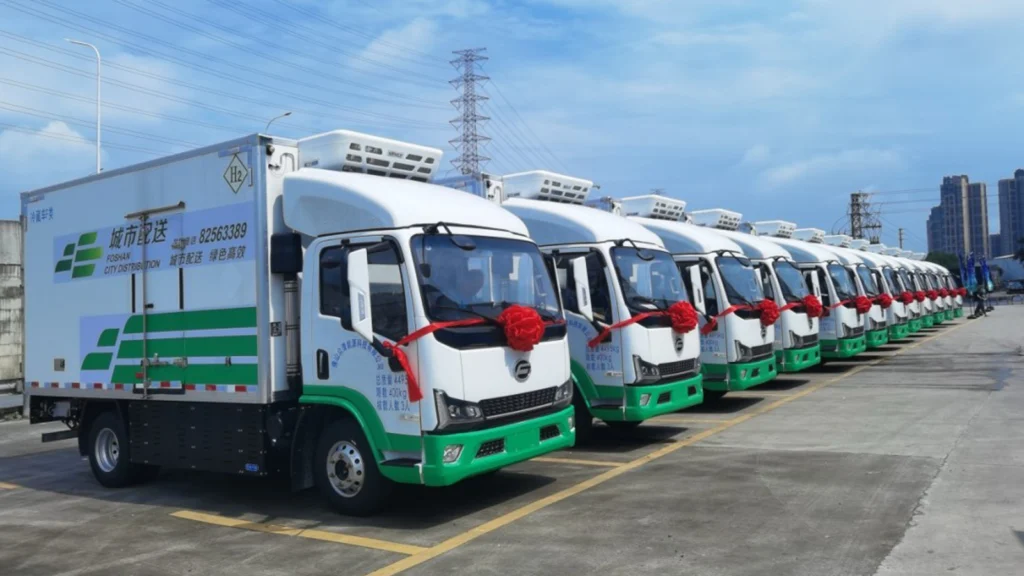
Zhengzhou, the capital of Henan province and one of China’s busiest logistics cities, has just added 200 hydrogen-powered delivery trucks to its fleet – the latest sign that hydrogen commercial transport is moving from cautious trial runs to full-scale operation.
The handover took place on 21 August in the city’s Aviation Port Area, a sprawling free trade and cargo hub on the banks of the Yellow River.
The project brings together three key players in China’s hydrogen rollout – SPIC Hydrogen Technology, the fuel cell arm of state-owned power giant State Power Investment Corporation, Yutong Commercial Vehicles, the Zhengzhou-based bus and truck manufacturer, and Hydrogen Power Technology, a regional operator overseeing refuelling and fleet services.
The same trio already delivered 360 hydrogen refrigerated trucks in 2024, and they now claim Zhengzhou has one of the highest hydrogen refuelling station densities in central China, with more than 1,500 hydrogen vehicles already on the road.
Under the cab – SPIC’s “Hydrogen Ascend” stack
The new logistics trucks use SPIC’s in-house “Hydrogen Ascend” fuel cell system. The company says the stack consumes around 15% less hydrogen than the industry average, runs happily between -30°C and 50°C, and is designed for 100,000 hours of operation – which is roughly 11 years of eight-hour shifts.
That stack sits in a lightweight Yutong chassis designed to eke out range and payload, with each truck promising over 400 km between fills, with a refuel time under 10 minutes – a time comparable to filling a diesel van.
Yutong has been building a portfolio of hydrogen buses, light trucks, and heavy-duty rigs, with these vehicles being engineered on the same ‘L4-capable intelligent architecture’, meaning the hardware is already designed to support autonomous driving when regulations allow.
Fleet management and infrastructure growth
Henan-based Hydrogen Power Technology is running the operational side, providing predictive maintenance and uptime tracking via a digital management platform.
The company claims the 360 refrigerated trucks already on Zhengzhou’s roads have saved over 1,000 tonnes of CO₂ emissions, offering proof that hydrogen logistics is commercially viable when backed by the right infrastructure.
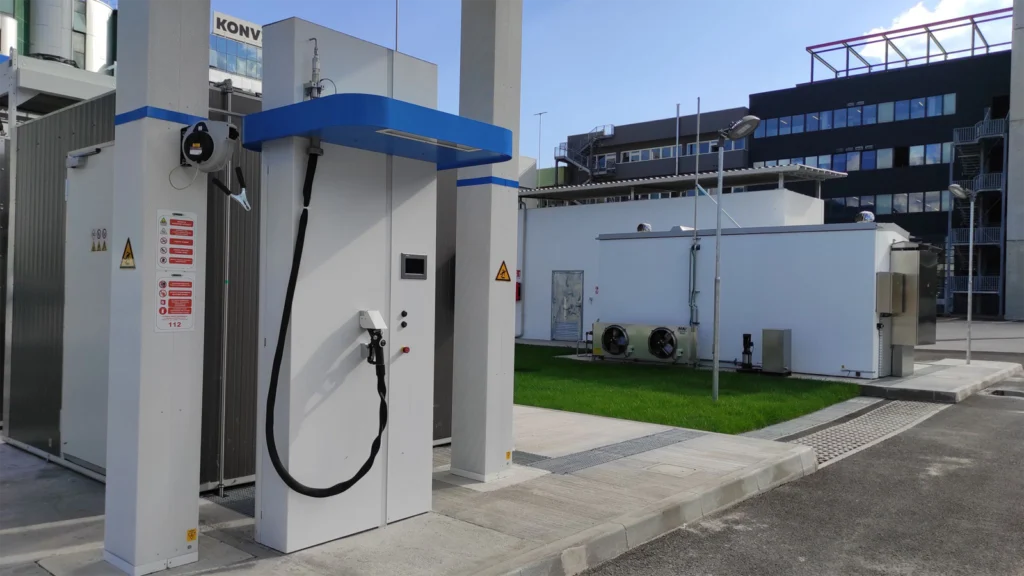
Infrastructure is where Zhengzhou has been making some of the most significant strides, with the Aviation Port Area’s hydrogen plan combining solar-powered electrolysis, storage facilities, and refuelling stations in a tightly integrated hub – effectively a fully hydrogen supply chain in miniature.
Five more distributed refuelling stations are due online this year to support the trucks, each expected to deliver the capacity needed for 200 km of daily operation per vehicle.
Cost targets and a national test case
SPIC says it’s working to bring fuel cell costs down to ¥2,000 per kilowatt by 2026 (around £215), a level some analysts see as pivotal for hydrogen trucks to compete with diesel in China’s freight market.
In parallel, the partners are piloting hydrogen-battery hybrid trucks with battery swapping to further lower running costs.
By 2026, another 500 hydrogen-powered sanitation vehicles are set to join the fleet. If all goes as planned, Zhengzhou will become a rare example of a city where hydrogen transport is not just a headline-grabbing experiment but a fully functioning system – one that could be replicated across China’s industrial heartlands.
From demonstration cities to the real world
China’s hydrogen strategy has so far relied on “demonstration city” pilot zones – a government-backed programme where cities build their own mini hydrogen ecosystems, from electrolysers to end-use vehicles.
Zhengzhou’s effort is one of the most advanced, partly thanks to its strategic location at the intersection of rail, air, and road freight corridors.
Unlike passenger cars, which need a nationally dense network of stations, logistics fleets can make hydrogen work with relatively fewer hubs, provided those hubs are well supplied.
That’s why projects like this, even if they look localised, matter for hydrogen’s global trajectory – they are testbeds for scaling hydrogen freight at pace.