Exclusive: So… how do you actually buy a hydrogen car?
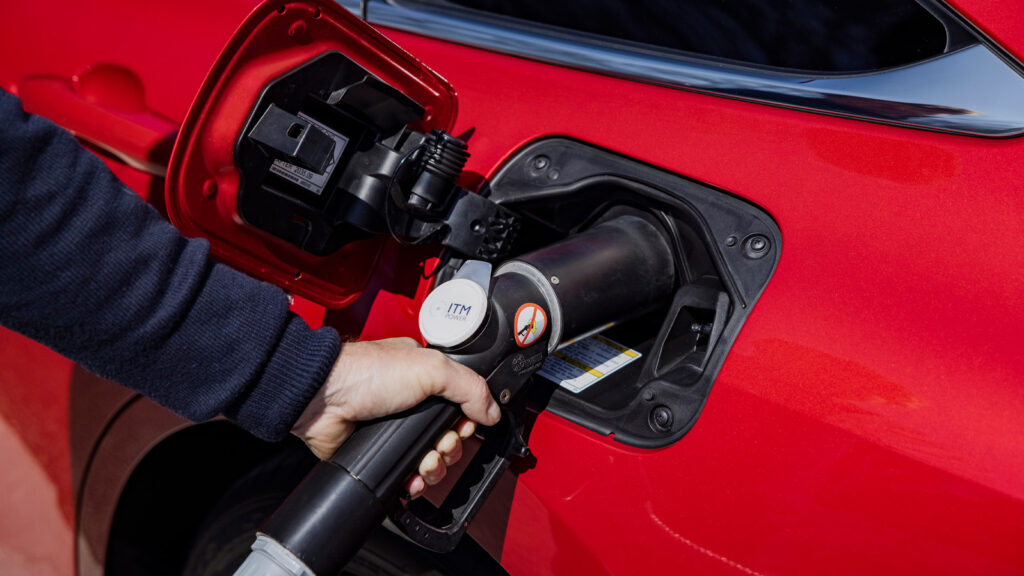
Hydrogen cars, then. The fuel of the future. The most abundant element in the entire universe. The powertrain of choice for the baddie in Quantum of Solace.
These machines have long been dreamt of as the saviour of the combustion engine, the prodigy of OEM skunkworks, and the clean and green way of motoring that emits nothing but pure water out of the exhaust pipe. Arnold Schwarzenegger even had one.
But what if you wanted to get your hands on one today? Can you walk into a showroom and order it with metallic paint? Can you haggle? Do you pay with cash or can you lease one? Can you spec floor mats, GardX and GAP insurance?
Well. Sit down and buckle up – Driving Hydrogen’s Matt Lister rang up Jon Hunt, Toyota GB’s top hydrogen man to talk about the process of who they will – or won’t – sell one to.
You don’t just walk in and buy one
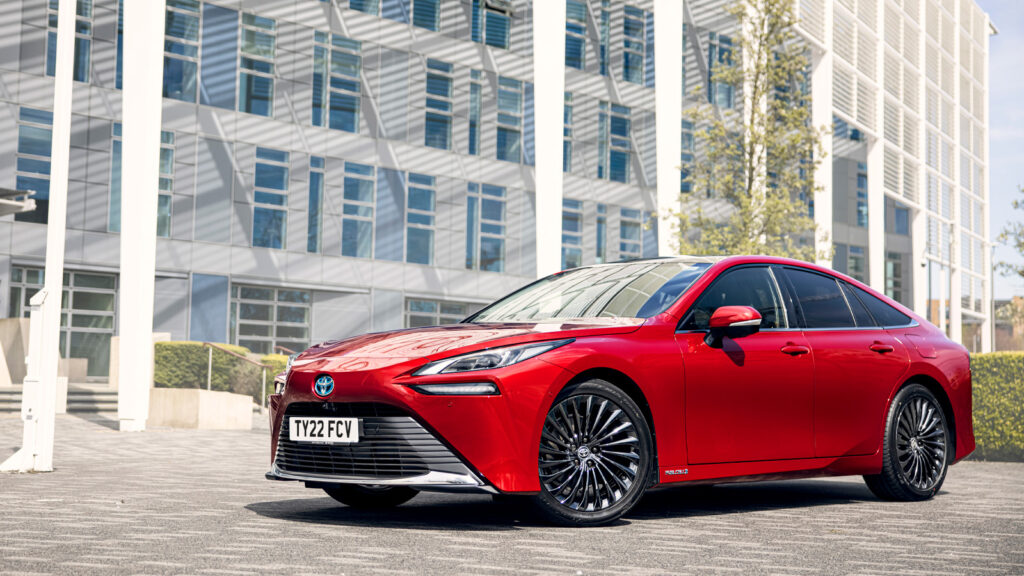
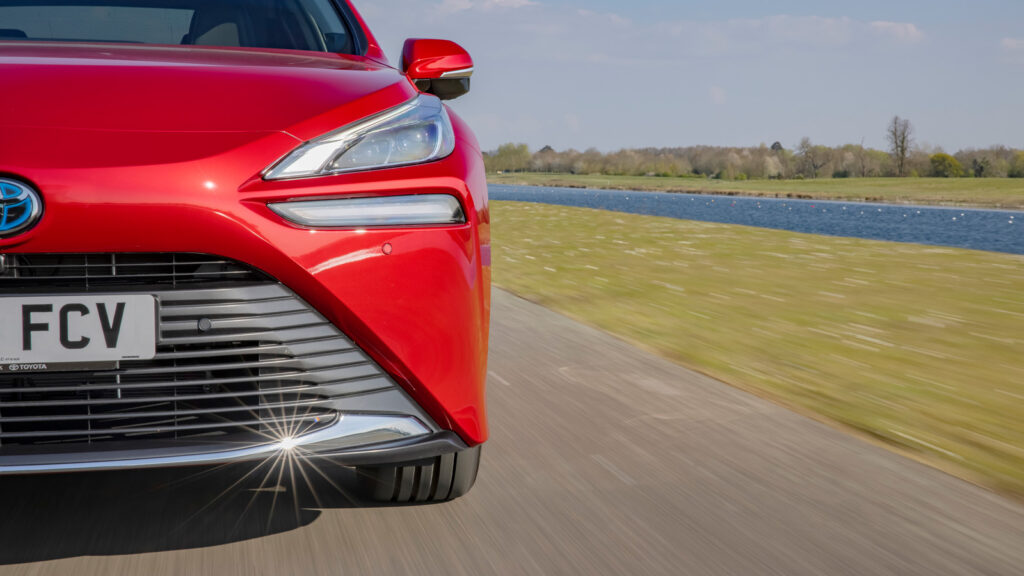
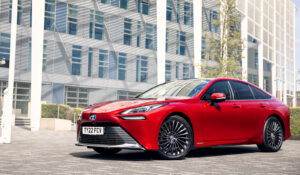
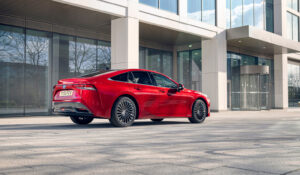
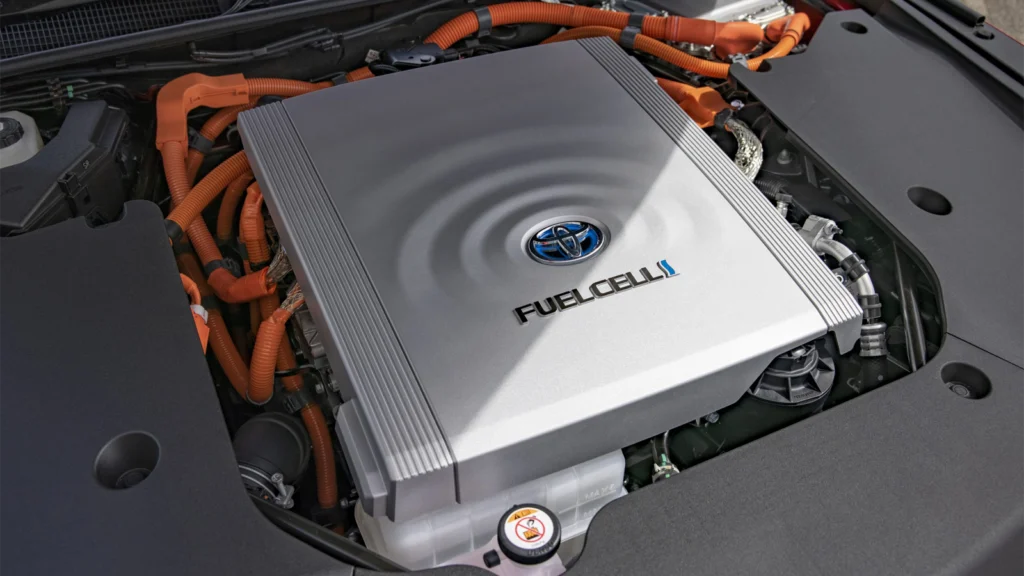
If you fancy a Toyota Mirai in the UK – one of the very few hydrogen cars you can actually buy – you can’t just wander into your local Toyota showroom, stand between the Yaris Cross and the big “0% APR” poster, and expect someone to toss you the keys. Well, unless you live in Germany, where the whole thing is boringly straightforward.
Germany, being a civilised nation, has over 110 hydrogen filling stations. Over there, Mirais are just another Toyota – walk in, order, done.
In the UK the process is a bit more… bespoke. The correct move is to go online, fill out a form, and wait. Or, if you’re old-fashioned and insist on going into a dealer, the sales rep will give you a look that says “what are you on about, mate?” before firing off an email to Toyota GB’s head office.
Either way, every enquiry in Blighty lands on one man’s desk. That man is Jon Hunt – Toyota’s “Senior Manager for Hydrogen Transformation”.

Jon’s first question is: Where do you live?
Before the conversation gets anywhere near metallic paint, vegan leather or whether the cupholders will take a large McFlurry, Jon has to check whether a Mirai makes sense for you at all. As he puts it: “It’s not in anyone’s interest to have something that is not going to be useful for them.”
Which is his polite way of saying the infrastructure here is a bit rubbish. There are only a handful of working hydrogen pumps in the UK, so location really matters.
Jon has turned people down before, and says it quite openly. If you’re out in the sticks with no station for miles, sorry, but no sale.
Jon may sound like a terrible salesperson, but Toyota has good reasons for being cautious. Over in California, a group of Mirai owners are currently suing Toyota, arguing they were sold cars they then couldn’t refuel when stations went offline. One could imagine Toyota would very much like to avoid that sort of headache here.

So what’s the rule of thumb?
Jon explains: “What people are comfortable with is the first question, but really it’s driving time that we look at more than distance. Around a half an hour drive [from your nearest filling station] is acceptable because it’s probably fitting within what you might normally be doing. Half an hour drive means an hour round trip if you were just doing that.”
In other words, if you’re within about 30 minutes of a pump, you’re probably fine, but any more than that, and it all starts to look a little impractical.
But even then there’s another consideration. Stations can go down for maintenance from time to time, so Jon asks potential owners whether they have another car to fall back on.
A Mirai is lovely, but you’ll want something else on the drive for the week or two when your nearest hydrogen site is shut.
FIND YOUR NEAREST HYDROGEN FILLING STATION:
Infrastructure is changing (slowly)
It isn’t all doom and distance-anxiety. Things are improving …thankfully.
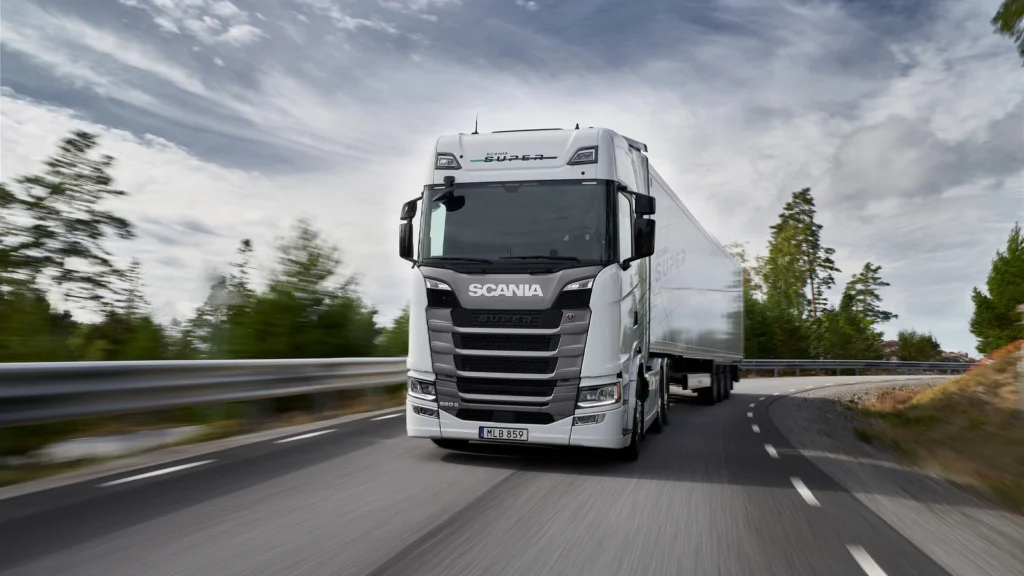
Jon points to the HyHaul project, which is building new stations along the M4 corridor that can handle both passenger cars and heavy trucks.
Element 2, a British hydrogen station operator, has said it will install 50 new stations by 2030. And back in auld Germany, several older sites are already being upgraded so the same pump can handle both an HGV fill at 350 bar (of pressure) and a Mirai’s 700-bar top-up.
Toyota itself is involved in testing new “dual refuelling” systems, with ‘twin nozzles’ to cover trucks and cars alike. Heavy stuff is what will build the real demand for hydrogen stations – those built for trucks will give passenger cars something to piggyback on.
Jon sums it up: “The vehicles themselves have proven their capabilities in all sorts of conditions – police, taxis, car clubs, private use and business use.
“The car technology is well understood, established and commercial… Buying one is totally feasible, but it’s down to ensuring they’re right for the customer. The simple fact is the infrastructure is very limited and you need to carefully consider that.”
What’s the damage?
So, let’s say Jon gives you the nod. What are we talking in terms of money?
A fully loaded Mirai will run you about £72,000. That’s with proper “semi aniline leather”, big wheels, heated and cooled seats front and rear, and all the trimmings.
Drop to the poverty-spec version and you get “vegan leather” (pleather to the rest of us) and smaller wheels, of which interestingly, actually give you a bit more range. Performance is the same on both.
£72k grand might sound a lot, but let’s not forget that Toyota also owns Lexus, of which the Mirai is based. Jon makes a fair comparison: “In terms of size and quality, we’d point to our Lexus LS, which is over £100,000.”
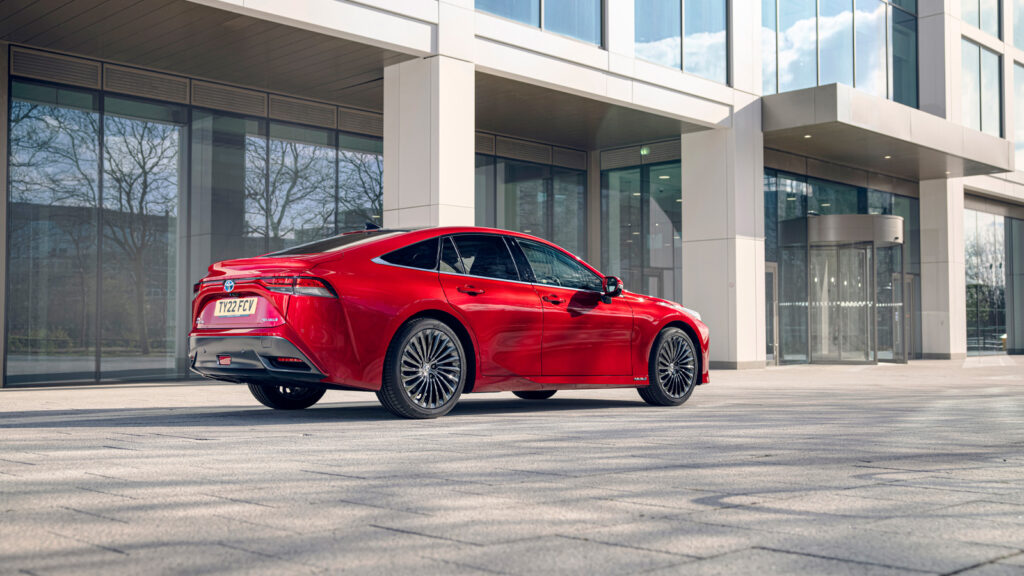
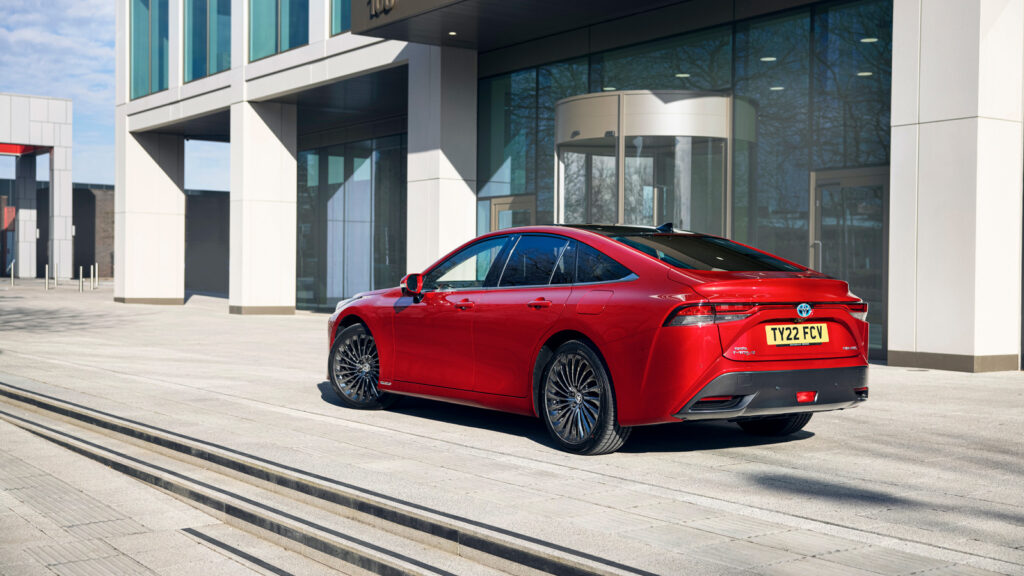
He’s right – the Mirai is roughly around the size of a BMW 5 Series or Merc E-Class, and a brand new well-specced version of either will also flirt with £70k these days. In that context, the Mirai is a pretty well priced car, for such low volume, in its segment as an executive saloon.
Can you haggle?
No. Is the short answer… The Mirai is sold directly by Toyota GB, not by dealers, so the sticker price is the sticker price. Finance packages exist, but bringing a carrier bag full of readies won’t get you a couple of grand off, unfortunately.
What about insurance?
Here things can get a little bit fiddly. Being hydrogen-powered doesn’t count against the Mirai, but it’s the rarity on the roads that means there’s a couple more steps involved.
The car’s been through ABI group rating, but because it’s low volume, it doesn’t always show up in the standard comparison tools – so you won’t find it in the drop down list on Compare the Market.
There simply aren’t enough Mirais out there for the system to know what sort of person drives one, or how often they crash into bollards.
Toyota has its own insurance arm, and in practice the process just takes a bit more paperwork rather than five minutes online. Nothing unusual if you’ve ever insured something rare before – it just isn’t quite as automated.
If there was a nationwide refuelling network, would you buy a hydrogen car?
Buy or lease?
Both are possible. Since the first-generation Mirai launched in 2015, private buyers have been able to purchase outright. Many business users prefer to lease for accounting reasons, or others like the police and taxi firms often buy, because they want to fit equipment and run them into the ground.
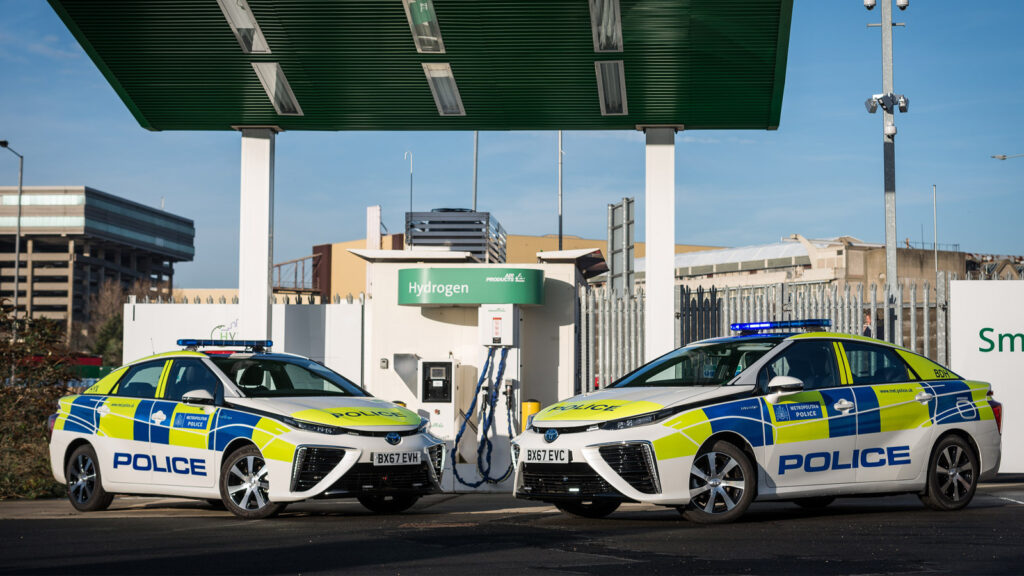
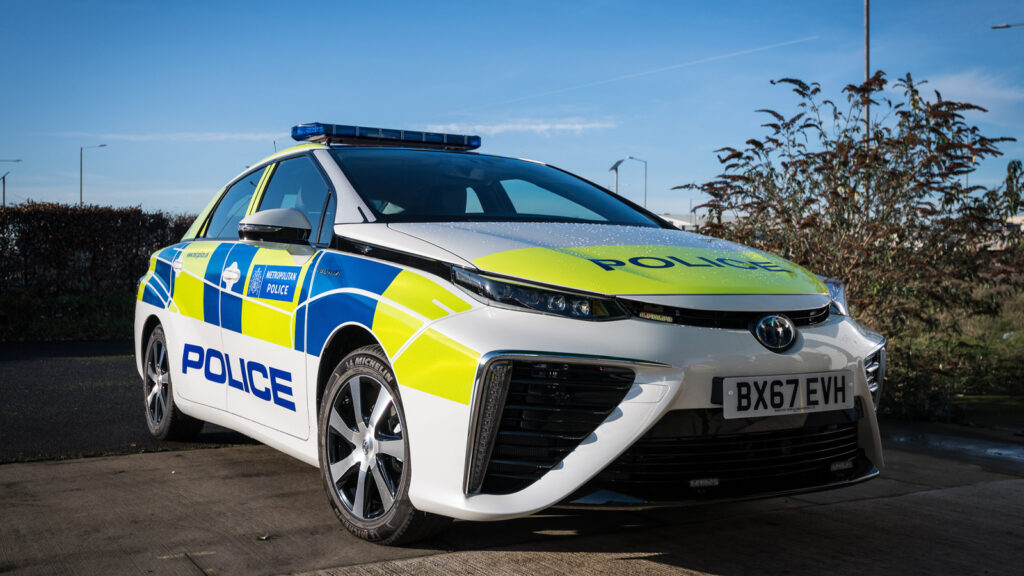
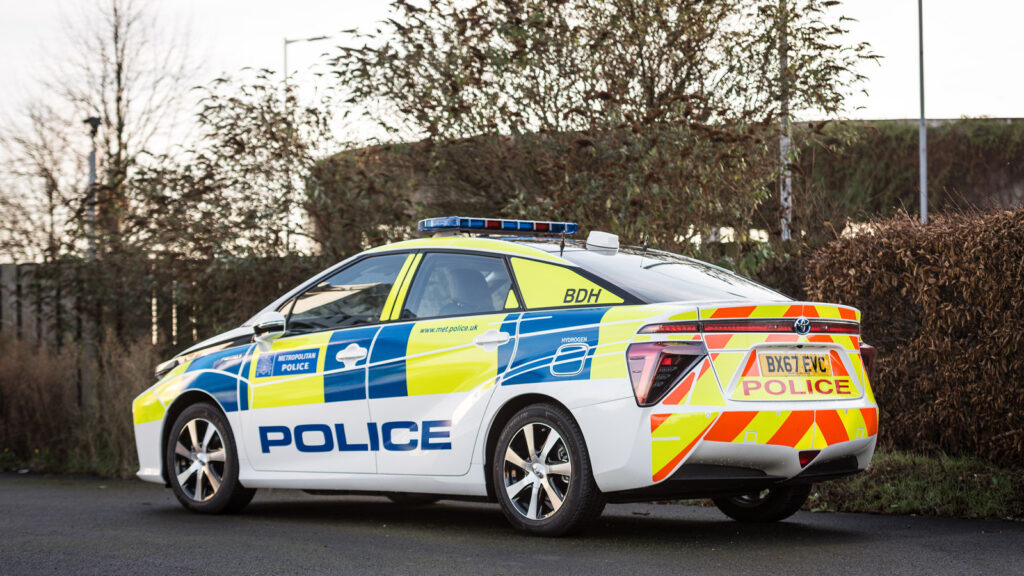
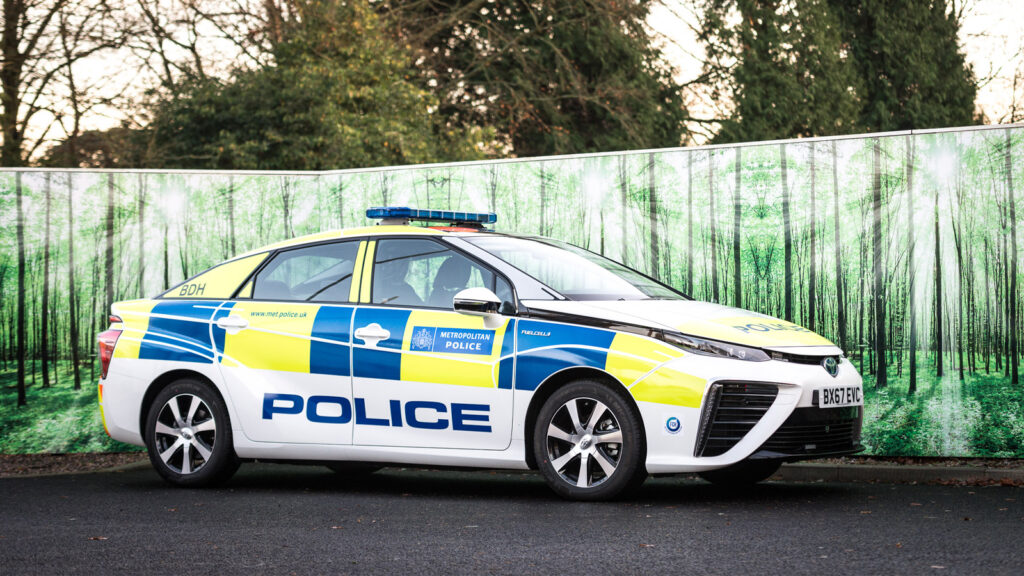
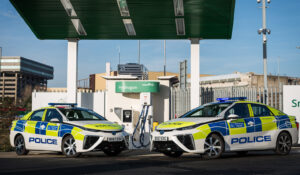
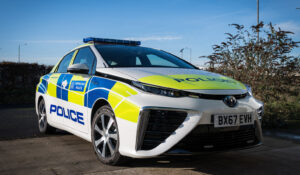
In the UK, both the Metropolitan Police and Surrey & Sussex Police have run Mirais – first-and second-generation – in both livery and plain form. The plain ones aren’t exactly what you’d call subtle, mind you. Spotting an unmarked Mirai outside a meeting probably isn’t much of a challenge.


So, can you actually buy one?
Yes – but not like a Yaris or a Hilux or a Corolla. To get a Mirai, you need to pass Jon Hunt’s common-sense checklist: live within half an hour of a pump, ideally have a second car, accept the £72k price with no haggling, and be willing to go through a slightly different insurance process.
Jon himself puts it best: “It’s having a conversation really. We don’t have a sales target or any of these things. It’s not business as usual. It’s just about engaging with whoever’s interested and ensuring that it’s appropriate. That’s the main thing.”
Which, translated, means yes, you can buy one, but only if the bloke in charge of hydrogen at Toyota GB says you’re sensible.
The future, it turns out, is available – but by appointment only.