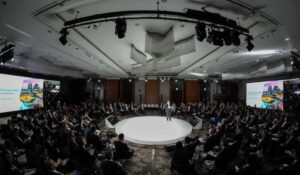
Hyundai shows off all-new NEXO and hydrogen fleet to world economics congress
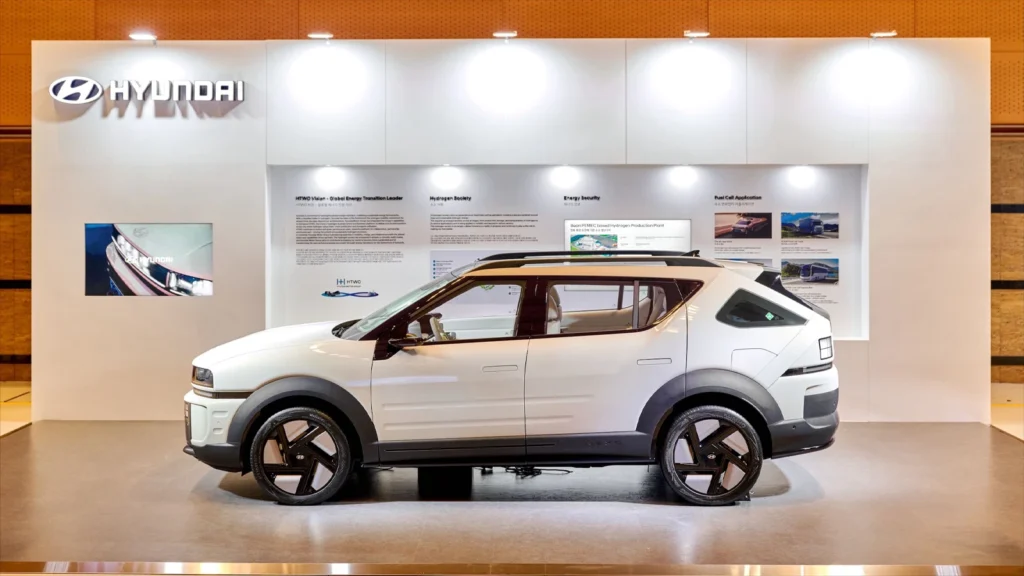
Hyundai has carted its all-new NEXO FCEV – that’s a hydrogen fuel cell electric vehicle, if you didn’t already know – to the 13th World Congress of the Econometric Society in Seoul. Think of it as a sort of Bilderberg for academics, policy mandarins and Nobel types to chew over economic policy. Not the usual launch for a new car, then.
On the stand is a full sweep of the company’s hydrogen hardware. There’s the new NEXO itself, naturally, flanked by the XCIENT fuel cell truck and Hyundai’s Elec City and Universe fuel cell buses, the firm also makes.
The all-new NEXO
The SUV is the centrepiece, first launched back in 2018. The NEXO was Hyundai’s dedicated hydrogen model – a successor to the Tucson FCEV – and this is its first complete redesign in seven years.
This new version, revealed in April 2025, arrives with what Hyundai calls its “Art of Steel” design language – a slightly martial name for a family SUV – adorning a pair of signature ‘HTWO’ lamps up front.
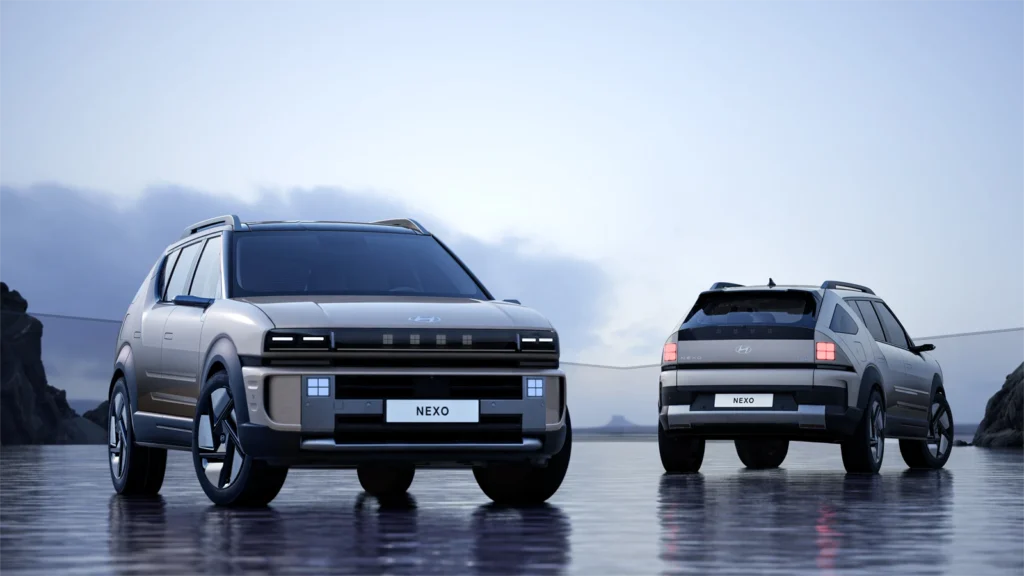
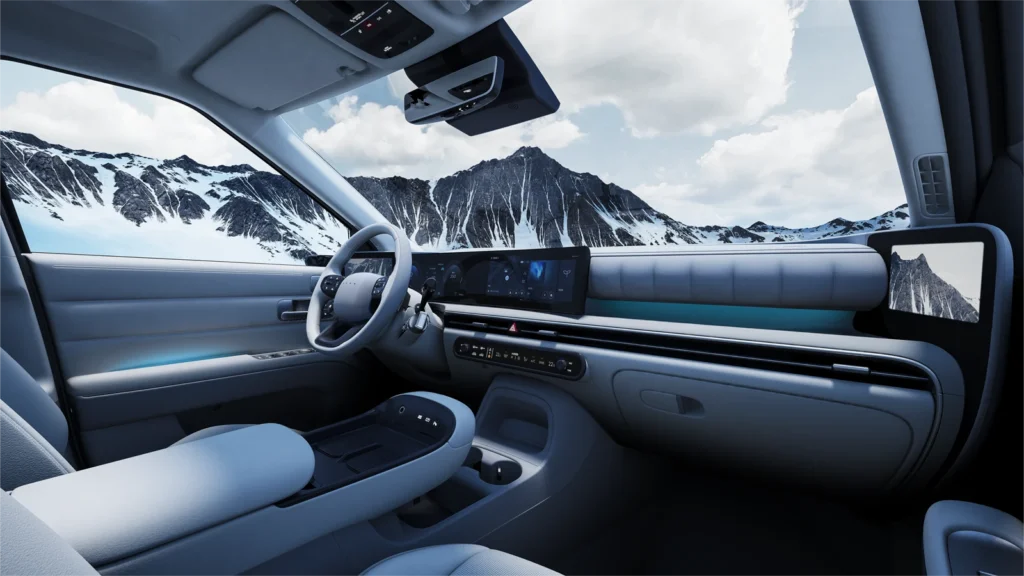
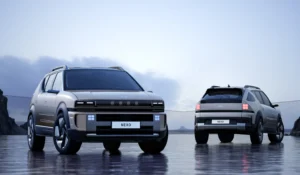


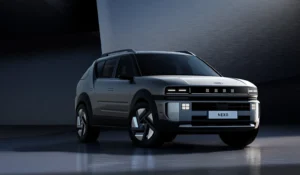
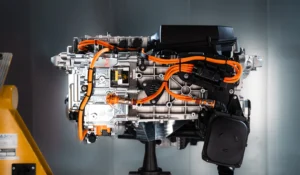
Under the skin, Hyundai is quoting more than 700 kilometres (435 miles) of range on the Korean test cycle, and a total system output of 190 kW – about 255 ‘osses, in old money. Performance figures usefully up on the outgoing model’s measly 120 kW.
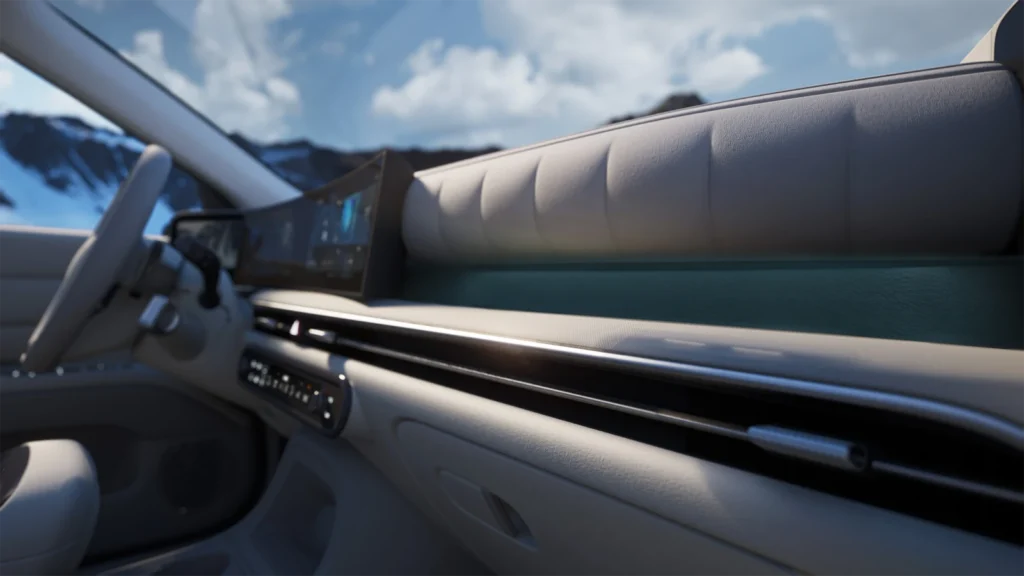
Safety systems have been upgraded too, and the cabin uses more ecological and sustainable materials than before – perhaps a nod to the fact that early adopters purchasing zero emissions vehicles are likely to care about such things.
HTWO, economics, and the wider play
Hyundai is showing all this under its HTWO hydrogen-specific sub-brand, which is supposed to cover the entire hydrogen value chain, from production, storage, distribution and utilisation.
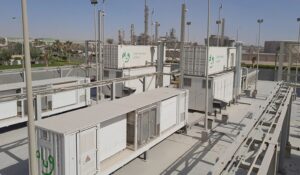
To hammer the point home, the stand also highlights two pilot projects – one being a biogas-to-hydrogen facility in Chungju, and a green hydrogen electrolysis plant in Buan. Riveting stuff, if you’re into that sort of thing.
The choice of venue is telling. The Econometric Society congress only happens once every five years and is billed as the largest international academic gathering in economics.
It’s not a motor show by any stretch of the imagination, but an attempt, one assumes, by Hyundai to plant hydrogen firmly in front of the sort of people who influence industrial policy and infrastructure investment.