Hyundai’s brand new XCIENT hydrogen fuel cell truck lands in America

If you were to believe the online shouting matches, you’d think the battle for trucking’s green future had already been won by batteries.
According to some, hydrogen is too late, too inefficient, or simply too inconvenient.
But Hyundai – clearly unbothered by all that noise – has turned up to ACT Expo 2025 with a pointed response: a real, fully-fledged, road-going hydrogen-powered Class 8 truck, built specifically for North America, and backed by a tangible infrastructure plan.
Meet the new XCIENT Fuel Cell, Hyundai’s heavyweight contender now making its North American production debut.
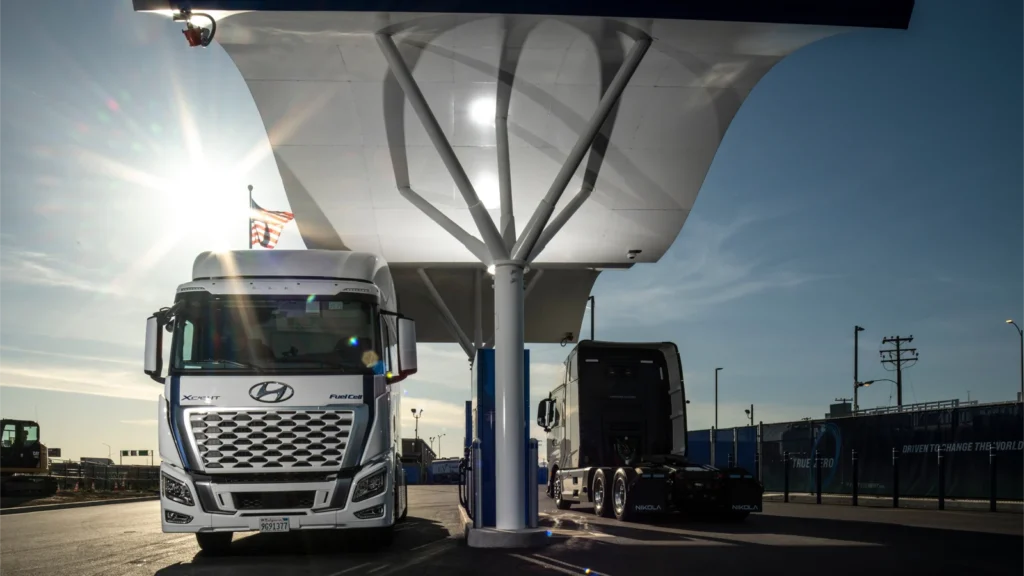
First teased as a concept at this very event last year, the truck has been rigorously tested in the U.S. since 2021, and now it’s here – fully operational, undeniably substantial, and refreshingly free of vapourware.
The nuts, bolts, and tanks of it
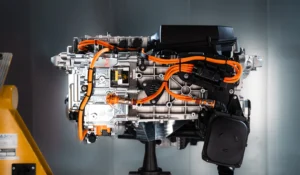
At the core of the new XCIENT is Hyundai’s latest-gen 180 kW hydrogen fuel cell system, comprising two neatly packaged 90 kW stacks.
This setup feeds a robust 350 kW electric motor, delivering a substantial 2,237 Nm of torque – enough grunt to pull the skin off a rice pudding and haul a gross combined weight of 82,000 lbs (that’s a feather over 37 tons).
The ten hydrogen tanks hold a total of around 68 kg of hydrogen, offering a realistic driving range of up to 450 miles, according to Hyundai.
Crucially, that number has been stress-tested across varied American climates, routes, and use-cases to be grounded in real life practicality.
The cabin has had a meaningful rethink, too – with drivers now getting a crisp, twin 12.3-inch digital display and touchscreen, sensibly fitted with real physical buttons (remember those?), plus an extensive suite of advanced driver-assistance kit.
Blind-spot warnings, collision avoidance, and lane departure alerts are all standard, designed explicitly to make the driver’s life easier and safer (and more annoying) – essential when you’re bootlegging Coors beer across state lines.
Real life testing
But the real strength of Hyundai’s announcement isn’t buried in spec sheets or shiny new dashboards, but hidden in the gritty, operational realities of logistics.
The company highlighted the success of its NorCAL ZERO project at California’s Ports of Oakland and Richmond, where a fleet of 30 XCIENT trucks has quietly clocked nearly half a million miles since late 2023 – the largest single deployment of hydrogen-powered heavy trucks in North America.
Meanwhile, on the East Coast, Hyundai has partnered with GLOVIS America to run another 21 trucks under its HTWO Logistics brand, covering half the inbound and outbound operations at Hyundai’s massive Metaplant America facility in Georgia.

Even more impressively, the hydrogen powering these trucks is produced right there, on-site, closing the loop on what a genuinely sustainable logistics hub could look like.
Ken Ramirez, Hyundai’s Executive VP and Head of Global Commercial Vehicle and Hydrogen Business, summed it up neatly: “The future of clean logistics demands more than just ambition – it demands action.
“By combining cutting-edge technologies with real operational partnerships, we’re delivering solutions that fleets can actually deploy today.”
Infrastructure: addressing the hydrogen elephant in the room
Hydrogen’s Achilles’ heel has always been infrastructure – or the conspicuous lack of it. Here too, Hyundai seems to be looking clear-eyed at reality rather than hoping for miracles.
Announced alongside the XCIENT debut is HTWO Energy Savannah, a first-of-its-kind Class-8 hydrogen refuelling and EV charging station located near the Georgia plant.
Built in partnership with HydroFleet and Capital Development Partners, this facility is due to open before the end of 2025, explicitly designed to support the heavy-duty trucks that need hydrogen’s range and refuelling speed.
This is Hyundai, as an OEM, taking the lead in directly addressing the fundamental barrier to hydrogen’s success in trucking – acknowledging that you can’t sell trucks without first building somewhere sensible to fuel them.
Hydrogen done right?
More broadly, Hyundai’s HTWO brand is evolving into something far more ambitious, which is an open platform designed to actively draw in partners and investors across the hydrogen spectrum, from production to storage, distribution, and use.
If the energy transition truly is about choosing the right tool for the right job, Hyundai’s clearly betting that hydrogen is not only viable but uniquely suited to heavy-duty trucking, long-haul freight, and high-demand logistics.
Far from being a competitor to batteries, Hyundai sees hydrogen complementing electrification where batteries face inherent limits.
Whether or not the online debates quiet down anytime soon, Hyundai’s North American push suggests hydrogen trucks are past the point of debate – and well into the business of delivering the goods.