Global hydrogen budget calculated in new report

Findings from a new report raise concerns over the climate consequences of increasing hydrogen use. The Nature report has found that hydrogen has an indirect 100-year global warming potential of 11 ± 4, due to its interactions with methane, ozone, and stratospheric water vapour.
The report analysed trends in global H2 sources and sinks from 1990 to 2020 to create a budget for the decade 2010-2020. It concludes that hydrogen usage has indirectly led to a warming of 0.02°C in the last decade.
Climate impacts of atmospheric hydrogen
The report notes that despite its relatively short lifetime of 1.9-2.7 years, H2 acts as an indirect greenhouse gas.
“By consuming OH radicals, a crucial sink for CH4, H2 warms the climate indirectly by extending the lifetime of CH4, producing greenhouse gases such as ozone and stratospheric water vapour, and affecting the formation of aerosols and clouds.
“Recent studies estimate 20-year and 100-year global warming potentials for H2 of 37 ± 18 and 11 ± 4, respectively.”
Hydrogen sources and sinks
Hydrogen sources increased from 1990 to 2020, mostly due to the oxidation of methane and anthropogenic non-methane volatile organic compounds (NMVOCs), biogenic nitrogen fixation, and leakage from H2 production.
Sinks – meaning processes which absorb hydrogen primarily from the atmosphere – also increased in response to rising atmospheric hydrogen.
Regionally, Africa and South America contained the largest sources and sinks, whereas East Asia and North America contributed the most hydrogen emissions from fossil fuel combustion.
The report estimates that rising atmospheric hydrogen between 2010 and 2020 contributed to an increase in global surface air temperature (GSAT) of 0.02 ± 0.006 °C.

The global hydrogen budget (2010–2020)
The study estimates the mean global H2 sources and sinks to be 69.9 ± 9.4 Tg yr−1 and 68.4 ± 18.1 Tg yr−1, respectively, for the decade 2010–2020.
The largest anthropogenic sources of hydrogen over this decade include those from fossil fuel and biofuel combustion, leakage from industrial hydrogen production, and oxidation of methane and anthropogenic NMVOCs.
Photochemical oxidation is the largest hydrogen source, whereas soil uptake is the largest sink. Soil uptake contributes the largest uncertainty to the total budget uncertainty, followed by photochemical oxidation, fossil fuel combustion, BNF, and biomass and biofuel burning.
Leakage from hydrogen production
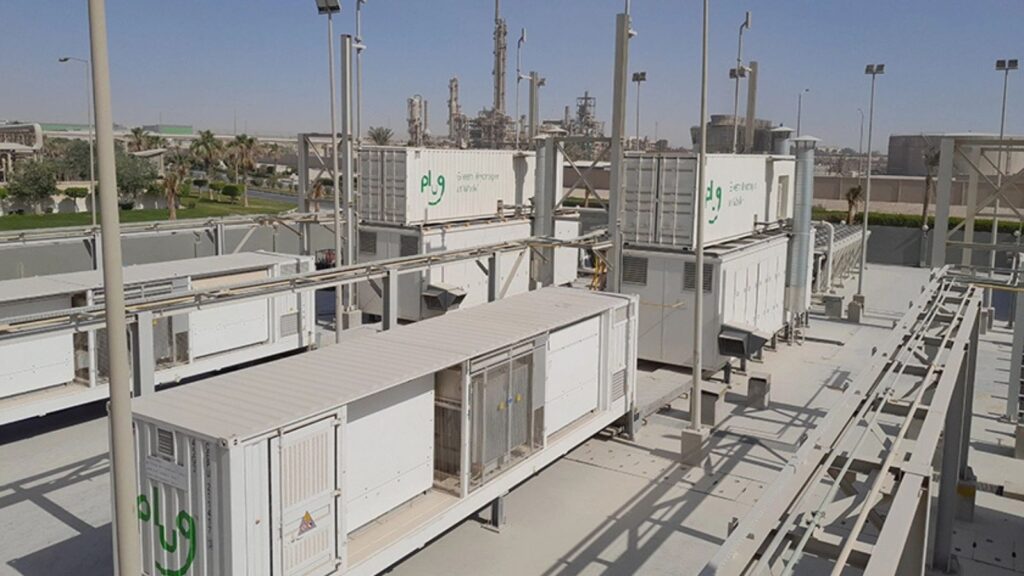
The majority of hydrogen production (>99%) is consumed locally at the site of production for industrial processes, so estimates of current hydrogen leakage mainly consider leakage at production sites.
The average global leakage rate is relatively unconstrained due to a lack of measurements. The study estimates total hydrogen leakage at 0.7 ± 0.4 Tg yr−1 for 2010–2020.
Prof Rob Jackson, a scientist at Stanford University and author on the study, told Carbon Brief that hydrogen leakage is on the rise “not because manufacturing is getting dirtier, but because we’re making more hydrogen from coal and natural gas”.
Where is change needed?
More than 90% of hydrogen produced today is grey hydrogen, derived mainly from steam methane reforming or coal gasification.
This is carbon-intensive, unlike green and blue hydrogen, which are produced through electrolysis or reforming fossil fuels. A shift towards green and blue hydrogen will be essential to fully utilise hydrogen’s clean energy potential.
The report says that “green and blue hydrogen are projected to dominate hydrogen manufacturing by 2030–2040” – a sign that positive change is already on its way.
East Asia and North America contribute the most hydrogen emissions from fossil fuel combustion, making up a respective 32% and 15% of the global total.