Symbio cuts 70% of staff as Stellantis walks away

From flagship to fallout: Symbio, once the beating heart of France’s hydrogen vehicle strategy, is now undergoing a dramatic restructuring.
The company has confirmed it will cut more than two-thirds of its workforce and scale back operations, following Stellantis’ full withdrawal as a hydrogen customer.
The decision, which Symbio described as a “brutal and unilateral” move earlier this year, has now crystallised into a painful new reality. Just 175 roles will remain from over 600 as Symbio refocuses on a limited product scope, mainly for non-automotive sectors.
Union leaders have called the layoffs “a social plan of rare violence.”
Stellantis walkout triggers collapse of Symbio’s LCV plans
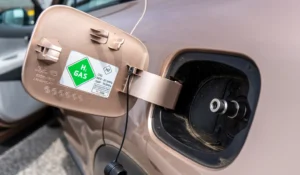
The fallout began in July 2025, when Stellantis — one of Symbio’s three co-owners — suddenly abandoned its hydrogen light commercial vehicle (LCV) programme. The Pro One-branded hydrogen vans, which had just completed final fuel cell validation, were due to enter production this summer at Symbio’s newly opened SymphonHy gigafactory in Saint-Fons.

At the time, Symbio said Stellantis’ exit jeopardised nearly 80% of its projected production volume through to 2030. Michelin and FORVIA warned of “irreversible operational and financial consequences” for the joint venture and for France’s hydrogen ambitions.
Symbio CEO Jean-Baptiste Lucas was candid: “No company has ever deployed hydrogen technologies at this level of maturity and speed. It is inconceivable that all this should be reduced to nothing.”
From 640 staff to 175 — and a strategic reset
After months of internal conciliation and a restructuring process initiated in July, Symbio has now confirmed a massive reduction in staff — down to just 175 employees. The rest of the workforce, approximately 70%, will be let go as the company adapts to its dramatically reduced market prospects.
“The pursuit of our business requires a profound and difficult transformation,” said Lucas, promising that Symbio would ensure “an exemplary” transition for impacted staff.
Despite the crisis, Symbio insists it is not folding.
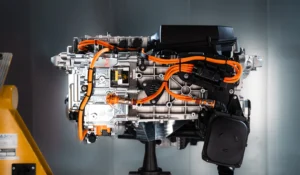
The company will continue to produce and develop its 75 kW StackPack™ fuel cell systems, with plans to ramp up to 10,000 units annually between 2028 and 2030 — aimed at buses, coaches and data centres.

Development of a next-generation 150 kW system for heavy-duty applications also remains underway, with a projected market launch around 2030.
A blow to France’s hydrogen ambitions
The collapse of Symbio’s LCV programme casts a shadow over France’s broader hydrogen mobility agenda. The company had been a key technology provider for hydrogen van rollouts backed by the government through ADEME and the National Hydrogen Strategy.
Now, with Stellantis walking away and Symbio dramatically downsizing, France’s hydrogen LCV rollout is in serious jeopardy.
Public subsidies, infrastructure planning, and supply chain alignment — all centred on the promise of Symbio-powered vehicles — now hang in the balance.
Michelin and FORVIA, who were informed of Stellantis’ intentions only weeks before the July announcement, echoed frustration over the disruption. “Symbio has scaled its investments, hiring, and development roadmap based on Stellantis’ stated needs for the next eight years,” the two companies said in a joint statement.
What comes next?
Symbio will now rely on future demand from other sectors — notably public transport and stationary energy — to stay afloat.
It also continues to call for clarity and support from government stakeholders to ensure the hydrogen sector isn’t left in limbo.
As Jean-Baptiste Lucas noted at the height of the crisis, “European industrial sovereignty is at stake.”
With Symbio’s fate now tied to a smaller set of products and markets, and its workforce sharply reduced, the question remains: can France’s hydrogen industry weather this blow — or is this the start of a broader unraveling?