Toyota’s superconducting pump and liquid H2 take to the grid
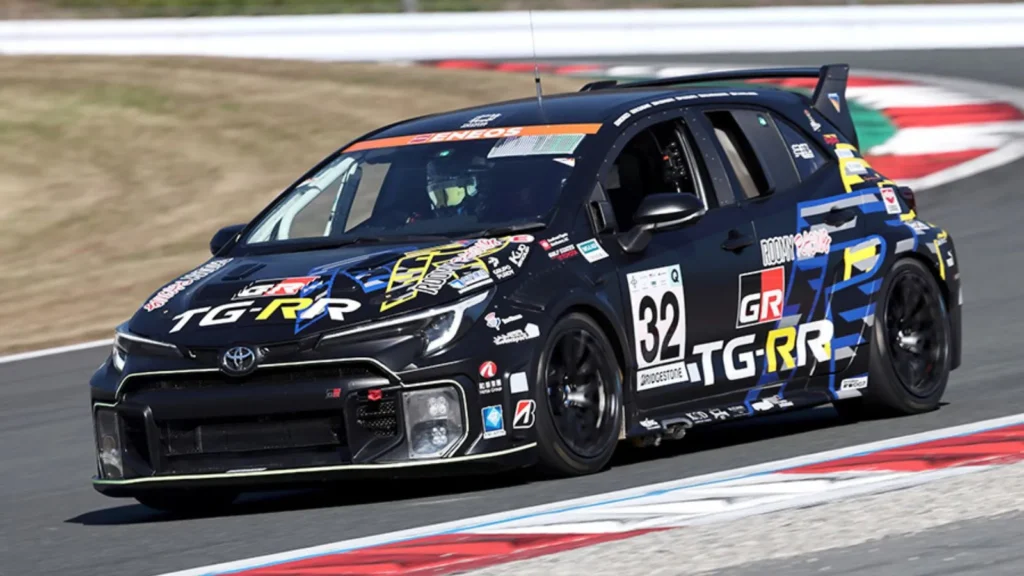
Toyota Motor Corporation has wrapped up a landmark weekend at Fuji Speedway, where the ENEOS Super Taikyu Series 2025 Empowered by BRIDGESTONE Round 7 Super Taikyu Final Thanksgiving Festival (15–16 November) doubled as a high-stakes lab for hydrogen innovation.
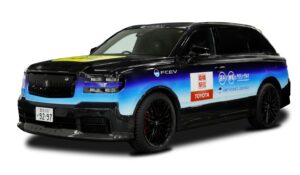
The spotlight fell on two cutting-edge hydrogen engine technologies, with the #32 TGRR GR Corolla H2 concept—running on liquid hydrogen fuel—leading the charge, alongside fresh strides in superconductivity for liquid H2 systems.
Liquid hydrogen GR Corolla: chasing continuous max output
The liquid hydrogen-powered GR Corolla built on its Round 3 success at the NAPAC Fuji 24 Hours Race (30 May–1 June 2025). There, it notched enhanced safety and weight savings via a new filling valve, plus a flawless demo of hydrogen engine combustion switching.
Finishing the full 24 hours without replacing the pump that pressurises liquid hydrogen for the engine—solid proof of ramped-up durability.
Yet cranking engine output piles extra strain on that pump, especially for non-stop runs at full tilt.
Toyota’s mission at the finale: test the pump’s boost performance and endurance post-24 Hours, aiming for seamless continuous operation at maximum output.
It’s a gritty push to level up liquid H2 engines for the track—and beyond.
Superconductivity: unlocking liquid H2’s full potential
Toyota’s superconductivity development hit a milestone, reaching the point where vehicles can run with a superconducting motor for the liquid hydrogen pump fitted inside the fuel tank.
This high-efficiency, compact setup frees up space for more than a 1.3-fold tank capacity hike, stretching cruising range while trimming weight and dropping the centre of gravity for better drive dynamics.
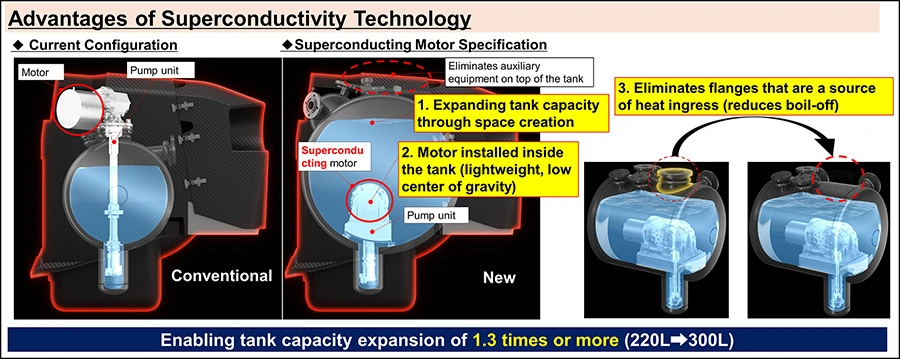
Eliminating the flange—those gap-filling pipe-joint components—as a source of heat ingress also curbs boil-off, the natural vaporisation of liquid H2 from external warmth. Liquid H2’s signature -253°C chill is superconductivity’s dream zone, where select materials shed all electrical resistance at ultra-low temps.
As Toyota puts it: “By maximising the compatibility between liquid hydrogen vehicles and superconductivity technology, Toyota will greatly expand the potential of hydrogen engine vehicles.”
Work continues with partners, targeting future Super Taikyu races to hone this tech.