Hyundai commits $85 billion to accelerate hydrogen and mobility innovations
Hyundai Motor Group has announced a major domestic investment plan of $85 billion (KRW 125.2 trillion) in South Korea over the five‑year period from 2026 through 2030 – it’s largest to date.
This plan covers future business, research & development (R&D) and capital expenditures, and places hydrogen technologies inline with Hyundai’s strategic growth engines.
Hyundai aims to turn South Korea into a leading global hub for future mobility technologies, while boosting the national economy and revitalising key industrial regions across the country.
Breaking down the $85 billion investment
To provide clarity, the commitment is divided into three key areas.
- $34 billion (KRW 50.5 trillion) for future business (AI, software‑defined vehicles, robotics, electrification, hydrogen)
- $26 billion (KRW 38.5 trillion) for R&D to develop new products and core technologies
- $25 billion (KRW 36.2 trillion) for capital expenditures to improve production facilities and build a Global Business Center.
Hydrogen investment: electrolyser manufacturing and export potential
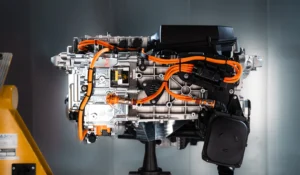
A significant portion of this investment is focused on hydrogen. Hyundai plans to manufacture PEM electrolysers and fuel-cell parts in Korea, including a 1 GW PEM electrolysis plant in the southwest. Hyundai expects this facility to serve both local and international markets, positioning Korea as a hydrogen export base.
This makes it clear that the company sees hydrogen technology as a key pillar of its decarbonisation and mobility strategy.

“As an efficient energy carrier, hydrogen plays a central role in enhancing energy resilience and driving industrial innovation,” said Hyundai Motor Group’s Vice‑Chair Jaehoon Chang.
He further emphasised that Hyundai is “capitalising on our broad expertise and proven heritage in hydrogen of nearly three decades” to deliver practical hydrogen‑powered solutions at scale.
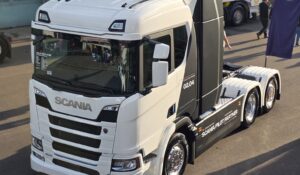
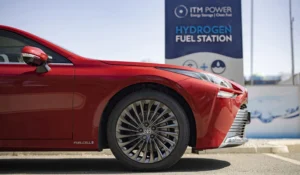
The announcement follows years of Hyundai building experience in hydrogen fuel cell systems and hydrogen-powered cars such as the NEXO and Hyundai’s XCIENT truck. With the company’s new hydrogen strategy, it is expanding further into the production side of the hydrogen value chain.

Hydrogen meets AI and robotics
Alongside hydrogen, Hyundai is investing heavily in digital transformation. This includes building an AI data centre, enhancing robotics and autonomous driving capabilities, and developing foundries for robotics manufacturing. It also plans to support parts suppliers in entering the robotics sector.
. The group is also investing in:
- An AI data centre and AI application hub
- Strengthening physical AI capabilities in robotics and autonomous driving
- Robotics manufacturing and foundry facilities
- Helping traditional automotive parts suppliers expand into robotics components
This approach shows Hyundai is taking a whole-system view: investing in digital technologies with low-carbon energy infrastructure, ensuring both can scale hand-in-hand.
Why this matters for hydrogen
Hydrogen is often described as the missing link in achieving deep decarbonisation — especially for sectors where batteries fall short. Hyundai’s strategy leans into hydrogen as a complement to electrification, robotics, and AI.

By investing in both production (electrolysers) and application (fuel cells), Hyundai is capturing more of the hydrogen value chain. This supports the creation of a connected hydrogen ecosystem.
The 1 GW electrolysis target suggests Hyundai is betting on large-scale hydrogen demand — not just in transport, but potentially across industrial sectors. Export ambitions also imply that Hyundai sees global opportunity beyond Korea’s borders.
What’s next?
Moving forward, Hyundai’s next steps will involve selecting a site for the electrolysis plant. It will also localise hydrogen component manufacturing. The company aims to improve export readiness for its new hydrogen‑enabled mobility solutions.
Hyundai is also ramping up how it produces hydrogen fuel cells in-house. This aligns its manufacturing with the broader hydrogen value chain rollout.
Hyundai’s move is a major signal to the hydrogen industry. A global OEM investing at this scale shows suppliers, investors, and policy makers that hydrogen is central to the future of mobility.
As Hyundai scales up, its message is clear. Hydrogen is not a side bet. It’s a central part of the company’s long-term strategy for clean and scalable mobility.