Seawater to be turned into hydrogen in new project led by Genuine H2 and Brunel University of London
Updated: 19/11/2025
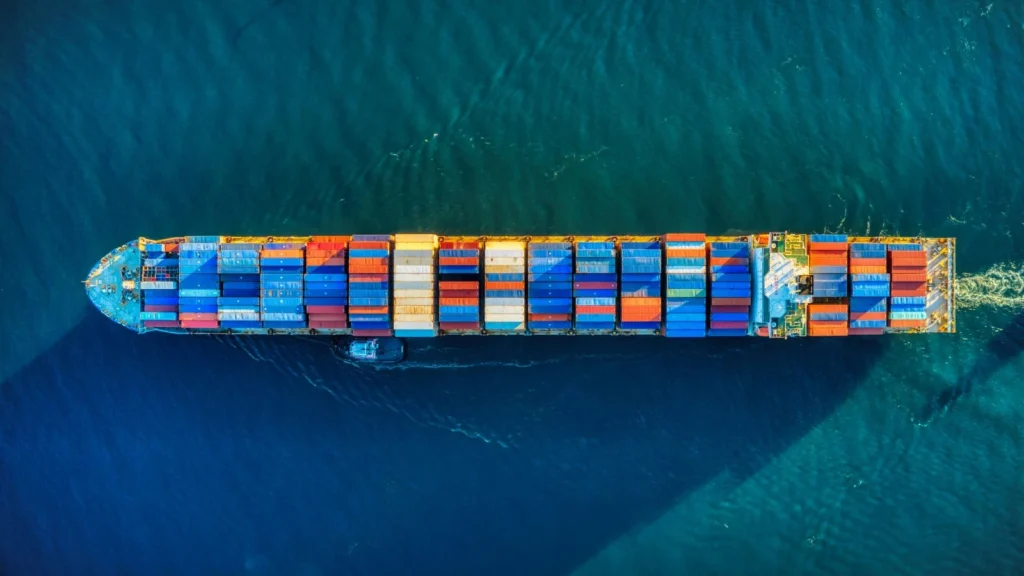
Over £1 million in funding has been secured to turn seawater into safely stored hydrogen. The green fuel, soon-to-be demonstrated by researchers at Brunel University of London and Genuine H2, will power ships, ferries and fishing boats.
The project is Britain’s first all-in-one hydrogen maritime demonstrator, and aims to take diesel out of ferries, trawlers and workboats where batteries are impractical.
“Brunel has been active in research and development of next generation hydrogen combustion engines,” said Professor Wang at Brunel’s Centre for Advanced Powertrain and Fuels. “By working with leading research partners in hydrogen production and storage, this project moves further to demonstrate a complete solution for marine propulsion from renewable energy via seawater to engine propulsion for marine vessels.”
What will the project involve?
Professor Xinyan Wang at Brunel University of London explained the process behind turning water into power: “We take seawater, split it using renewable electricity to make hydrogen gas, store it onboard as a molecular solid, then burn it in an engine instead of diesel, with no CO₂.”
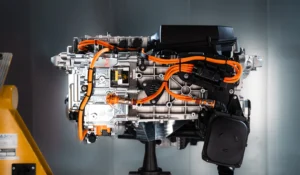
Codenamed GH2DEM, the project will be the first test of Brunel’s heavy-duty hydrogen combustion engine. It will be powered entirely by Genuine H2’s electrolyser and storage system, and is soon to be installed on campus.
Who is funding the project?
The project is backed by £1.44 million from the Department for Transport’s UK SHORE initiative and Innovate UK, as part of a £30 million push to decarbonise British shipping and sea travel.
Along with this project, money from the £30 million fund will be going towards revitalising Glasgow’s strong shipbuilding heritage with a new Scottish-built high-tech wing sail, to save up to 40% per annum in fuel and emissions.

The project builds on over £136 million already delivered to over 142 organisations, in a major step towards a “mission to kickstart economic growth and become a clean energy superpower”, according to the Department for Transport.
The UK SHORE (UK Shipping Office for Reducing Emissions) initiative aims to tackle shipping emissions in an effort towards a more sustainable future. Since 2022, UK SHORE has allocated more than £240 million in research and development funding to develop clean maritime technologies.
How does this work?
Using novel electrodes, hydrogen will be split directly from seawater, erasing costly desalination from the process. Desalination is the process of removing minerals, like salt, from the seawater.
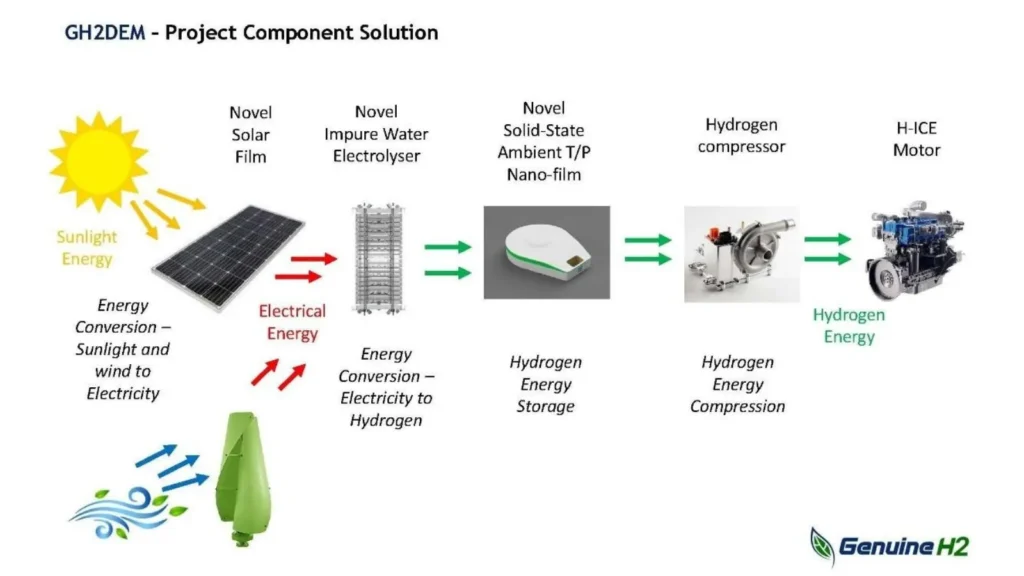
The hydrogen will then be locked away using thinner-than-paper ‘nano film’, leaving it in an unpressurised solid form. This means the hydrogen will not need to be frozen at extreme temperatures in heavy giant pressurised tanks – a major simplifier in the hydrogen storage process.
What’s next?
Testing has begun on land, and the demonstrator is expected to operate until March 2026. If successful, this will provide a safe, compact and clean fuel for maritime vehicles, and demonstrate the value of hydrogen combustion engines in UK supply chains.