Bosch’s first hydrogen truck goes into service in Nuremberg
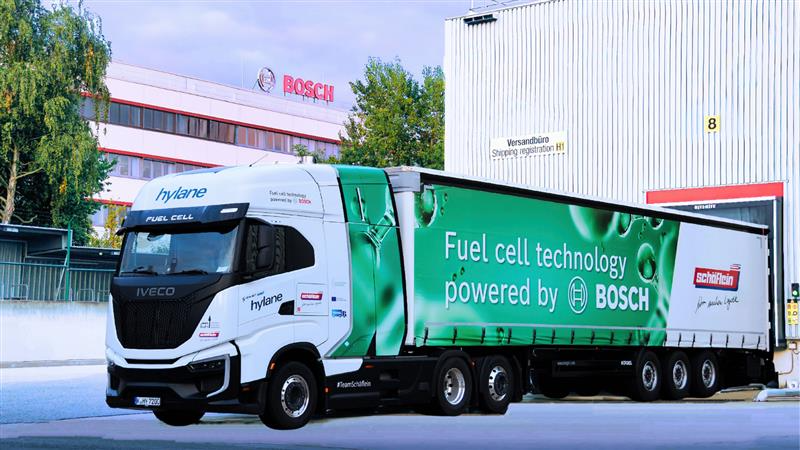
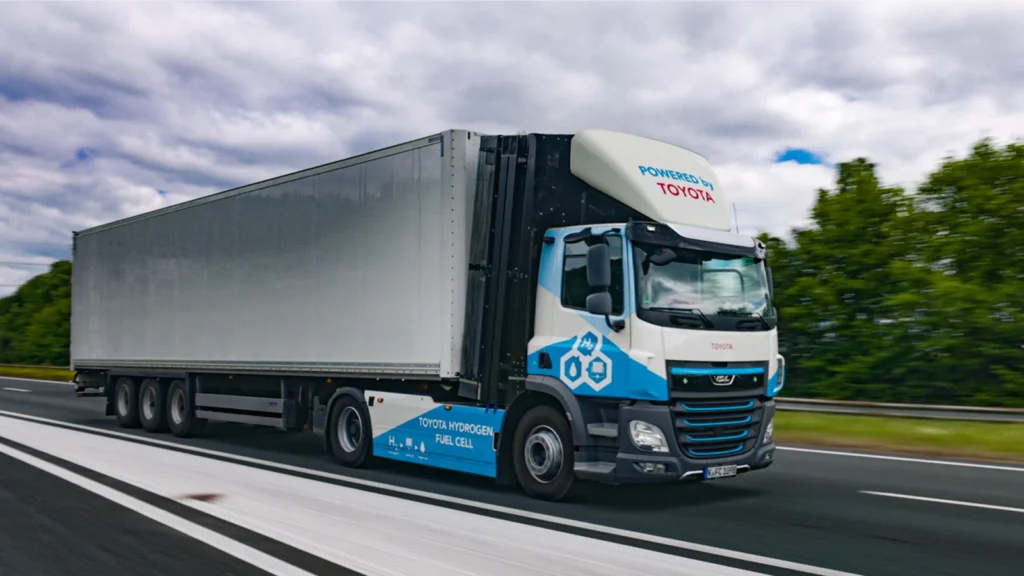
Bosch has begun using its first hydrogen fuel cell truck for day-to-day operations at its Nuremberg plant in Germany, using a 40-tonne Iveco S-eWay powered by the company’s own Fuel Cell Power Module (FCPM).
The truck, which is being operated by Schäflein and leased via Hylane, will clock around 12,000 kilometres per year, moving goods between Bosch facilities – being the company’s first deployment of its in-house fuel cell technology in regular, proper use.
How it’s built
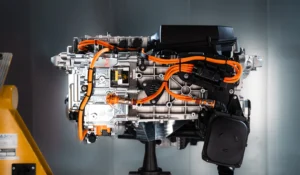
Under the cab is Bosch’s FCPM, the same unit recently nominated for the German President’s Future Prize.
The unit produces more than 200 kW (just under 270hp in old money) from the hydrogen fuel cell, then feeding a central e-axle and supported by two battery packs for short-term power demands. Combined system output is roughly 400 kW, or 540 horsepower.
Hydrogen is stored in five tanks at 700 bar (of pressure), holding up to 70 kg of fuel. Bosch claims a range of around 800 km (500 miles), with refuelling times on par with diesel and no drop-off in range during cold weather. The truck can haul a gross weight of 44 tonnes.
What Bosch wants to learn
Bosch says the goal is to cut emissions and gather real-world data to refine its next-generation fuel cell systems – the Compact 190 and Compact 300.
“The fact we’ve had no problems operating this truck shows that the fuel cell is ready for volume production,” said Alexander Weichsel, plant manager in Nuremberg. “The key to a successful hydrogen economy is above all to ensure an abundance of affordable hydrogen and adequate infrastructure, including here in Nuremberg.”
The company is working with regional partners to support Bavaria’s Hydrogen Strategy 2.0, aimed at creating local hydrogen production and distribution capacity.
Where it fits in
Production of the FCPM began in mid-2023 at Bosch’s Stuttgart-Feuerbach site, supplied by Bamberg (fuel cell stacks) and Homburg (components such as air compressors and recirculation blowers).
The unit is already being used by customers in Asia and North America, with several thousand fuel-cell systems now on the road globally.
Bosch is also developing hydrogen combustion engines for heavy-duty applications, and earlier this year launched its Hybrion PEM electrolysis stacks – its first entry into hydrogen production technology.
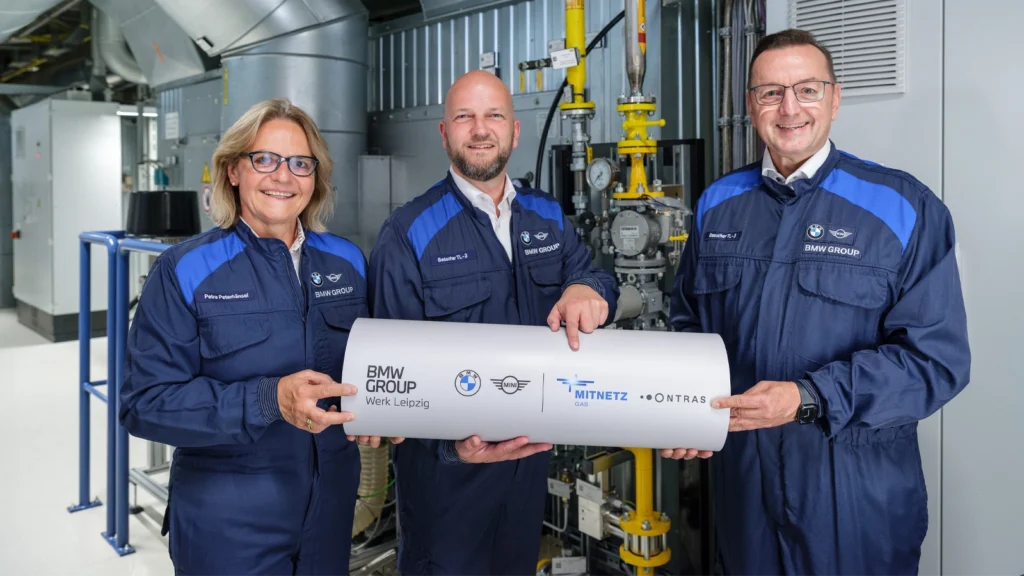
The company’s Leipzig plant is also preparing for a dedicated hydrogen pipeline connection – the same as BMW have just done with their plant in the city – linking its manufacturing network directly to hydrogen supply infrastructure.
A proving ground
One truck isn’t going to change the world, clearly. But Bosch say its trial is a meaningful test of their own system under routine industrial use – short runs, frequent stops, varying loads, and year-round operation.
Bosch will use data from the vehicle to measure reliability, energy efficiency, and degradation over time. If results match expectations, it’s likely other Bosch plants in Germany will follow.