Netherlands awards over 40 million Euros to hydrogen transport sector
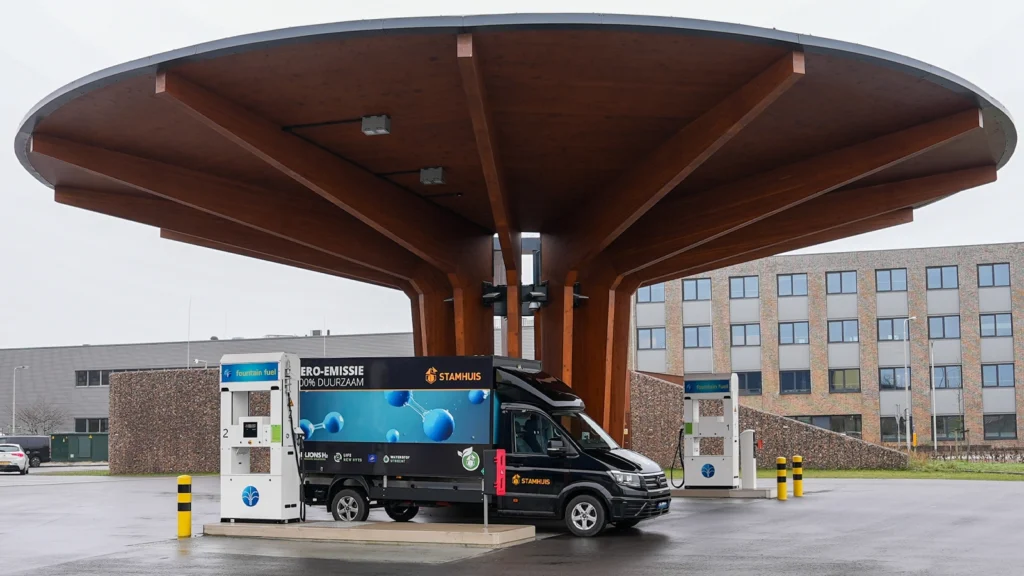
Over 40 million Euros in subsidies have been awarded to transport companies and hydrogen refuelling stations in the Netherlands, in a major moment for the European hydrogen sector.
The Dutch government announced the results of the SWiM subsidy (Hydrogen Cluster Sustainable Mobility), which allocated the funds, in September. The subsidy supports the improvement of hydrogen filling stations across the Netherlands, as well as the development of new or converted hydrogen vehicles.
The fund’s impact, up close
Leading hydrogen infrastructure company Fountain Fuel was one of the many companies who participated in the subsidy process.
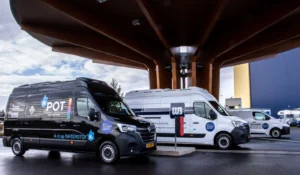
Stephan Bredewold, director of Fountain Fuel, says: “We already offer options for e-charging and hydrogen refueling through our Amersfoort station, Rotterdam The Hague Airport and Nijmegen. Thanks to the award of this subsidy, we can scale up and further expand the network with the construction of multiple locations.
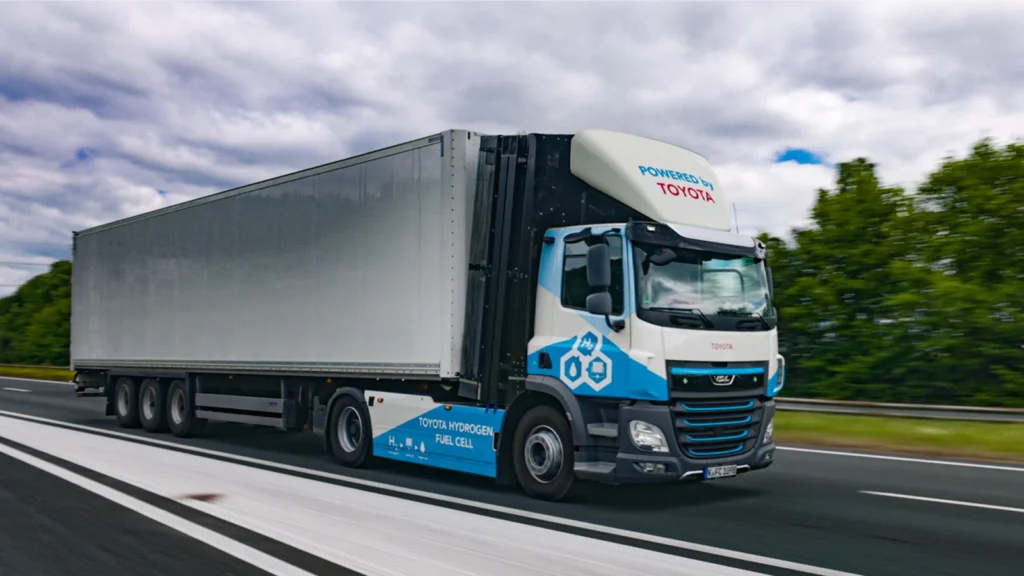
“It is important for the transport sector to expand the number of refueling locations. We do this by building a network in the Netherlands and subsequently also in Europe in the vicinity of cities with zero-emission zones, along TEN-T corridors and at logistics hotspots.”
The company received 8.2 million Euros just last year for its ‘Hydrogen Cluster Sustainable Mobility’ partnership, which connected over 60 logistics companies in improving hydrogen refuelling infrastructure.
Is the hydrogen sector well-supported in the Netherlands?
The Netherlands has always been a leader in hydrogen energy – it was the first country to define hydrogen as a clean fuel in its climate ambitions back in June 2019. This was in the 2019 Dutch Climate Agreement, and a more detailed blueprint for hydrogen usage was developed in the 2020 National Hydrogen Strategy.
The strategy consisted of three phases: roll out programmes for current green hydrogen projects in 2019-2021, develop demand and infrastructure as well as scaling up electrolyser capacity to 500 MW by 2025, and finally, scale up electrolyser capacity to 4GW by 2030.
There’s a hefty amount of money behind the words too. Earlier this year, the Dutch government earmarked up to €2.1bn for green hydrogen production, as well as €662m to support green hydrogen usage within industrial processes, under the Green Growth Package.
The Dutch electrification problem
Electrification is in full swing across the Netherlands – however, problems with grid congestion are emerging.
Long term delays across major grid operations are limiting the amount of power available for charging electric vehicles. According to Fountain Fuel, many Dutch grid operators are calling grid congestion an “unsolvable problem”, with waiting times for entrepreneurs reaching up to 10 years.
Many companies in the Netherlands are racing to become more sustainable, but insufficient electrical capacity is stopping them in their tracks from full electrification. This is where hydrogen can come in. Hydrogen can be produced independently of the grid via renewables, or produced from the grid when capacity is high but demand is low.
Hydrogen fuelled vehicles are allowing companies to ‘green their fleet’ without the delays, pushing companies closer to their sustainability goals.
What’s next?
Fountain Fleet’s future goals are to increase the scale of production and range of vehicle models available from their company in order to meet increasing demand. The subsidies will support a number of companies to do the same, expanding the hydrogen sector in the Netherlands majorly in the next few years.