Cheshire salt cavern may be used to store hydrogen underground
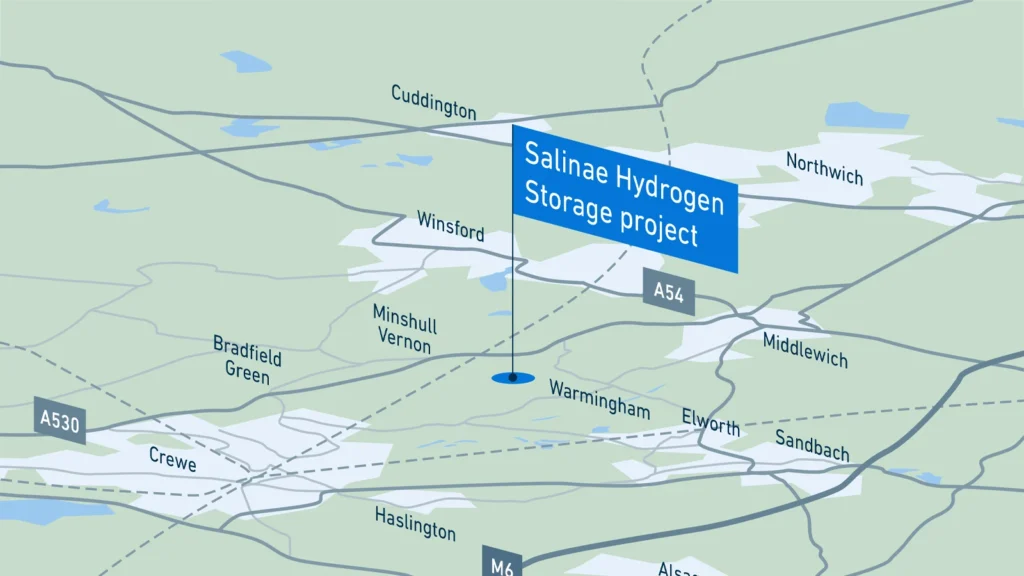
Uniper is exploring the potential development of a salt cavern hydrogen storage facility, near Warmingham in Cheshire. The project, known as the Salinae Hydrogen Storage project, will have the potential to store up to 400GWh of hydrogen, across a total of 13 caverns.
British Salt, who own the mineral rights, and Uniper, the German-state-owned energy company, recently signed a feasibility development agreement which gives Uniper the sole rights to explore the site’s potential for hydrogen storage.
John Rixham, the Head of Hydrogen Storage Development for the UK at Uniper, said, “Flexible energy storage is a fundamental component of both the energy transition and the security of the UK’s energy supply.
“Cheshire has the perfect geology to safely store large volumes of hydrogen and the Salinae Hydrogen Storage project could contribute to developing this innovative technology.”
How will it work?
Uniper and British Salt will work together to develop designs for the drilling of the first two wells, and the caverns would be created through a process called solution mining.
This involves injecting water into the salt beds to create a brine solution – a method British Salt has been applying on the same brinefield for over 50 years – leaving only hydrogen in the cavern.

The site has the potential to store up to 400GWh of hydrogen. This number represents the working gas (total hydrogen storage capacity minus hydrogen cushion gas capacity) energy value of the facility. Cushion gas is the hydrogen permanently retained in the cavern, to maintain the required pressure.
What benefits does this partnership offer?
This salt cavern hydrogen storage facility would be the first of its kind in the UK, but Uniper is already investigating the potential for future hydrogen storage with two pilot projects in north-west Germany.
The success of the Salinae Hydrogen Storage project would solidify salt caverns as a reliable and tested hydrogen storage method, and could place the UK in a strong position for further developments.
The project will provide a number of jobs across the development and construction stages, and once operational, provide permanent jobs for those in and around Warmingham.
Uniper suggested, “[the project] could also help to safeguard jobs in the wider area, by providing confidence for industries looking to fuel switch to hydrogen and away from fossil fuels, by providing a reliable source of hydrogen, complementing other sources.”
Rob Hudson, the Head of Strategic Development at British Salt, noted the company’s benefits: “We look forward to collaborating with Uniper on their hydrogen storage project and sharing our expertise in solution mining.
“One of the many benefits in our unique partnership would be our ability to use the brine displaced in the formation of the caverns in the production of salt at our Middlewich plant.”
Of course, this will also help to support decarbonisation throughout Cheshire, working towards the UK’s target of net zero by 2050.
What happens next?
While the feasibility development agreement is a promising step, the Salinae Hydrogen Storage project is still a long way from becoming operational.
The project is yet to receive a development consent order for a hydrogen storage facility, and in the absence of a hydrogen market, Uniper has stated a need for a bespoke business model for salt cavern hydrogen technology from the UK government.
If these hurdles are cleared, operation is estimated by 2032, with drilling starting in 2025 and the development consent process beginning in 2026.