Governments and industry back global hydrogen trade push at Rotterdam summit
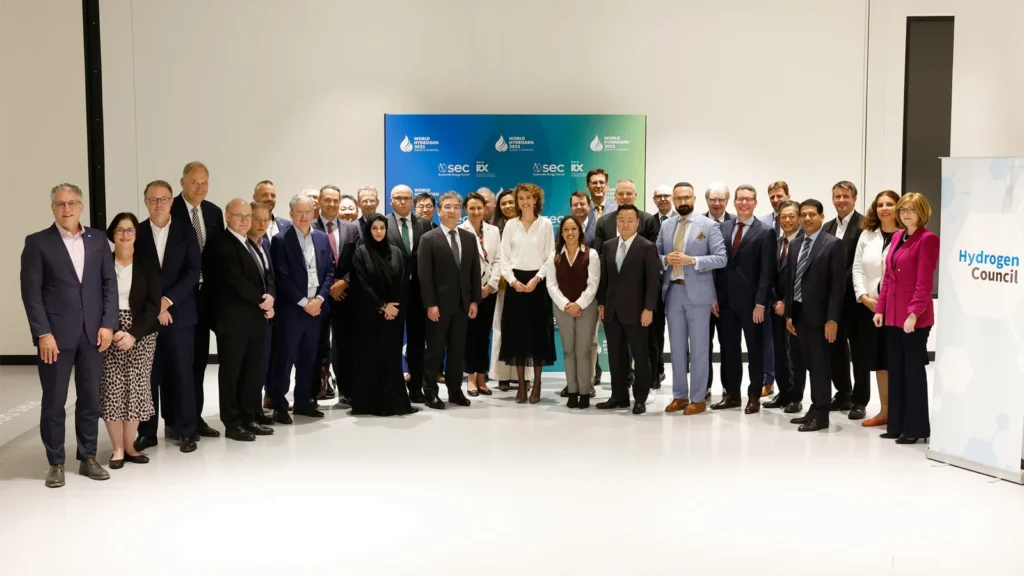
Governments and industry leaders met in Rotterdam this week to reaffirm their backing for global hydrogen trade, as part of a public-private roundtable held during the World Hydrogen Summit 2025.
The meeting was the latest gathering of the International Hydrogen Trade Forum (IHTF) – a group set up to help build cross-border hydrogen supply corridors and get exporting and importing countries working from the same page.
The forum is co-chaired by the Netherlands and Brazil, and brings together energy ministers, policymakers, and senior figures from industry, including the Hydrogen Council.
This year’s roundtable was chaired by Dutch Climate Minister Sophie Hermans and focused on how to keep momentum going as financial and geopolitical pressures continue to affect clean energy rollouts worldwide.
Investment is up – but delivery needs work
According to data shared at the summit, hydrogen project investment past final decision (FID) has climbed from $10 billion across 102 projects in 2020 to $75 billion across 434 projects in 2024.
That’s a sevenfold increase in just four years – but leaders warned that translating that into actual delivery still depends on policy follow-through, clear demand signals, and better coordination across borders.
Jaehoon Chang, Co-Chair of the Hydrogen Council and Vice Chair at Hyundai Motor Group, said international collaboration on “standards, infrastructure and supportive policy frameworks” would be key to accelerating deployment and making trade viable.
UNIDO Director General Gerd Müller echoed that, saying: “Building clean hydrogen economies needs substantial investments and long-term commitments, especially in developing countries with great renewable energy potential.”
Three shared priorities
The forum’s members outlined three areas they say need urgent focus to get international hydrogen trade moving:
- Financial support that actually works – by implementing already announced national incentives more efficiently;
- Shared economic benefits – ensuring hydrogen trade supports jobs and industrial growth on both sides of the supply chain;
- Real demand signals – especially in sectors like low-carbon steel, green fertilisers and synthetic fuels, where hydrogen-based products could scale fast.
Minister Hermans described the forum’s strategy as “realistic and balanced,” adding that while there are obvious challenges, there are also growing examples of success to build on.
“We remain fully committed to advancing the global low-emission hydrogen sector”, she said.