Toyota brings hydrogen to the Hakone Ekiden with fuel cell versions of familiar models
Toyota is putting hydrogen right in the middle of one of Japan’s best-known road events. In a Dec. 22, 2025 announcement, Toyota Motor Corporation said every vehicle it provides for the 102nd Tokyo–Hakone Collegiate Ekiden (held January 2–3, 2026) will be electrified.
The Tokyo-Hakone Ekiden is Japan’s massive two-day university relay marathon held every January, covering 217.1 km from Tokyo to Hakone and back – dubbed as the “greatest race on earth”.
The fleet will include BEVs, FCEVs and HEVs, and Toyota says it will also switch fuel for the hybrids to plant-derived, low-carbon fuel to reduce emissions.
That headline matters for hydrogen fans because Toyota isn’t only turning up with a Mirai-shaped message.
Instead, it will field fuel cell versions of existing vehicle types that do real work at the race, from filming to transporting teams.
Which Toyota vehicles are going hydrogen?
Toyota says it will provide 40 electrified vehicles in total for the 2026 race.
Within that, several key roles will use FCEV versions of models you’ll recognise:
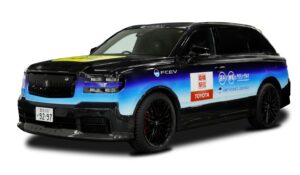
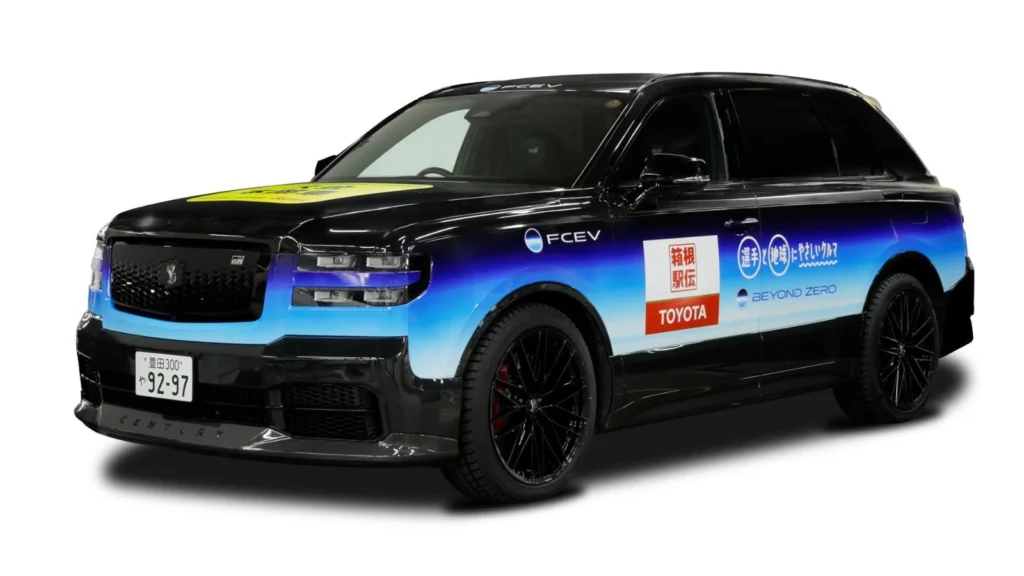
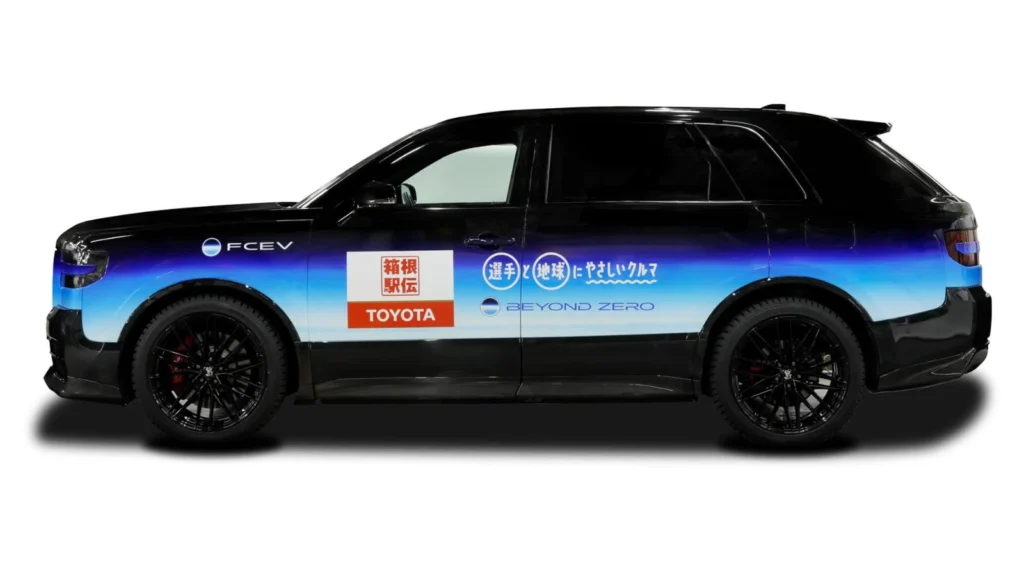
Toyota will provide the race headquarters vehicle as a Century (FCEV). It will also supply a light-duty truck (FCEV) as the joint camera truck filming the leading runners. Toyota calls these “original FCEV models” for the event.
For moving people and kit, Toyota lists Coaster (FCEV) buses to transport related personnel. It also lists a GranAce (FCEV) as a luggage vehicle.
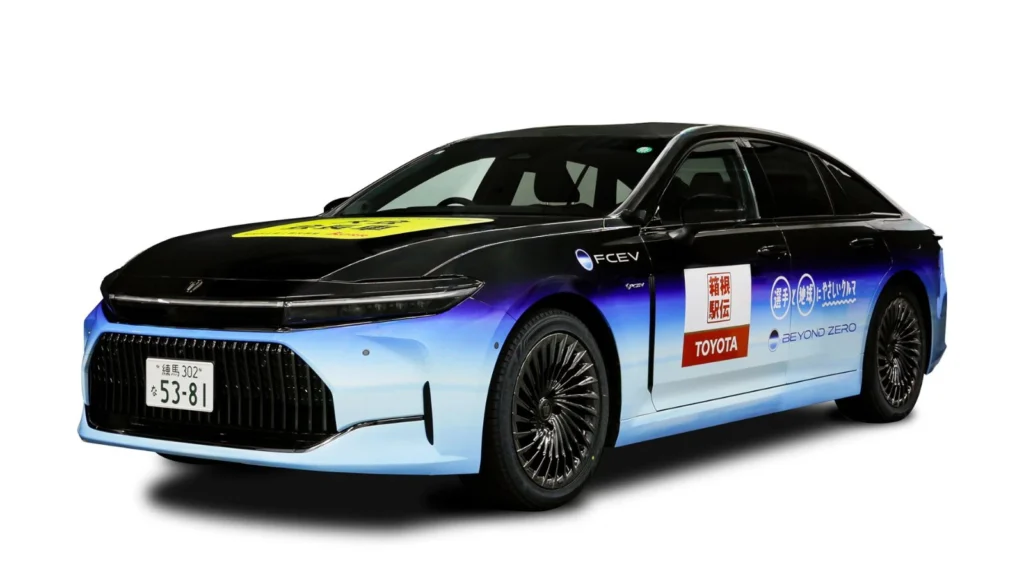
Toyota’s table also shows Crown Sedan (FCEV) entries for several roles, including a chairperson’s vehicle and PR/press vehicles.
Crucially, Toyota does not frame these as retail launches in this announcement. It frames them as vehicles provided for event operations.
A quick hydrogen refresher (because “FCEV” gets thrown around)
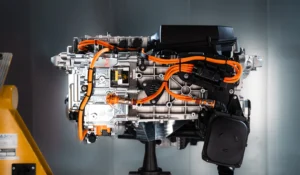
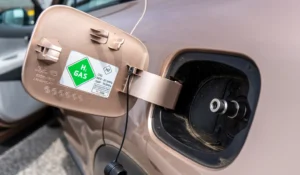
Toyota explains the fuel cell setup in plain terms. It says these FCEVs use fuel cells instead of engines, and motors drive the wheels using electricity generated by the chemical reaction of hydrogen and oxygen. Toyota adds that the vehicles are quiet and “emit only water.”

So, in practice, Toyota uses the Hakone Ekiden as a moving testbed and showcase.
The vehicles do jobs that need range, uptime, and fast turnarounds.
It’s not only hydrogen: BEVs and hybrids also play a role
Hydrogen headlines aside, Toyota mixes powertrains across the fleet.
It says e-Palette BEVs will serve as medical and emergency response vehicles.
Meanwhile, each university team’s operations vehicle will be an HEV. Toyota says these hybrids will run on low-carbon E10 fuel (10% biofuel) supplied by ENEOS, using ethanol derived from non-edible sorghum produced through a research association that includes several Japanese automakers and ENEOS.
In other words, Toyota leans into its “multi-pathway” line here. It argues that different regions and customers need different electrified options, and it positions BEVs and FCEVs as part of that broader mix.
How this fits with Toyota’s broader hydrogen story
If you’re reading this in the UK, the obvious reference point remains the Toyota Mirai, Toyota’s series-produced hydrogen fuel cell electric car. Toyota introduced the Mirai in 2014, and it has continued to develop the model as its flagship FCEV.
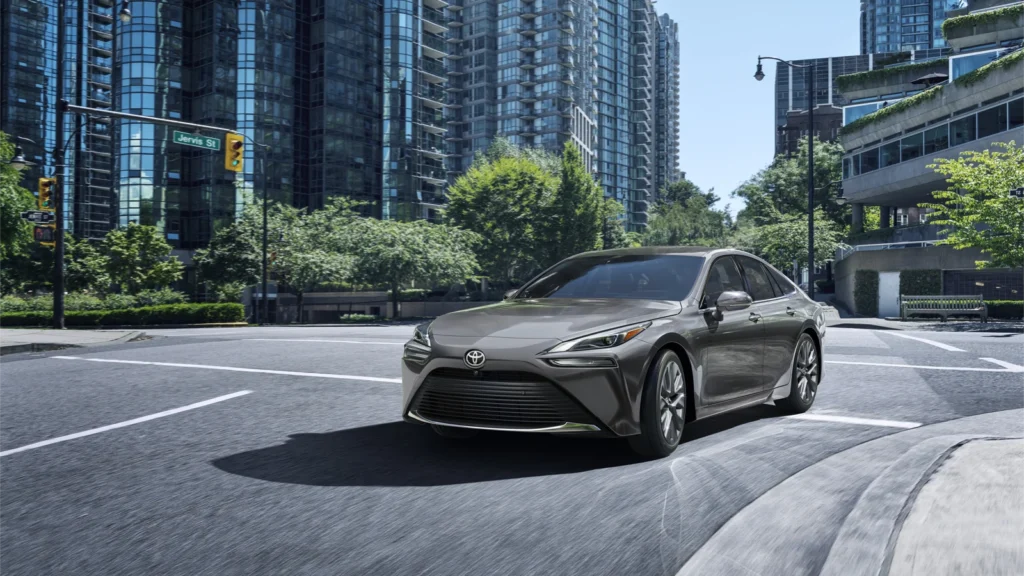
What’s interesting about the Hakone Ekiden plan is the way Toyota spreads hydrogen across vehicle “types,” not just a single dedicated model line.
The announcement names fuel cell versions of vehicles used for VIP transport, logistics, buses, and a support truck.
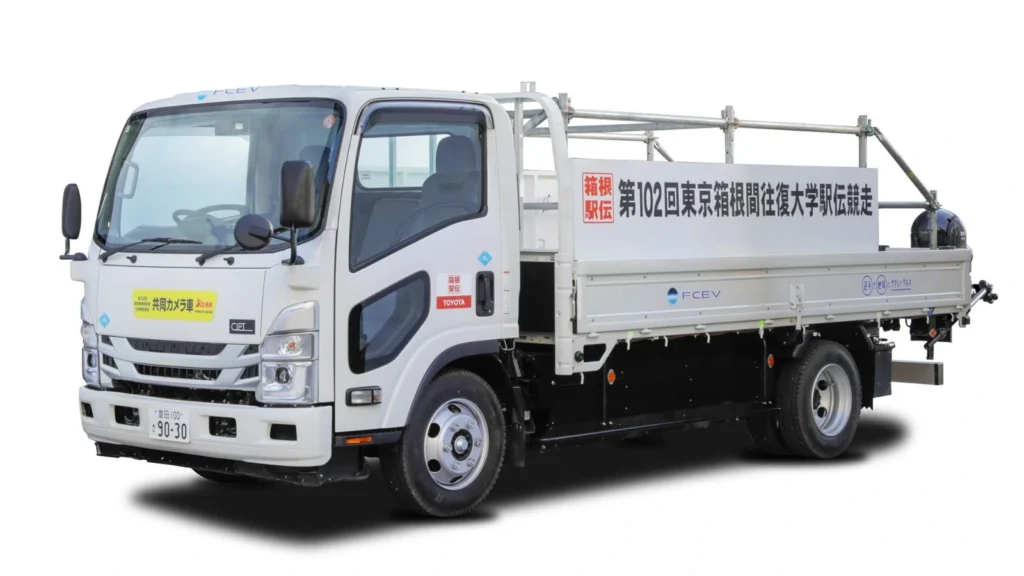
That won’t magically solve hydrogen’s infrastructure challenge. However, it does show Toyota using fuel cells where the job profile may suit them, especially in organised fleets with planned routes and known refuelling points.
The takeaway
Toyota’s Hakone Ekiden plan is simple on paper: all provided vehicles go electrified, and hydrogen takes some of the most visible jobs.
For hydrogen watchers, the key detail is the list itself. Toyota names fuel cell versions of the Century, Crown Sedan, Coaster, GranAce, and a light-duty truck.
It’s a reminder that, for Toyota, hydrogen isn’t only a single halo car. It’s also a toolkit the company keeps trying in different shapes, when the use case makes sense.