Project Union: the UK’s national hydrogen pipeline network explained
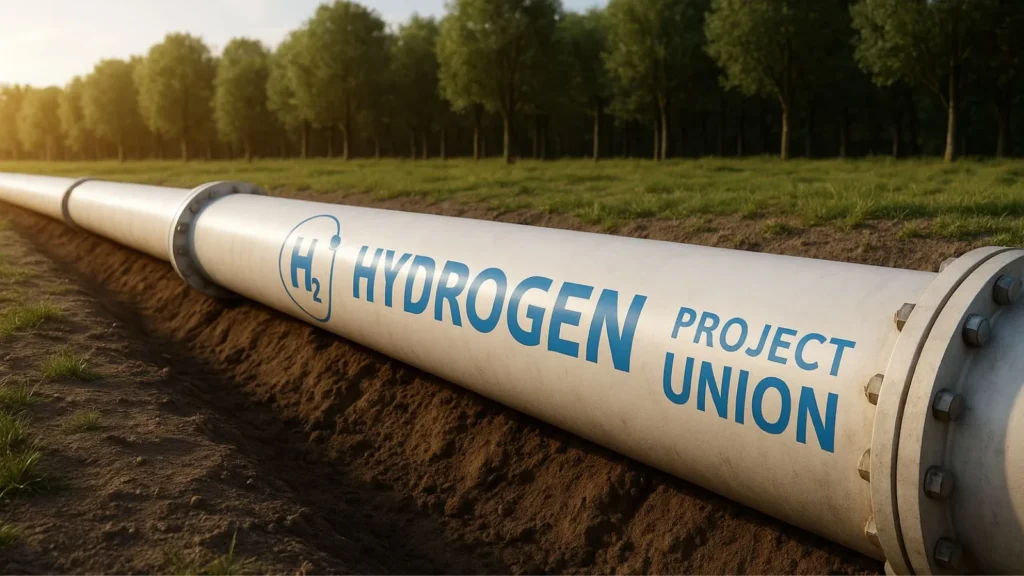
Ofgem announced an additional £107 million towards National Gas’ Project Union, which will create a national hydrogen pipeline network across the UK.
This November announcement adds to the £57 million already confirmed in June for the project, bringing the funding to 50% of what’s needed to develop National Gas’ proposed core hydrogen network.
But what is Project Union? What happens first, and what does it mean for the UK? Here’s everything you need to know about National Gas’ leading hydrogen project.
What is Project Union?
Project Union is National Gas’ project to repurpose existing natural gas pipelines to create an 1500-mile core hydrogen network for Britain. The project will repurpose over 2,400 km of the UK’s 8,000 km natural gas transmission network to be suitable for hydrogen, and connect regional hydrogen industrial clusters across the UK.
Danielle Stewart, Project Union’s Programme Director called it a “once-in-a-generation opportunity”.
“For more than 60 years, the gas network has supported the British economy. Project Union is an evolution of that support, driving the transition to low-carbon energy.”
Project Union will connect a planned hydrogen production plant in Scotland to the Grangemouth industrial cluster near Edinburgh, and then split into two branches. These will link to the Teesside and Humber industrial clusters in northeast England and HyNet in the northwest. The initial £57 million will go to the Teesside and Humber link, with the most recently announced funding directed to the St Fergus to Teesside and northwest routes.

Who is supporting the project?
National Gas, the British national gas network, will be leading the project, and use its national gas pipelines to create the new hydrogen network. However, it is funded by Ofgem.
Ofgem, who provided £164 million of funding this year, is the UK’s Office of Gas and Electricity Markets. The body regulates the monopoly companies which run the UK’s gas and electricity networks, as well as supporting environmental initiatives in these companies.
What does this mean for the UK?
Project Union could support around 3,100 jobs at peak construction, according to research commissioned by National Gas. The analysis also suggests it could deliver £300 million in annual direct gross value added (GVA) to the UK’s economy.
“Project Union will unlock significant investment, create a critical pathway for hard-to-electrify heavy industries to decarbonise, and safeguard jobs – all while advancing the Government’s clean energy ambitions and strengthening Britain’s energy security.” said Ian Radley, Chief Commercial Officer at National Gas.
What happens now?
The project will be rolled out in regional sections, starting with the East Coast. The East Coast of England will be where much of the country’s hydrogen is generated, and connect industries across Teesside and the Humber region.
National Gas is currently in a two-year development phase of design, environmental assessment, consents and public consultation to support this first section of the project.
The company aims for full completion of all regional sections in the mid-2030s.