Central Asia’s first ever green hydrogen project launches in Uzbekistan
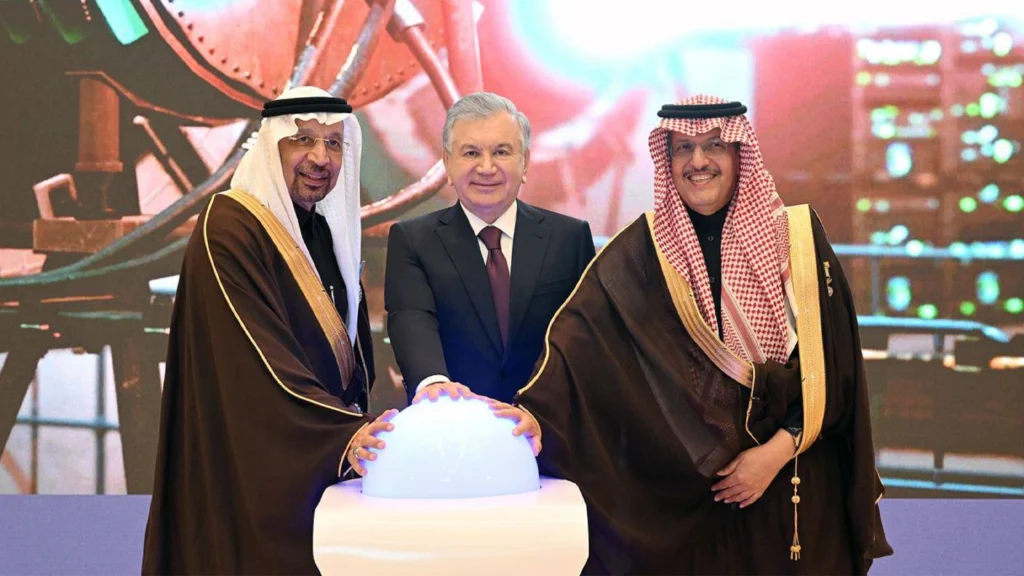
The first ever green hydrogen project in Central Asia has officially begun operations in Uzbekistan. The project will produce 3,000 tonnes of hydrogen per year to replace grey hydrogen in the production of fertilisers.
It’s already delivering molecules to its offtaker, chemicals company Uzkimyosanoat, with the support of a number of international collaborators.
“We believe this will elevate Uzbekistan’s position on the global green hydrogen map,” said Abid Malik, President of ACWA Power for Central Asia. ACWA Power is a Saudi renewables developer, and is behind both this project and another in Saudi Arabia. Uzbekistan’s regional first, along with the Saudi project, was announced to the world by Malik at the Tashkent International Investment Forum this June.
What is the project?
The project initially aims to produce 3,000 tonnes of hydrogen per year, which will go towards replacing methane-based grey hydrogen usage in the production of fertilisers. If successful, the plan is to establish another facility in Chirchik with the capacity to produce 500,000 tonnes of ammonia per year, using green hydrogen, as well as a 2.4 gigawatt capacity wind power plant.
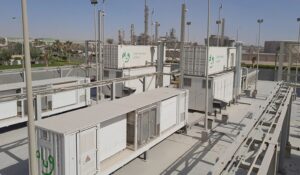
Chinese electrolyser manufacturer Longi provided a 20MW modular “4-to-1” system to lead hydrogen production. This pre-fabricated, less expensive system involves four electrolysers per associated balance of plant, and had only been implemented in China until now.
The engineering, procurement and construction of the project was managed by PowerChina, a fully state-owned construction engineering company.
Who is funding the project?
The project was backed with up to $55.4m from the European Bank for Reconstruction and Development (EBRD), in a loan signed off in 2024 to ACWA Power. The senior loan was split up into $21.2m specifically for the electrolyser and $34.2m to power the facility with an expansion to an upstream wind farm.
Canada provided $10m in concessional finance towards the project through the Special Fund for the High Impact Partnership on Climate Action. This fund aims to tackle environmental degradation across the world through grants and commercial finance, and is run by the EBRD.
Across a number of international investors, the project’s total investment value has reached a staggering US$88 million.
What’s next?
Depending on the success of the project’s first year, Uzbekistan may see some major expansions in the next decade.
ACWA Power suggested that it would follow up the development with a larger facility producing an annual 500,000 tonnes of hydrogen when the project was first announced. However, there have been no further updates since.
According to ACWA Power’s two-phase plan, the next decade would see a new facility in Chirchik and a major multimillion expansion to an upstream wind power plant.