Exclusive: The Northeast team putting hydrogen combustion on the grid
In the Northeast of the UK, not far from the rush of the river Tees, swells a hydrogen revolution. Tees Valley Motorsport are ambitious, innovative, and utterly unflappable. Director and Founder Tony Lelliot took the time to talk with Driving Hydrogen about the future of the organisation and crucially, how it aligns with the future of hydrogen.
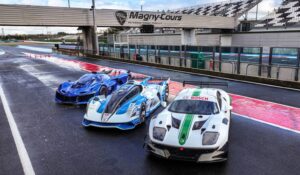
Tees Valley Motorsport has three key hydrogen cars under development: A Prokart, a Renault Clio, and a Ford Fiesta, all designed with endurance racing in mind and all retrofitted with hydrogen combustion engines.
We asked Tony why hydrogen? But more specifically, why hydrogen combustion?
“We wanted a unique project that would set ourselves apart from the competition after lockdown, and I had a hunch hydrogen combustion would ultimately be good for motorsport.
“It seemed to me that combustion was obviously going to be better as the tech is already there, and that infrastructure from the past would be usable for the future.”
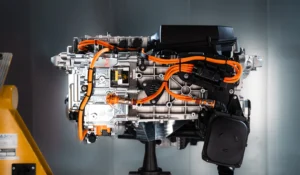
Retrofitted hydrogen combustion engines
“Hydrogen combustion is also better for the young people growing up, they need to see and hear that noise to understand the thrill of motorsport, rather than just listening to the squealing tires.”
Despite the technological advancements made, there remain those sceptical of hydrogen’s potential. Tony shares, “We still get all the Hindenburg doom and gloom stories.
“But our vehicles follow the same protocols for the safety standards as the road cars.
“Group four spec, but we’re trying to go further than that, and house these cylinders within carbon fibre structures, so that they’ve always got double protection.”
Safety first
Tees Valley Motorsport aims to debut all 3 hydrogen cars before the close of 2025. Tony talks about milestones and bumps along the way.
“We have recently been doing some testing with the Prokart. It’s been very positive.
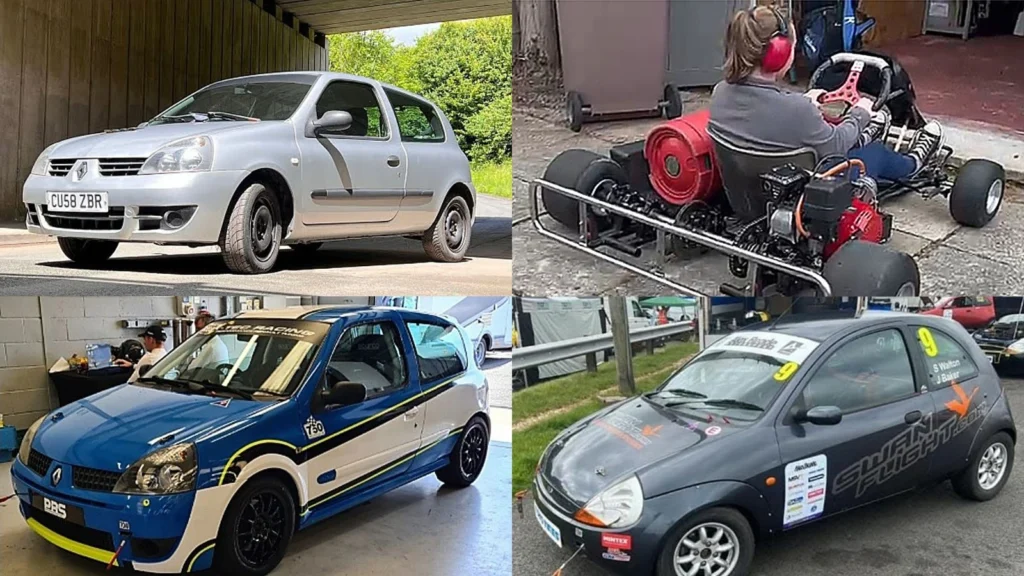
“We are currently rebuilding the twin engines and hope to be track testing them shortly. We’ve got a couple of test drivers absolutely chomping at the bit to get in them.
“The main thing is to develop the engines to the point where they are competitive, we’re not worrying about the chassis side, just to put the engines through their paces.
“Lining up these cylinders is probably the biggest technical challenge with it. Once we’re happy, we’ll transfer the engines to a kart provided by 7Kart and see how they perform relative to petrol engines.
“If we can find parity, that would be brilliant, but if we’re 5% off the pace, which is that target, that would be adequate to move forward.”
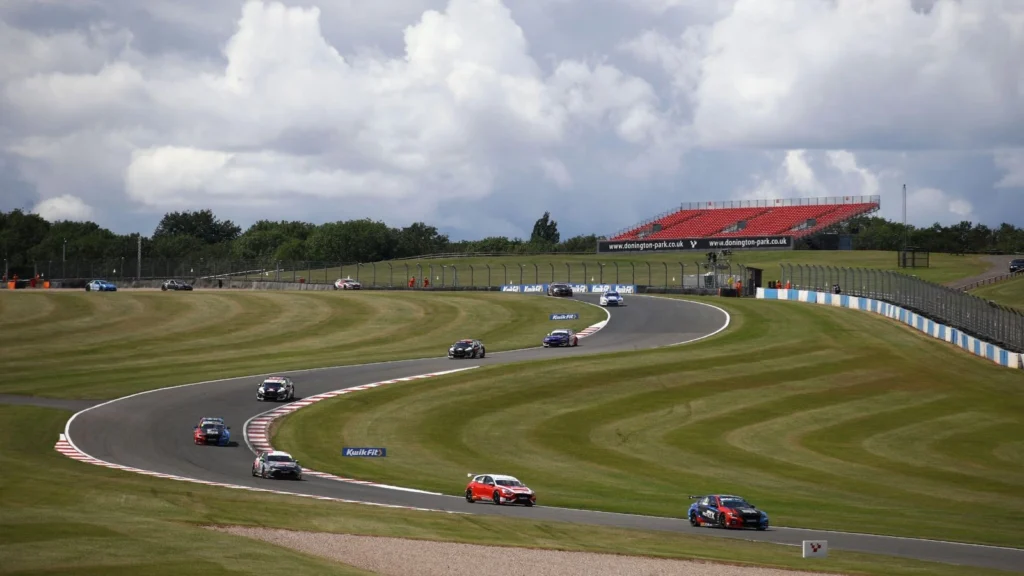
The hydrogen Clio and Fiesta, working examples of retrofitting, will now be running at UK’s racetrack, Donington Park, in October rather than the original goal of Oulton.
Tony explains, “We have had some very frustrating delays, not technical issues but supply chain problems. For example, we had a supplier in America just as the tariffs came in and that company subsequently went into liquidation.”
End of one revolution, start of another
However, you motorsport fans won’t have to wait to catch a glimpse of the hydrogen hatchbacks. Because in late September, the Northeast will be celebrating a unique bit of history, the Stockton and Darlington Railways’ 200th anniversary.
Tony’s plans to “actually be in the Town Square on the day and start our cars up when the Stockton Flyer Monument (a kinetic statue) dies down. End of one revolution, start of another.”
Tees Valley Motorsport places a deliberate emphasis on “giving young people a chance,” collaborating with numerous colleges in the Northeast.
Tony expands, “whether it be drivers, engineers, catering students, business students, we want to show them that they could tailor those skills to a career in motorsport.”
Brick by brick, building a hydrogen movement
“The eventual aim is to have our own brick-and-mortar academy in the Northeast. But until that time, we’ll direct them through the National Motorsport Academy”.
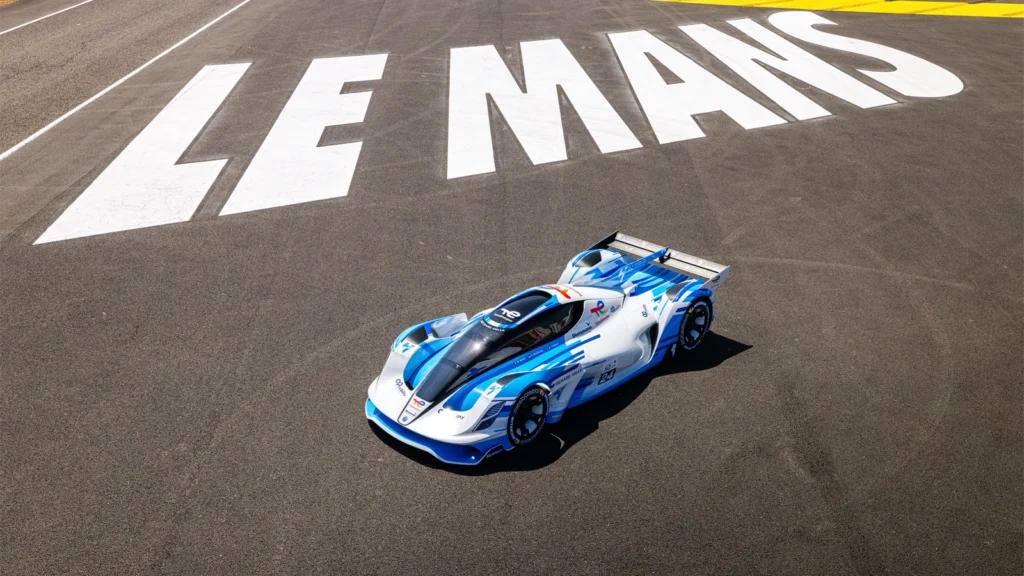
The Tees Valley Motorsport are not lacking in big dreams; their ultimate ambition? To race a hydrogen car at one of the biggest stages out there, Le Mans. Tony discusses the team’s pursuit of this goal.
“It might be a further five years, still target three years, because the challenge is what keeps everybody going and fires you up, but we still have a healthy dose of reality to temper that with.”
The road ahead
Whatever comes next, one thing’s certain – we’ll be watching closely. Tees Valley Motorsport is carving out its own path in hydrogen racing, and the journey is only just getting started.