Hydrogen E‑Transit project moves into vehicle integration phase as system tests conclude
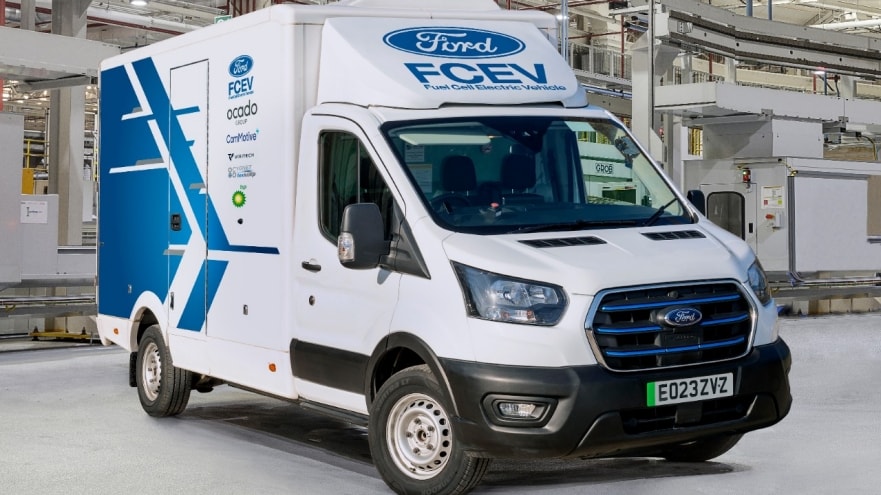
Hydrogen fuel cell systems for Ford’s E‑Transit prototype fleet have completed final testing ahead of integration, as part of the APC‑funded FCVGen2.0 programme
A set of prototype hydrogen fuel cell systems designed for the Ford E‑Transit has now completed pre-installation testing, with integration into vehicles underway ahead of real-world fleet trials later this year.
The tests – carried out at a specialist facility in Cambridge – included high-voltage checks, calibration, emissions measurement, noise assessment, and performance characterisation.
The systems were developed by Ford as part of Fuel Cell Commercial Vehicle Generation 2.0 (FCVGen2.0), a £16.3 million UK research project supported by the Advanced Propulsion Centre.
The vans will use a high-power fuel cell system and pressurised hydrogen storage in place of a conventional battery or diesel engine, with the aim of matching the operating characteristics of an internal combustion equivalent.
Once the pilot fleet is deployed, data will be gathered on range, uptime, drivability and fuelling logistics, with the fuel cell systems to be re-tested at the end of the trial to assess any changes in performance.
Eight hydrogen-powered Transits, one real-world pilot
FCVGen2.0 builds on the earlier Ford-led FCVGen1.0 demonstrator and is intended to produce a low-volume trial fleet of eight hydrogen fuel cell Ford E‑Transits.
These will be run by strategic fleet operators – reportedly including Ocado – for a six-month operational period.
Ford is leading the project, with funding awarded through the APC’s Collaborative R&D programme.
The results will inform future development of zero-emission commercial vehicles and help assess the wider commercial and infrastructure case for hydrogen in high-utilisation fleet segments.
The vehicles are being assembled at Ford’s Dagenham site, with powertrain testing handled by CamMotive, the EV-focused division of long-established combustion testing firm Cambustion.
CamMotive previously developed a fuel cell test facility in Cambridge as part of its contribution to the project.
Supply chain, not just prototypes
Alongside Ford, the consortium includes materials specialist Cygnet Texkimp, fuel cell developer Viritech, and energy firm bp, with roles covering composite tank manufacture, powertrain architecture, and refuelling input respectively.
The project also includes research into efficient end-of-life recycling and volume manufacturing readiness.
Although the number of vehicles is small, the programme is designed to validate the broader feasibility of hydrogen fuel cell systems in light commercial vehicle roles.
It also supports UK ambitions to build out domestic hydrogen capability, both in engineering and supply chain terms.
Ford has yet to confirm whether the E‑Transit fuel cell system will progress beyond this pilot stage, but the trial is expected to conclude in early 2026.