Hyundai launches hydrogen-powered refuse and hook-lift trucks
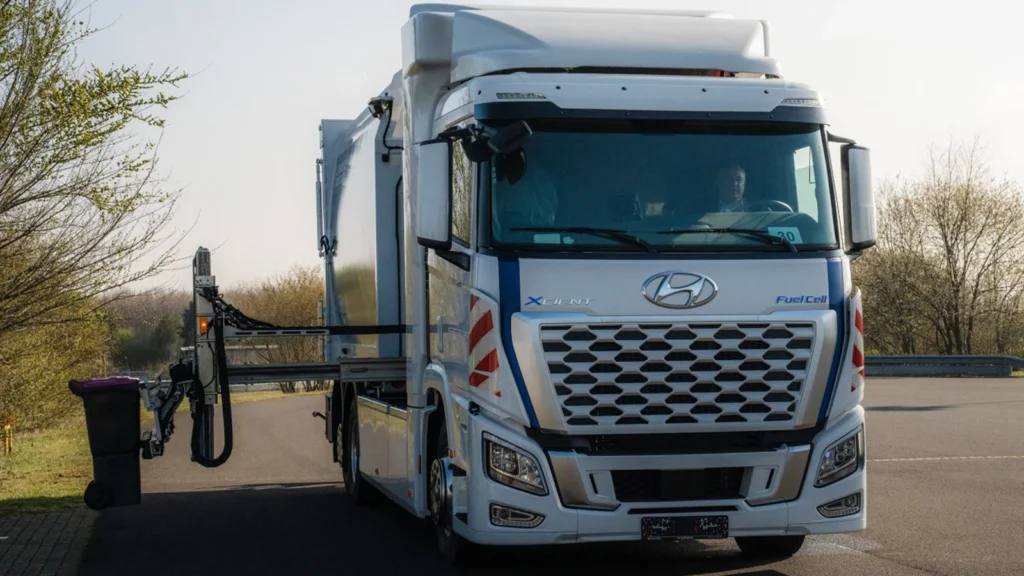
Hyundai has introduced new refuse collection and hook-lift variants of its XCIENT Fuel Cell truck, extending its hydrogen platform into municipal and waste management applications for the first time.
Available in both 4×2 and 6×2 configurations, the new variants combine Hyundai’s 400-kilometre-range hydrogen truck with specialist bodies developed by Terberg and Meiller for municipal and waste handling use.
From line haul to landfill
Until now, most of Hyundai’s European fuel cell trucks have been used for regional haulage, but with the new roll-off and bin-lift variants, the company is targeting fleet decarbonisation for local councils and refuse operators.
These are sectors with heavy, predictable-duty cycles and growing pressure to hit net-zero targets – in other words, prime real estate for fuel cell electrics, where fast refuelling, long range and high onboard energy capacity can all be put to work.
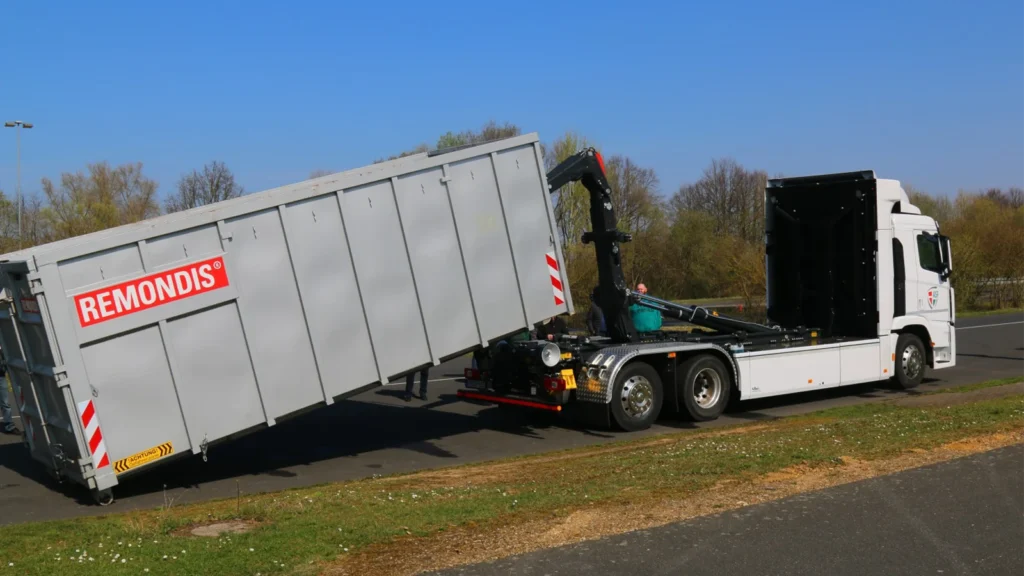
The roll-off version uses a Meiller hooklift system with support for containers between 5.25 and 7.0 metres long, while the refuse collector mounts Terberg’s HS eSpeedline body, offering up to 30 m³ of volume and 7-8 hours of self-powered operation – enough for a full day on the bins.
Refuelling takes around 15 minutes, and Hyundai says payloads are comparable to diesel equivalents thanks to packaging improvements and the absence of a heavy combustion engine.
The platform also supports a maximum gross weight of 36 or 42 tonnes, depending on axle configuration.
Hydrogen suits stop-start heavy-duty work
Refuse collection vehicles – bin lorries to you and me – spend much of the day operating power-hungry systems like bin lifters, hydraulic rams and onboard compactors.
These auxiliary functions can account for a significant share of a truck’s daily energy use, especially in dense urban areas with frequent stops.
Battery-electric refuse trucks often need to size up their battery packs or add separate systems just to power the bodywork – which eats into payload and still limits daily range.
With many operators already running close to the gross vehicle weight limit, that trade-off matters.
Hydrogen fuel cell trucks, by contrast, generate electricity continuously during operation, supplying both drive and auxiliary loads without drawing down a fixed-capacity battery.
That allows consistent performance throughout the shift and avoids long recharging cycles – making them particularly well suited to municipal duty cycles with long hours and little downtime.
That said, they’re not immune to limitations. The power used for lifting and compacting still comes from the onboard hydrogen store, so range will fall if bodywork loads are high.
Most systems also use a small buffer battery or capacitor to handle rapid power spikes – adding some complexity. And while refuelling is quick, it still depends on local hydrogen availability, which may require depot investment.
Built in Korea, bodied in Europe
The vehicles are being offered through Hyundai Hydrogen Mobility AG (HHM), based in Zurich, and its German subsidiary HHMG.
Both focus exclusively on hydrogen-electric heavy-duty vehicles and support local deployments in Switzerland, Germany and beyond.
Over 12,000 tonnes of CO₂ have already been saved by XCIENT trucks in Switzerland, HHM claims – equivalent to more than 15 million kilometres of real-world driving.
“Many waste management companies and fleet operators are entering new territory with hydrogen-electric drive,” said HHM CEO Beat Hirschi. “That’s why service, maintenance and investment security are so critical. This is where Hyundai excels.”
Orders are now open.