Fleet operators back hydrogen – but support gaps must be closed, warns RHA

The Road Haulage Association (RHA) has published the results of its first-ever Net Zero Survey, offering one of the clearest snapshots yet of how fleet operators across the UK view the transition to zero-emission vehicles.
And while the headline picture is one of cautious progress on electrification, the real interest – and real barriers – lie in hydrogen.
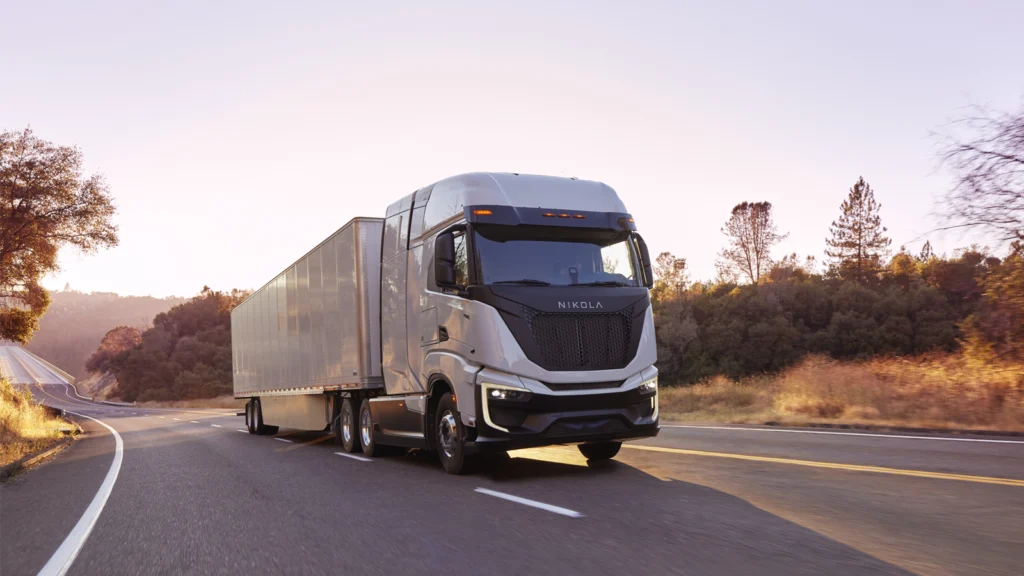
Despite a still-nascent market, the RHA found that 12% of larger HGV fleets already plan to bring hydrogen-powered vehicles into service within five years.
Coach operators are also watching closely: 46% believe hydrogen-powered coaches will reach the market within the same timeframe, but the vast majority remain unconvinced that the supporting infrastructure will be there when it does.
The data points to a growing recognition that hydrogen could play a key role in decarbonising longer-haul and high-utilisation segments – but the conditions to make that happen don’t yet exist.
“A clear message we draw from this survey is that Net Zero must be commercially viable”, the RHA wrote in its summary. “Vehicles which transport goods and passengers are working vehicles that must pay for themselves.”
Appetite is growing – but confidence is not
In total, 401 HGV operators responded to questions about hydrogen – making this one of the most robust data sets to date on UK fleet intentions.
And while only a fraction of small operators had active hydrogen plans, interest rises sharply with fleet size.
22% of 25-99 vehicle fleets and 24% of 100+ vehicle fleets said they would look to adopt hydrogen HGVs within the next five years.
Yet despite this emerging demand, confidence in the government’s overall Net Zero targets remains low.
85% of all operators surveyed said they do not believe the UK’s current targets for commercial vehicle decarbonisation will be met.
The RHA says this pessimism is driven by two things: lack of real-world options, and lack of viable economics.

For hydrogen vehicles, 47% of HGV operators say the top barrier is that no viable vehicles are currently available. This is followed closely by cost (32%), then lack of refuelling infrastructure at both depot and public levels.
In short, operators are not resistant to hydrogen. They just don’t see how it works yet – and they’re not going to bet their business on a technology that may or may not do the job or pay its way.
Depot vs public infrastructure: both missing, both essential
The lack of accessible hydrogen refuelling is a theme that cuts across both HGV and coach operators.
Among HGV fleets considering hydrogen, 37% flagged depot hydrogen supply as a top-two barrier. 33% cited public refuelling availability.
For coach operators, it’s arguably worse – 59% said they don’t believe a sufficient public hydrogen network will exist within five years, while 39% doubted they could get hydrogen delivered to depots.
This is not just a theoretical concern. Coach operators, by definition, operate in unpredictable and long-range routes that require reliable public access to energy.
Without confidence in a national hydrogen network, they’re unlikely to commit to vehicles they can’t fuel reliably.
The RHA highlights these gaps as a key reason for policy urgency. It is calling on the government to accelerate investment in hydrogen infrastructure, and ensure depot installations are viable, affordable and timely.
It also notes that most of the concern around infrastructure doesn’t come from lack of interest – it comes from uncertainty. Operators simply don’t know where and when infrastructure will arrive.
Knowledge gaps still holding back hydrogen
One of the most striking findings of the survey is the sheer number of operators who answered “don’t know” when asked about core hydrogen readiness issues – from fuel supply to training.
For coach fleets in particular, there’s still a basic lack of clarity on how hydrogen vehicles would be operated, maintained or refuelled in practice.
The RHA is now calling for an industry-wide education and awareness campaign focused on hydrogen, to help operators understand where hydrogen fits in the commercial fleet mix, how the technology works, and where the infrastructure will be.
Hydrogen providers – and OEMs developing hydrogen trucks and buses – would do well to heed that call. Education isn’t just a nice-to-have – it’s now a market enabler.
Larger fleets are leading – but small fleets risk being left behind
The survey draws a sharp line between larger operators – who are planning, trialling or adopting new technologies – and smaller firms, who are overwhelmingly not.
Only 8% of 1-4 vehicle HGV fleets have any plans to add electric HGVs within five years. For hydrogen, the figure is effectively zero.
This presents a structural challenge. The UK logistics sector is made up of 95% SMEs, many of whom rely on affordable second-hand vehicles to stay viable. And right now, there is no second-hand market for zero-emission trucks – battery or hydrogen.
The RHA says government and finance providers must intervene to bridge that gap, with mechanisms such as credit risk guarantees, residual value schemes, and better access to capital for early adopters.
Without this, SMEs will simply sit on diesel until forced to exit the market – a transition that helps no one.
“Establishing a vibrant second-hand market in zero emission commercial vehicles is a must”, the RHA says. “Our estimate is that this will take more than 10 years to emerge naturally.”
Low-carbon fuels: a practical stopgap, not a distraction
While hydrogen and battery electric options are still evolving, many operators are looking for something they can do now.
The survey reveals strong demand for low-carbon fuels – particularly HVO – as a transitional measure.
Among larger HGV fleets (100+ vehicles), 65% are already using or planning to use low carbon fuels within five years.
Smaller fleets are less likely to follow – but not for lack of interest. The key barriers here are familiar: cost (44%) and supply (31%).
The RHA is calling for government to unequivocally support low carbon fuels, recognising them as a legitimate near-term decarbonisation tool.
It recommends a fuel duty rebate linked to carbon intensity – helping bring HVO and similar fuels closer to cost parity with diesel.
It also argues that a strong stance in favour of these fuels would send the right signal to industry while zero-emission solutions mature.
Final thoughts: practical operators, impossible margins
The most sobering parts of the survey are not in the stats, but in the operator comments.
Analysing hundreds of free-text responses, the RHA found four themes repeated time and again: doubt, cost, infrastructure, and technology.
One operator put it simply:
“There is no realistic chance our customers will absorb any premium to cover the cost of transitioning our fleet within the proposed timeframes.”
Margins in logistics are already wafer-thin. Without targeted support, many fleets say they’ll have no choice but to sit the transition out.
Hydrogen still has a clear place in the future of commercial transport – especially for heavier, longer-range use cases. But the message from this survey is blunt: that future won’t arrive on its own.
If government, energy providers and OEMs want hydrogen to succeed, they’ll need to solve the structural problems fast – or risk losing the fleets that were willing to give it a go.