Ligier Automotive doubles down on hydrogen in Magny-Cours with Bosch, ACO and Alpine
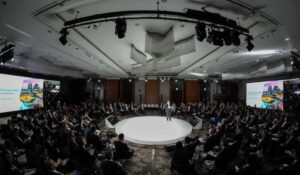
Ligier Automotive, Bosch Engineering and the Circuit de Nevers Magny-Cours hosted a hydrogen convention on Thursday, 20 November.
The event brought together hydrogen experts, industrial players, and institutional representatives from the Nièvre department and the region.
The organisers set out a clear goal. They wanted to review the state of hydrogen technologies, share real experience from the field, and present the first building blocks for a future Hydrogen Excellence Hub in Magny-Cours.
A “laboratory of innovation” for the next era
From the opening remarks, the convention framed hydrogen as more than a powertrain choice. It was positioned as an industrial and regional development opportunity, with motorsport playing its familiar role as an innovation testbed.
Serge Saulnier, President of the Circuit de Nevers Magny-Cours, linked the hydrogen push to a long tradition of track-led progress in safety, performance, endurance and onboard technology.
“We are committed to the energy transition and to the future of our sport and our infrastructure,” Saulnier said. “With this approach, we return to the founding values of racetracks: being laboratories of innovation.”
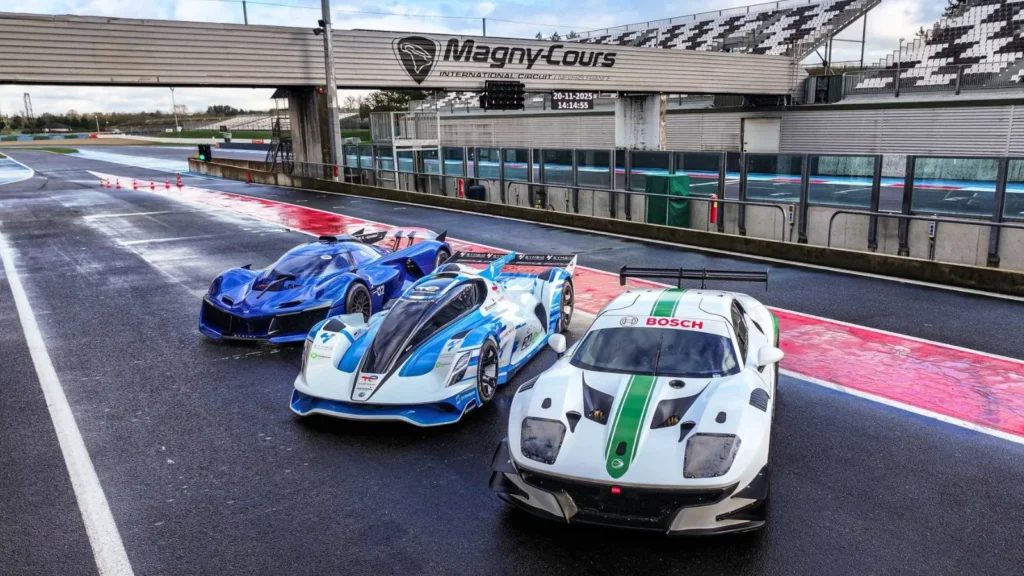
The event also highlighted a wider shift across the endurance and performance ecosystem. The Automobile Club de l’Ouest (ACO), involved in a hydrogen programme since 2018, attended with the MissionH24 H24EVO prototype. Alpine also attended with its Alpenglow HY6.
“Hydrogen is inevitable in the future”
Speakers offered a frank snapshot of the hydrogen mobility market. The convention noted uncertainty in Europe, linked to fluctuations in public investment and consumer hesitation toward electric vehicles. It also highlighted faster momentum in other regions, “particularly Asia,” and suggested this creates space for strategic positioning.
Jacques Nicolet, President of Ligier Automotive, urged the sector not to misread the moment.
“There is a slight cooling around hydrogen, but we see it as an opportunity,” Nicolet said.
“Hydrogen is inevitable in the future, and Magny-Cours has all the strengths needed to become a center of excellence for this technology.”
The press release points to why Magny-Cours believes it can play that role. It cites local engine and mechanical companies, advanced engineering capability, test infrastructure, engineering schools, a strong industrial network, and the presence of major motorsport and endurance racing players.
The three hydrogen cars in the spotlight
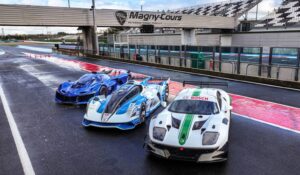
The convention’s technology story came to life through three very different vehicles.
Ligier JS2 RH2 (Ligier Automotive x Bosch Engineering)
Ligier and Bosch Engineering jointly developed the Ligier JS2 RH2 as a hydrogen demonstrator. Ligier describes it as a GT-style, two-seat car designed for demonstration and training.

It has already covered more than 7,000 km of testing in varied conditions, including heat, cold, rain and snow, to prove the maturity of its hydrogen system.
The teams also shared how quickly the project moved. Ligier says it took only seven months from project launch to the public demo at the 2023 24 Hours of Le Mans, and work is now underway on the next generation of hydrogen engines.
The event also included a hands-on element. Guests saw the Enhywhere mobile refuelling station that was installed for the convention, before taking demo laps in the JS2 RH2.
Jacques Nicolet summed up the experience in a line designed to calm sceptics.
“If you’re not told the car is running on hydrogen, you cannot guess,” he said.
“The sensations are the same.”
MissionH24 H24EVO (ACO / MissionH24)
The ACO has run a hydrogen programme since 2018. At Magny-Cours, it brought the MissionH24 H24EVO prototype.
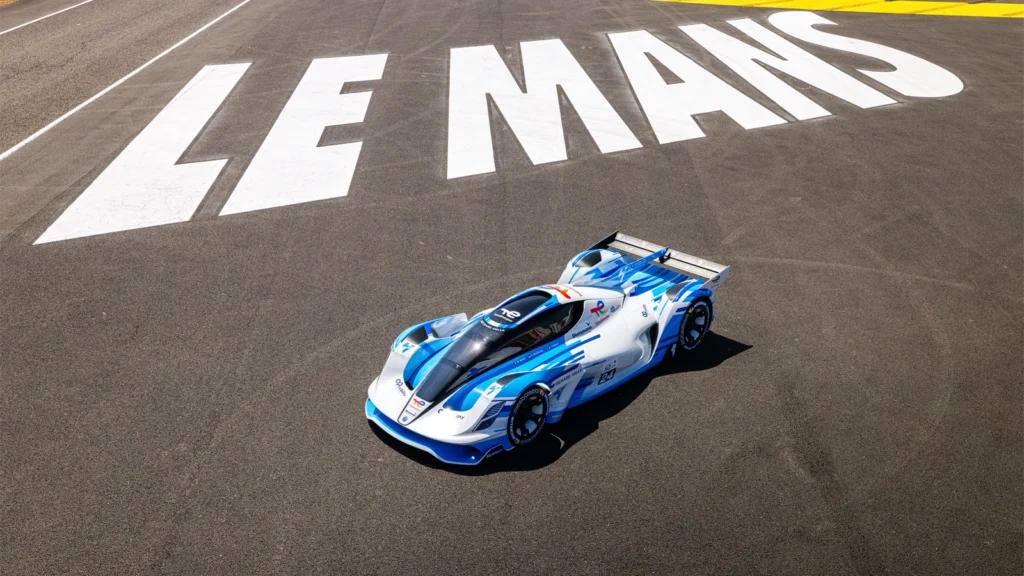
The convention also highlighted the work carried out by ACO and MissionH24, represented by Carole Capitaine, Head of Hydrogen Communications, and Nicolas Perez, H24Project Project Manager.
Capitaine underlined the long-running, collective approach behind the programme.
“Endurance is a team sport,” she said. “We are especially pleased to be here to share the experience we’ve gained on hydrogen.”
She also pointed to the Hydrogen Village at the 24 Hours of Le Mans, and the importance of continuing to educate the public and the media on emerging technologies.
Alpine Alpenglow HY6 (with Ligier involvement)
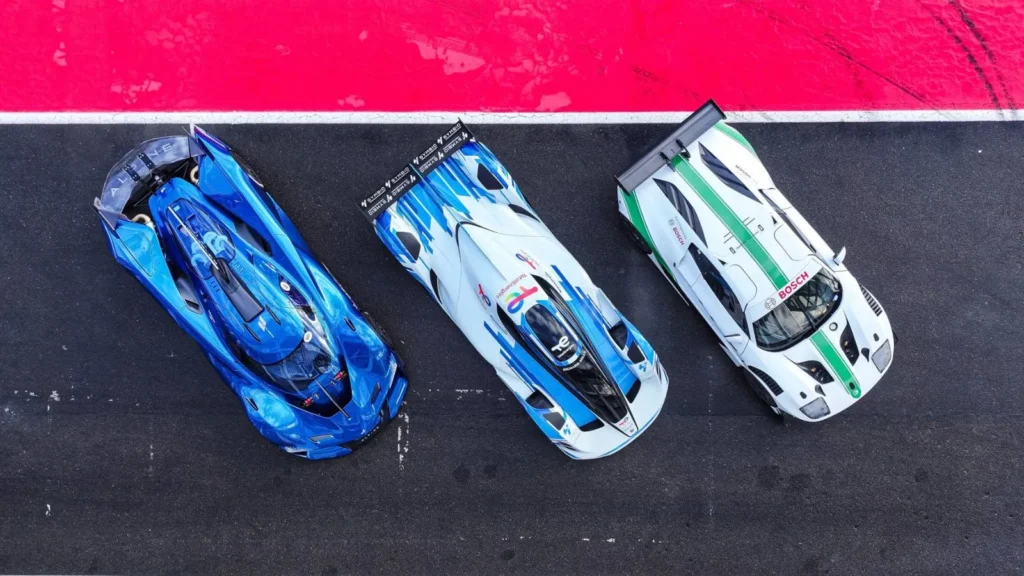
Alpine attended with the Alpenglow HY6, which sat alongside the two other cars.

Ligier says seeing the JS2 RH2, the H24EVO and the Alpenglow HY6 side by side showed the coherence of technology progress. It also highlighted Ligier’s direct involvement in multiple hydrogen programmes.
Ligier Automotive describes its contribution to the Alpenglow project in practical terms. It supported the design of the hydrogen circuit, hardware development, hydrogen storage and cooling solutions, and the integration of these components into a Ligier LMP3-based platform.
Why Bosch says hydrogen matters
Bosch Engineering positioned hydrogen as a strategic focus inside its wider decarbonisation work.
“Ecological neutrality is a necessity, and this is why hydrogen is one of the most important strategic topics at Bosch today,” said Lionel Martin, Head of H2 Products at Bosch Engineering.
A hydrogen hub with four pillars
The convention’s ambition goes beyond showcasing prototypes. The Magny-Cours plan aims to build a hydrogen hub around four pillars: a testing and development platform for gaseous and liquid technologies, dedicated infrastructure including refuelling stations, a strengthened industrial network to welcome and support companies, and a training ecosystem developed with engineering schools and technical centres.
The press release also stresses that the target applications go beyond motorsport. It lists local public transport, light logistics, regional freight, public services, and professional uses that need autonomy and fast refuelling.
What Ligier and Bosch say comes next
Ligier and Bosch Engineering also formalised new directions for their collaboration. They are working on liquid hydrogen storage systems, in line with upcoming FIA regulations, and they continue development on gaseous hydrogen storage for many non-competition uses.
Richard Tur, COO of Ligier Automotive, framed the wider aim in terms of jobs and reindustrialisation.
“This new topic can open an entire ecosystem around this technology in Magny-Cours,” Tur said. “We will support companies and major manufacturers, create a testing environment, generate opportunities, and ultimately jobs. Reindustrialization requires innovation.”
Ligier says one possible next step is a new generation of hydrogen track-day cars. These could carry the Ligier brand, or be delivered as white-label platforms designed for learning, testing, validation and experimentation.
The company also flagged two near-term events where it plans to continue the conversation: Hydrogen Business for Climate in Belfort in early December, and Hyvolution in Paris in late January alongside Bosch.